


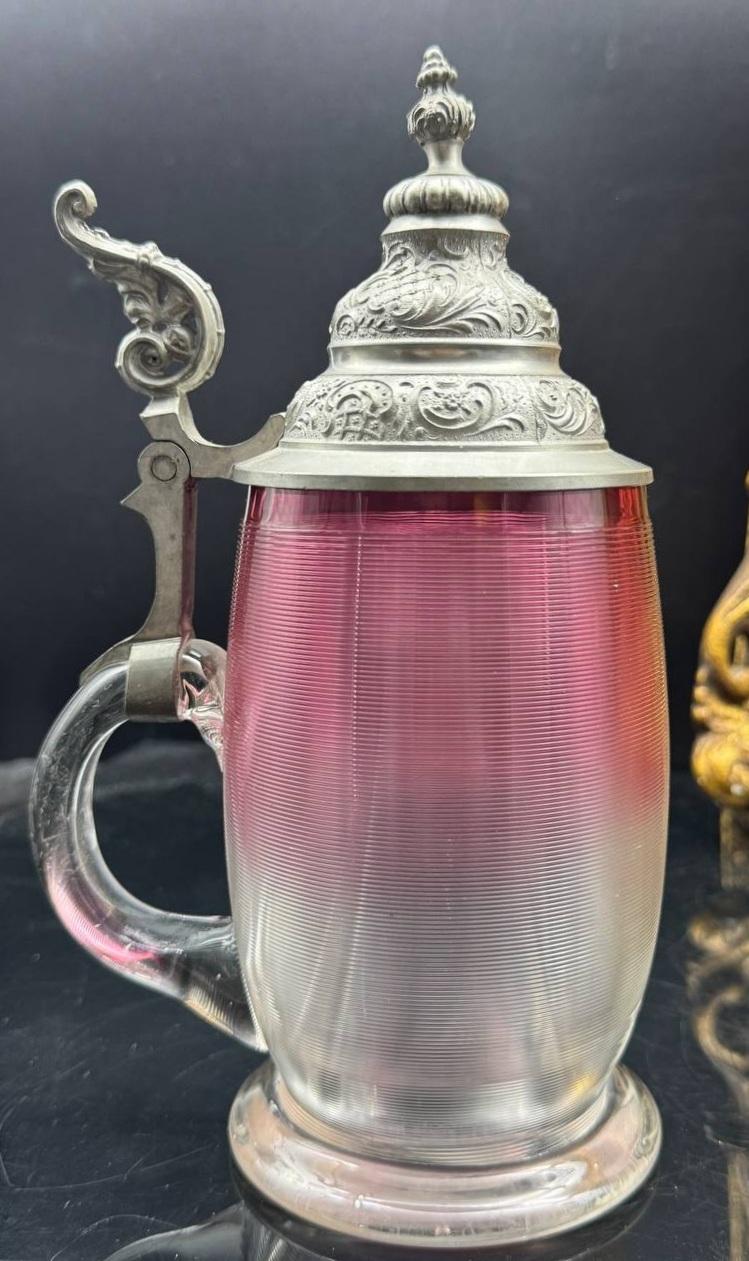
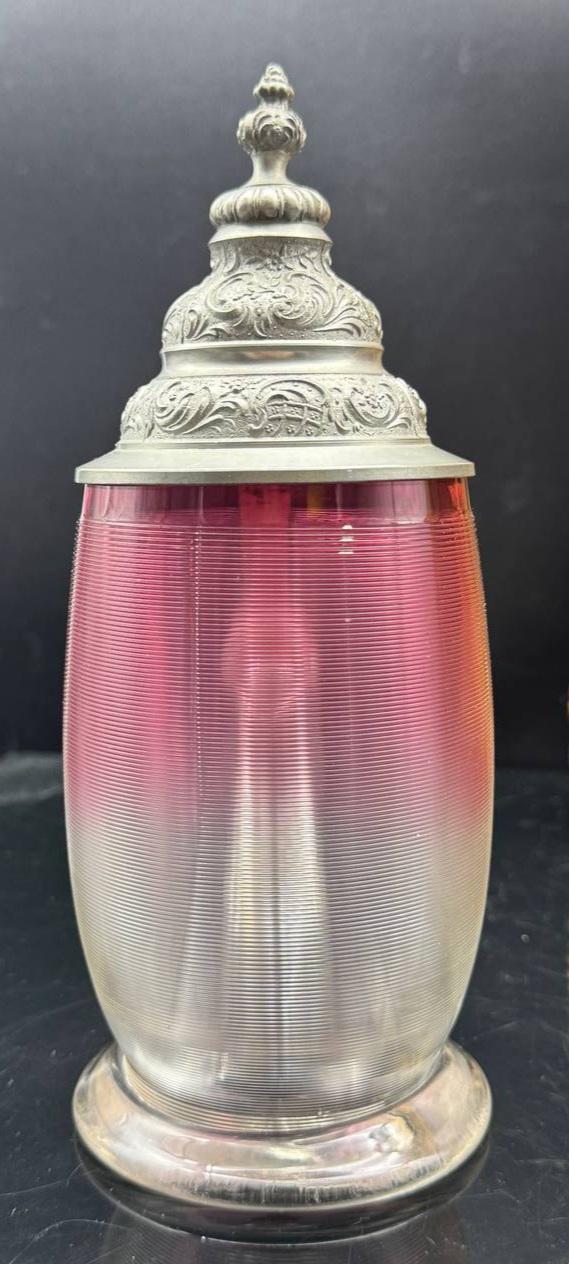
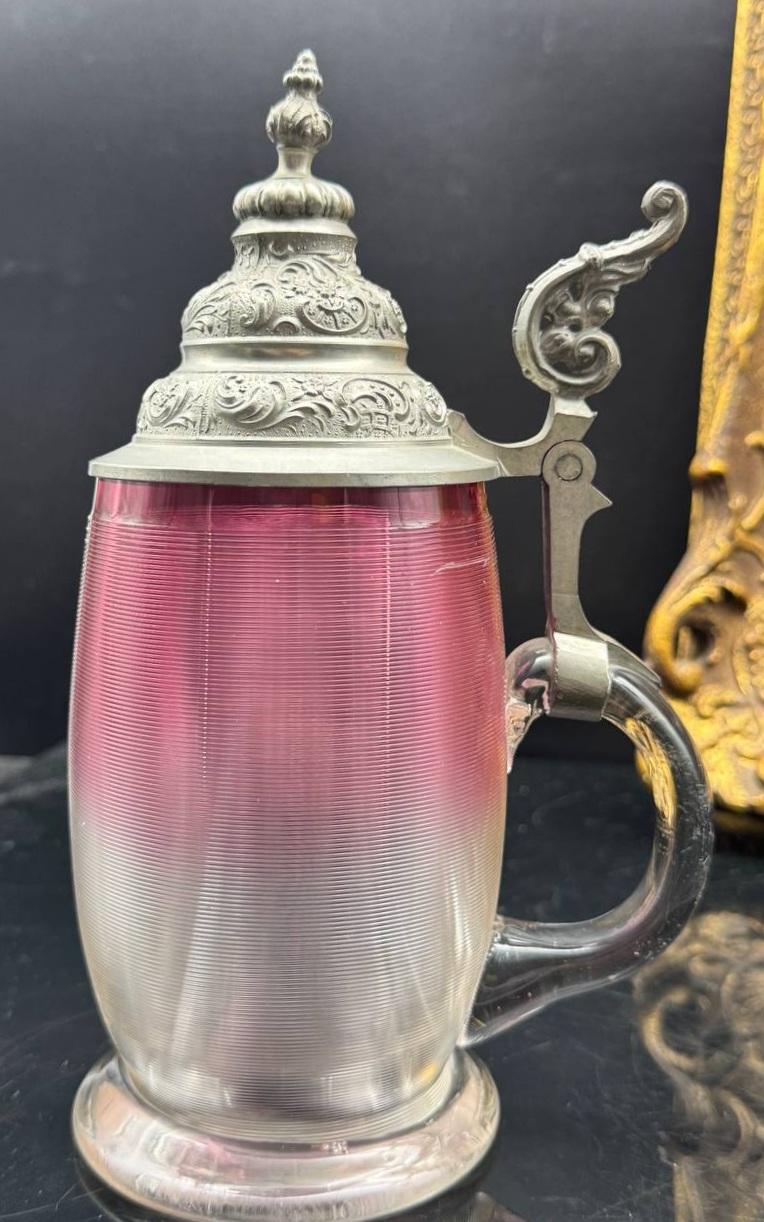
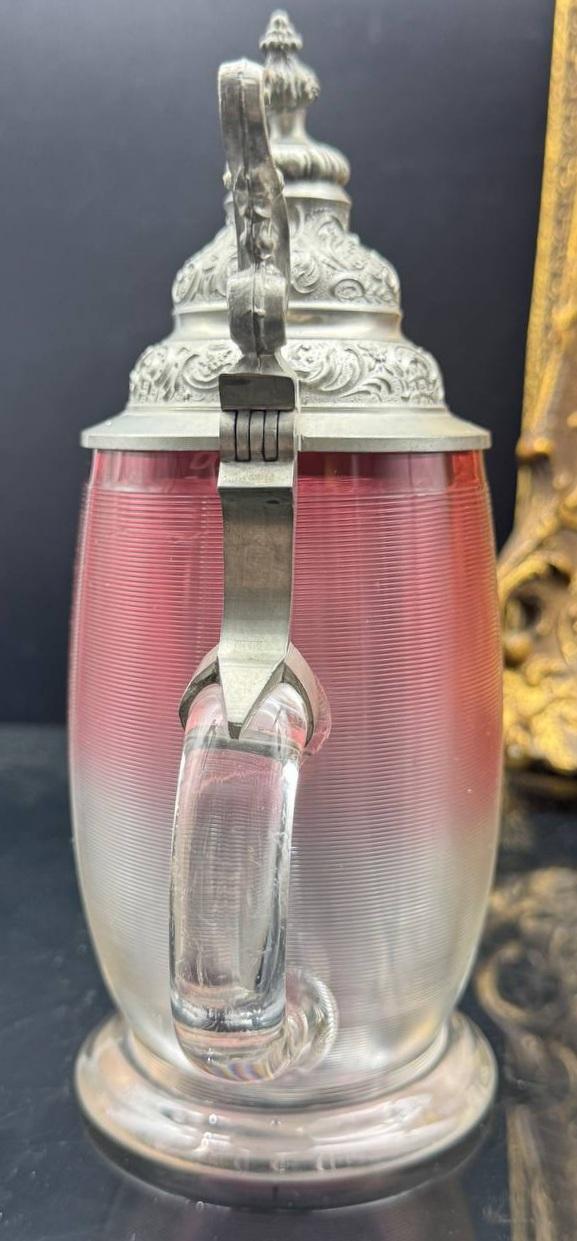
Collector's mug "Music in crystal".
A video clip about this mug can be viewed at the link: [link]
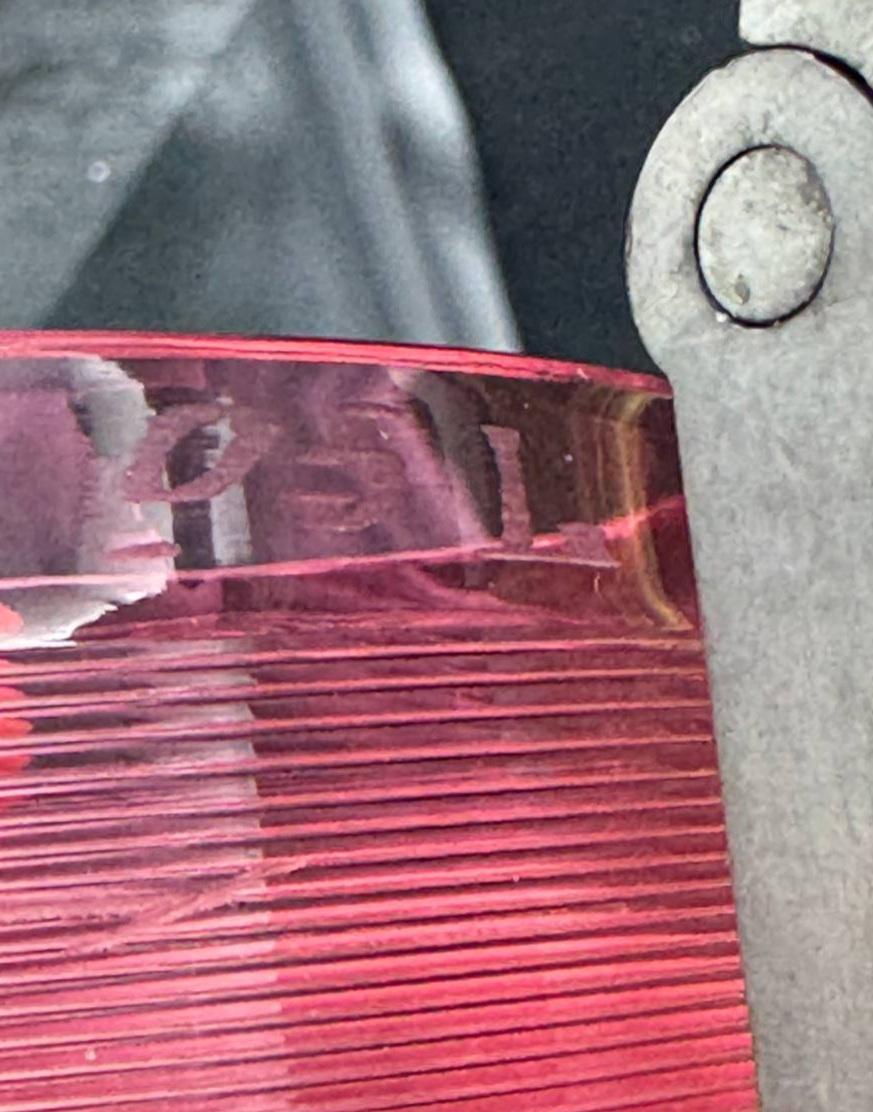
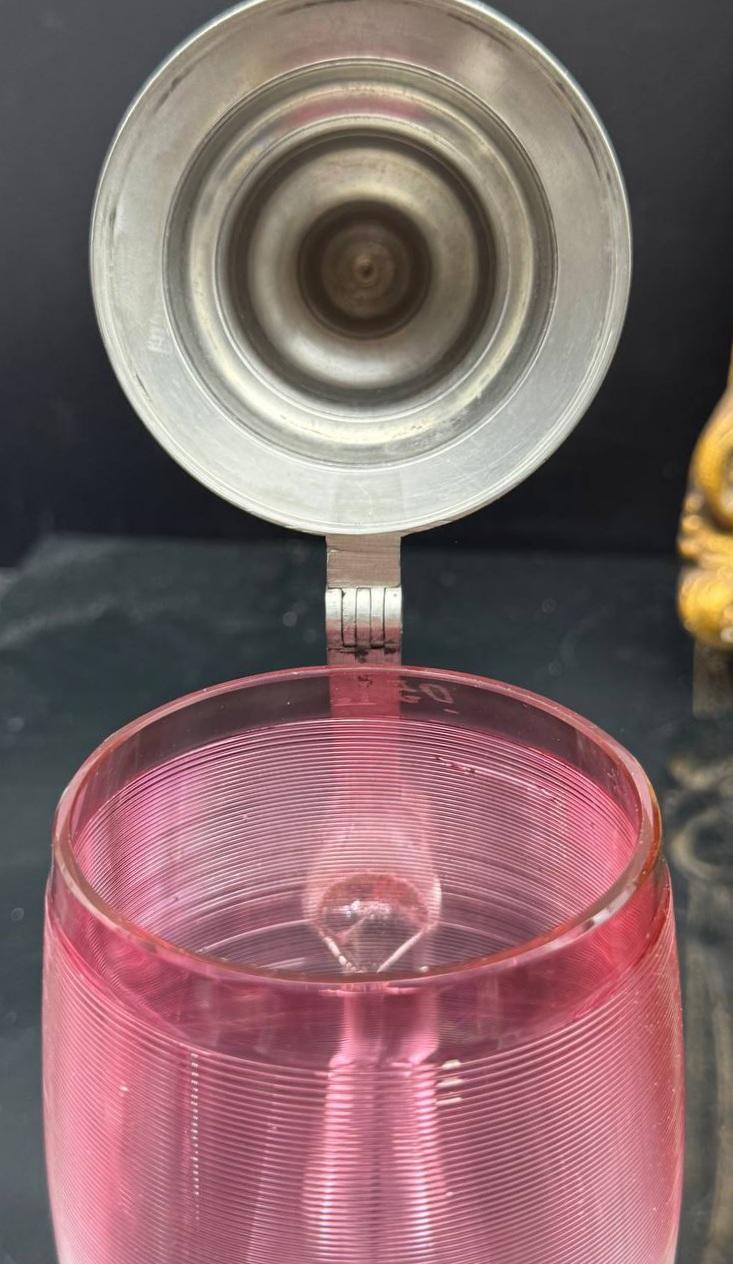
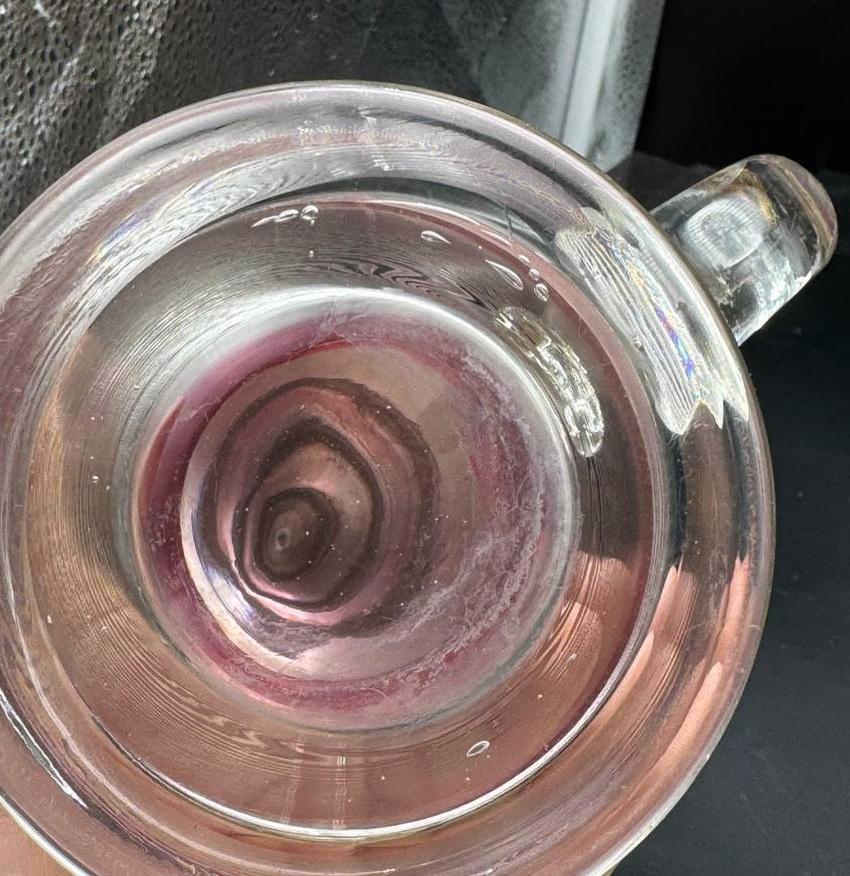
This antique German handmade beer mug was made using the glass-blown molding technique. The color scheme of the mug is made in the style of "Cranberry to Clear" (the color transition from cranberry to transparent). In fact, the glass case has a characteristic color gradient transition from saturated to transparent. This is considered a difficult and time-consuming glass staining technique. No less difficult and time-consuming is the technique of applying a relief pattern, which covers the surface of this mug. In this case, the characteristic finely grooved pattern in the form of thin horizontal grooves is executed in the "threaded glass" style.
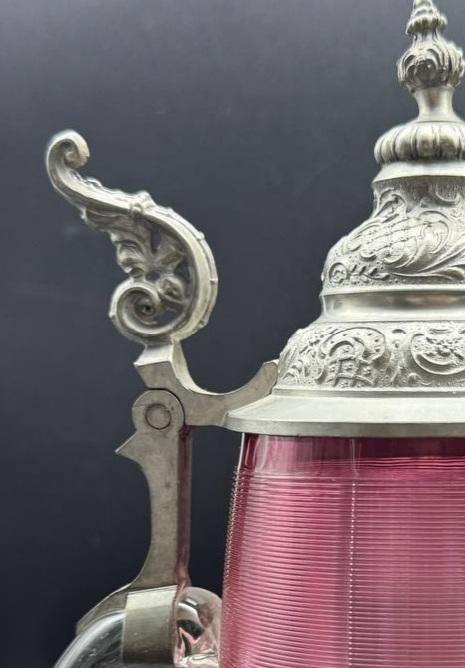
The mug is equipped with a massive high lid made of a special tin alloy suitable for making dishes for food. The lid has a complex three-component design of its dome part. All three belts of the dome of the lid are decorated with a relief floral pattern. Each of these belts was made separately and then assembled by soldering.
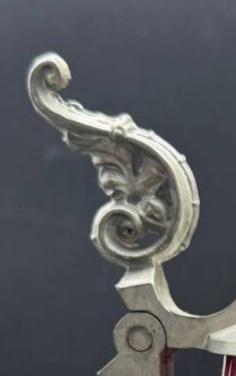
The shape of the lever of the lifting mechanism of the mug lid deserves special attention. It is made in the form of a tin figurine stylized as a fragment of the body of a lyre, a stringed plucked musical instrument. Since ancient times, the lyre has been depicted in works of art as a musical instrument used by the god Apollo, the patron saint of art, and the muses Terpsichore (the patron goddess of dance) and Erato (the patron goddess of love poetry).
Musical symbols can be read not only in the design of the mug lid. The decoration of the glass surface of the mug in the "threaded glass" style also contains a musical context.
The relief in the "threaded glass" style clearly resembles the rings of grooves on a record. Figuratively speaking, the glass surface of the mug is made in the form of a three-dimensional gramophone record. The use of a gradient color transition from bright saturation to transparent lightness in the design of a mug is considered a visualization tool for music. In the modern sense, this is color music.
Gramoplastics as a subject of sound recording gained worldwide popularity during the heyday of art nouveau since the 1890s. In Germany, it was the art nouveau style, reflected in all areas of art and applied art design.
The heyday of the art nouveau style (the German version of art nouveau) occurred in the 1890s and 1910s - just at the time of the mass appearance of gramophones and the first records. Against this background, the creative search of the glassblowers of that time, who came to the decision to design the mug that way, looks quite understandable.
The mug has a capacity of 0.5 liters and a height of 23 cm. The mug was made in the period 1895-1905 at one of the Bohemian manufactories specializing in the production of colored crystal.
View the collection of Paulo Vik Falcon

Comments (0)
Log in to add a comment.