


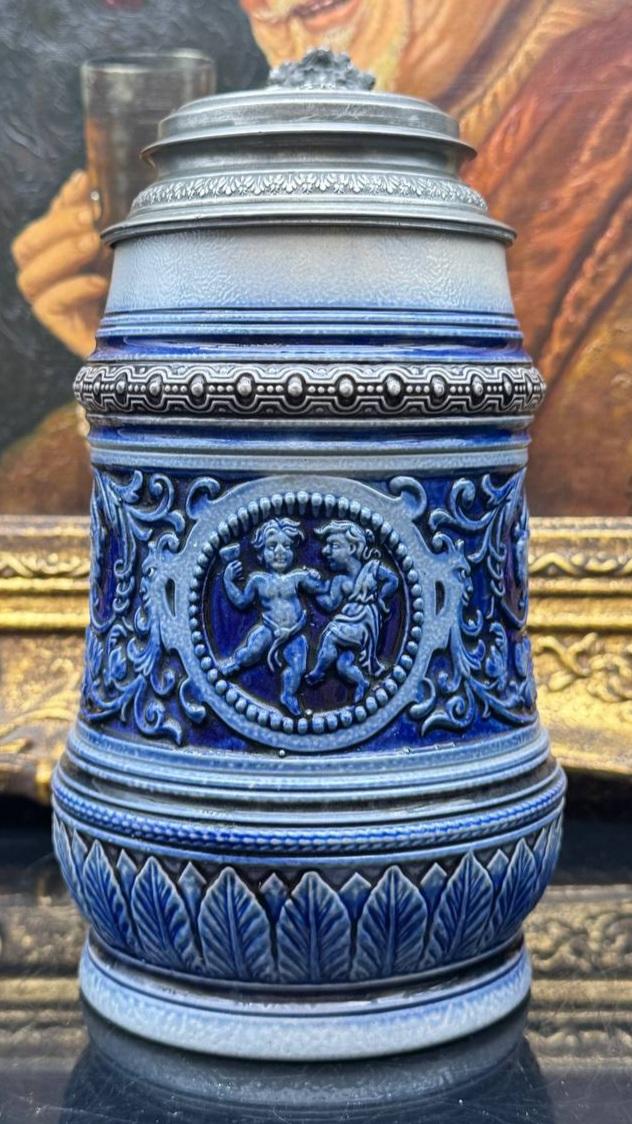
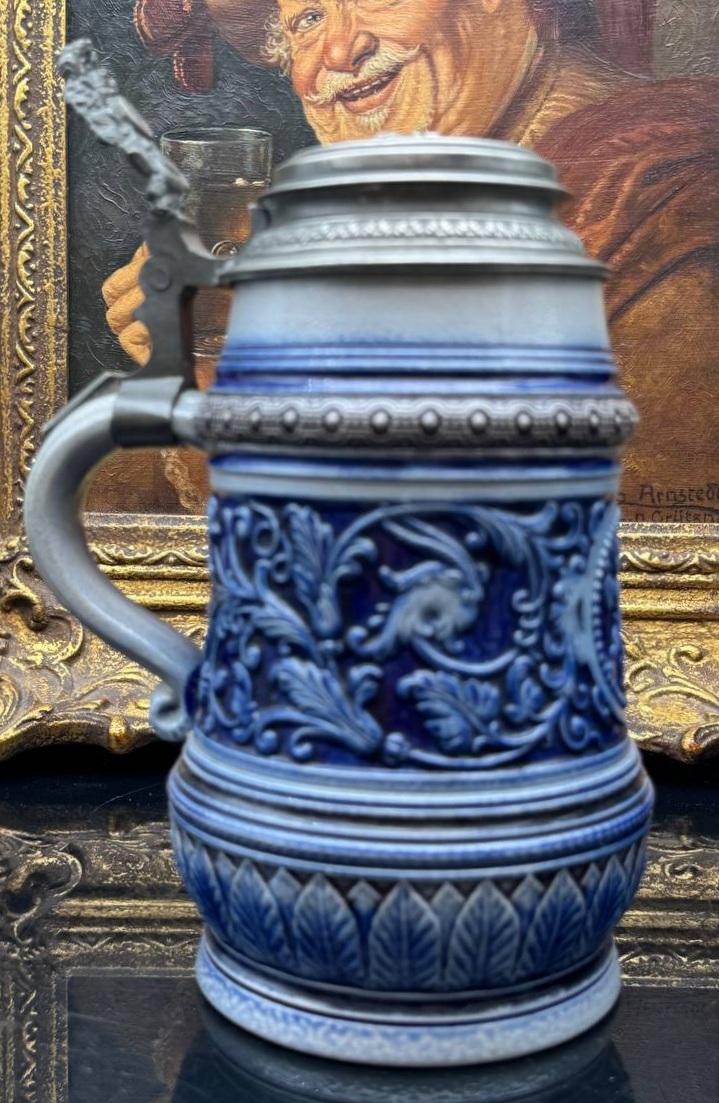
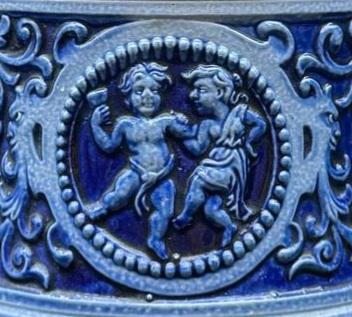
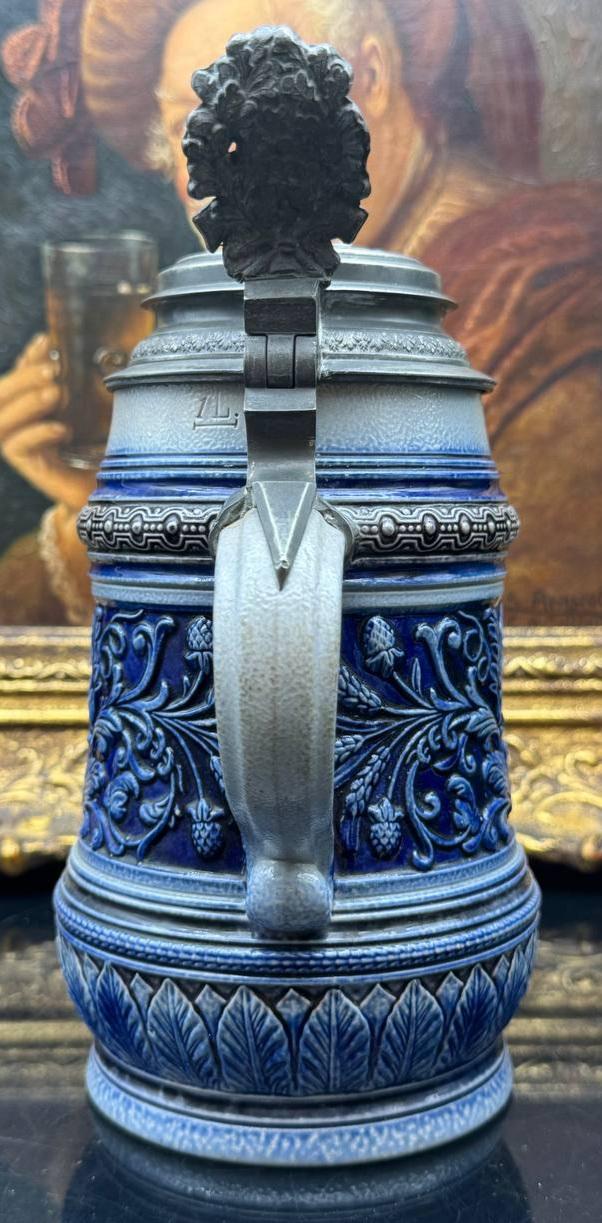
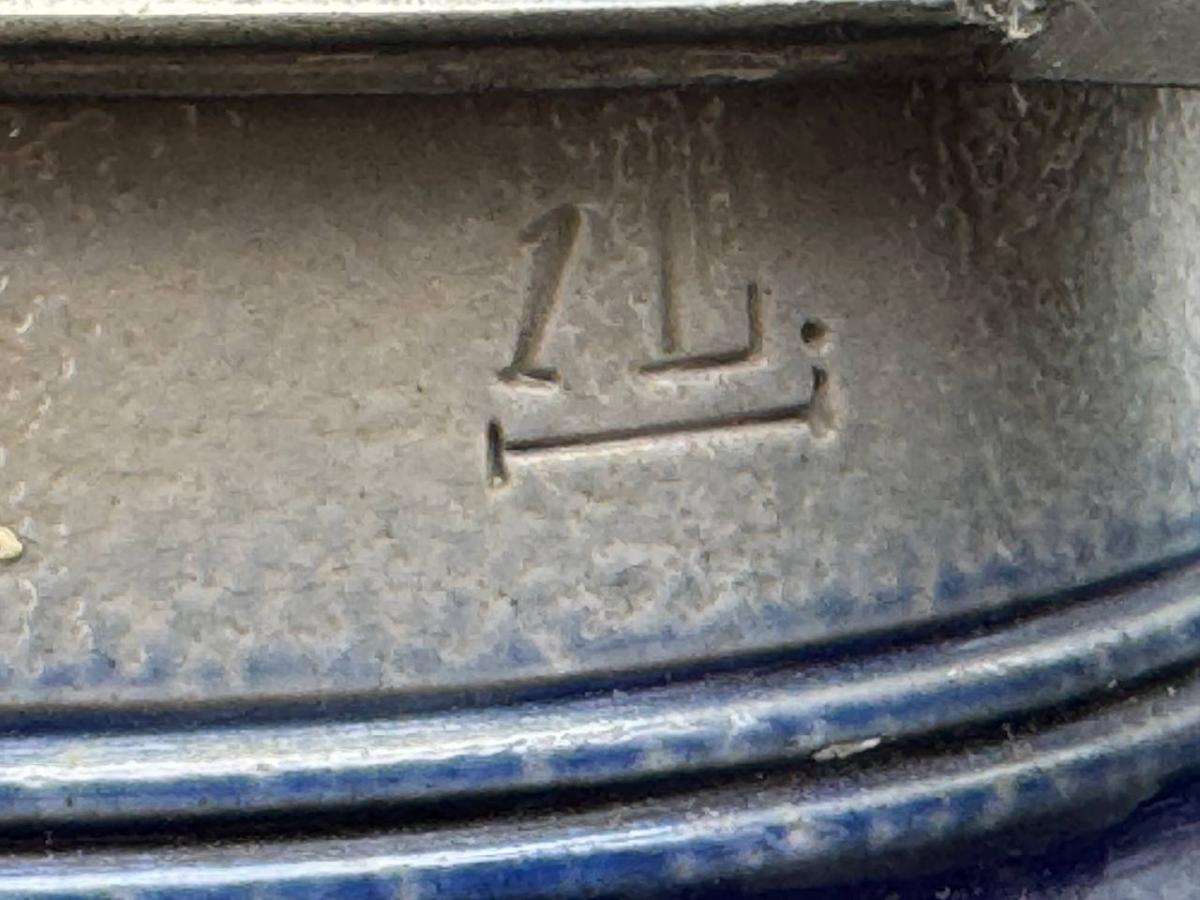
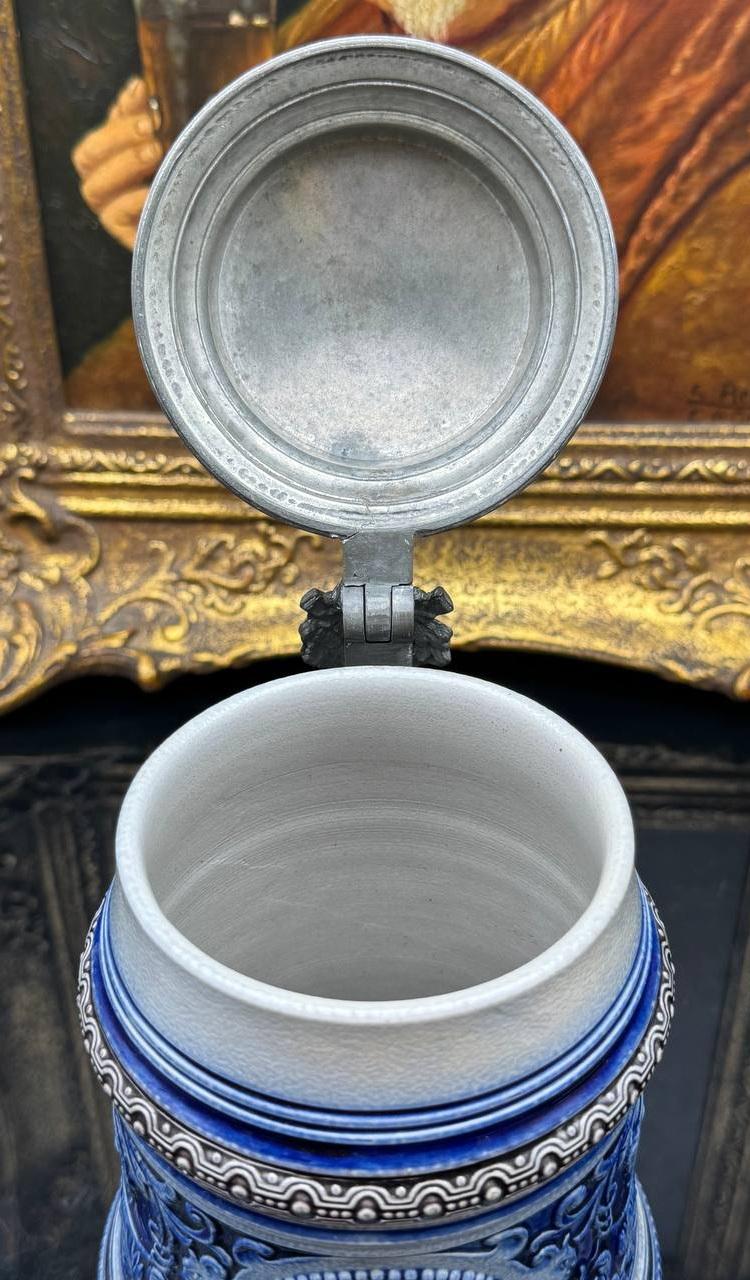
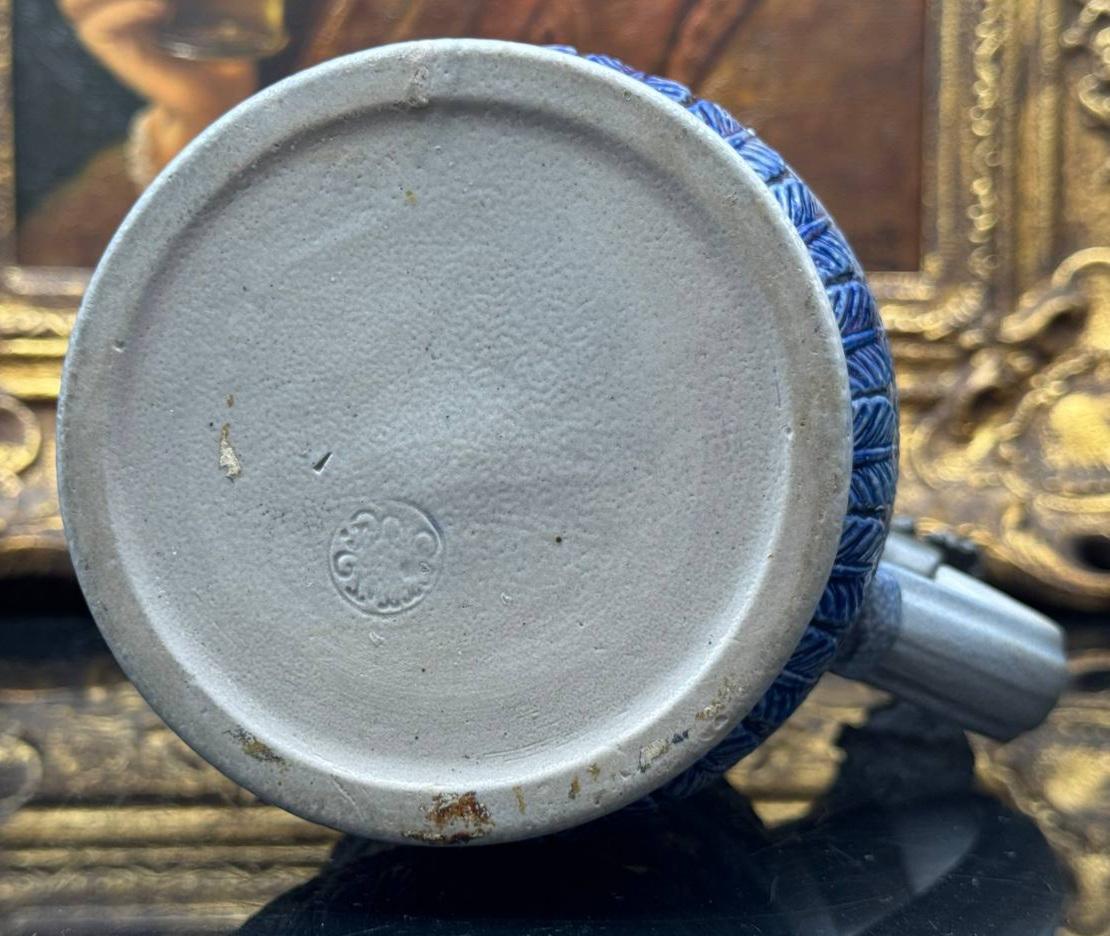
Vintage large beer mug "Dancing children". The capacity of the mug is 1 liter, the height is 23 cm. The mug was made at the Merkelbach manufactory. & Wick in the period 1879-1881. In the Merkelbach finished product catalog & The Wick mold of this mug model has the number 253.
Merkelbach Factory & The Wick pottery company, as well as the tin industry, were founded in Grenzhausen in 1872 by Friedrich Wilhelm Merkelbach II (1840-1896) and the sculptor-fashion designer (Johann) Georg Peter Wick (1837-1914). Based on the fact that the factory managed to develop about 30-40 new forms of beer mugs per year, it can be assumed that form number 253 could have been developed between 1879 and 1881.
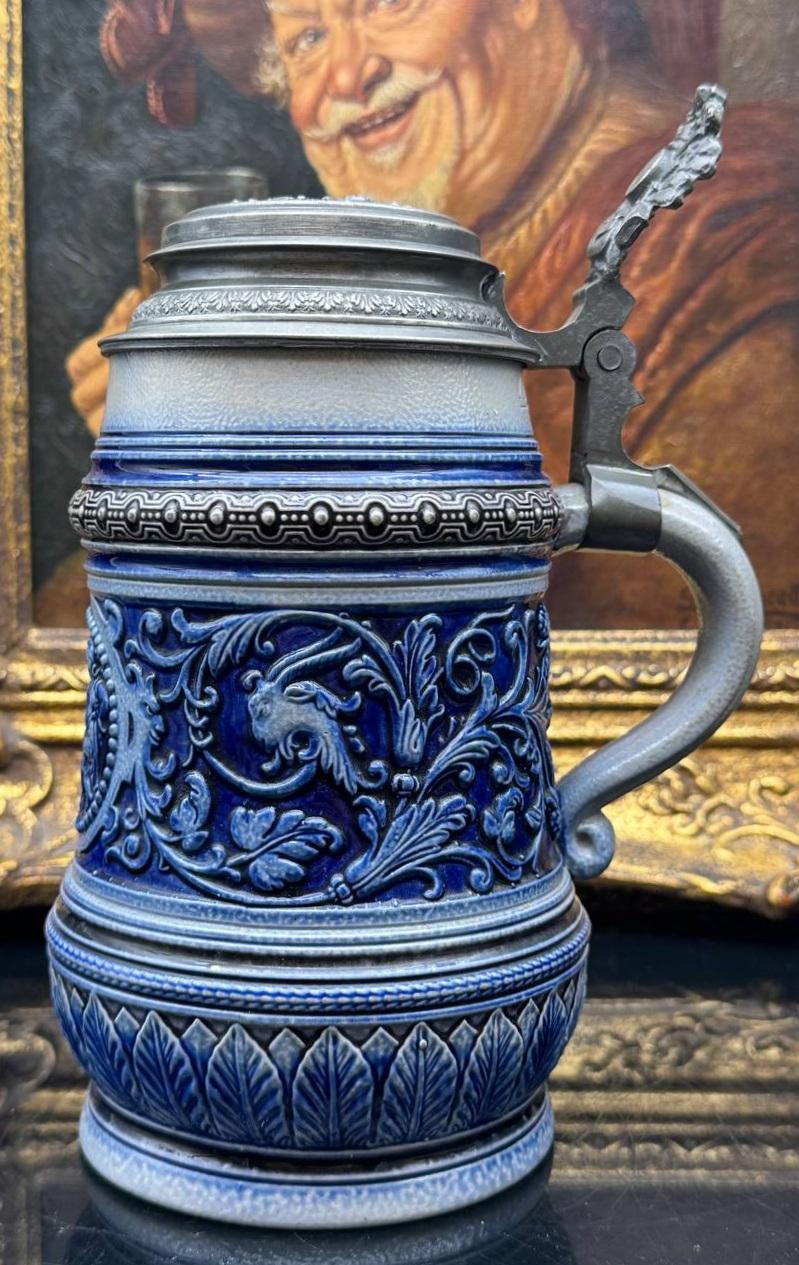
The mug is made of high-quality ceramics (stone mass) by the method of salt glazing, typical for the German region of the westerwald (Western Forest). The design uses a classic combination of a gray background and a deep cobalt blue color. The body of the product is decorated with relief ornaments and a central round medallion depicting cherubs or dancing children. The lower part is complemented by a textured pattern in the form of stylized relief leaves. The sides of the mug are decorated with a floral pattern with a capricorn head facing the central medallion with dancing children. The image of a goat (German bock) in German beer culture means a special dark strong beer variety bokbier (German bockbier). The image of a goat applied to a beer mug means that such a mug was made for drinking bokbir.
Beer of this style originated in the 14th century in the Hanseatic city of Einbeck in northern Germany. It was very dense so as not to deteriorate during transportation. In the 17th century, the brewers of Munich adopted the recipe.
Due to the peculiarities of the Bavarian dialect, the locals began to distort the northern name "Einbeck" and pronounce it as "ein Bock", which by ear absolutely coincided with the German expression "one goat". Over time, the cumbersome name was shortened to the laconic Bockbier.
Brewers quickly picked up on this pun, and since then the goat has become a permanent symbol of this style. His image almost always adorns labels, advertising posters and collectible mugs.
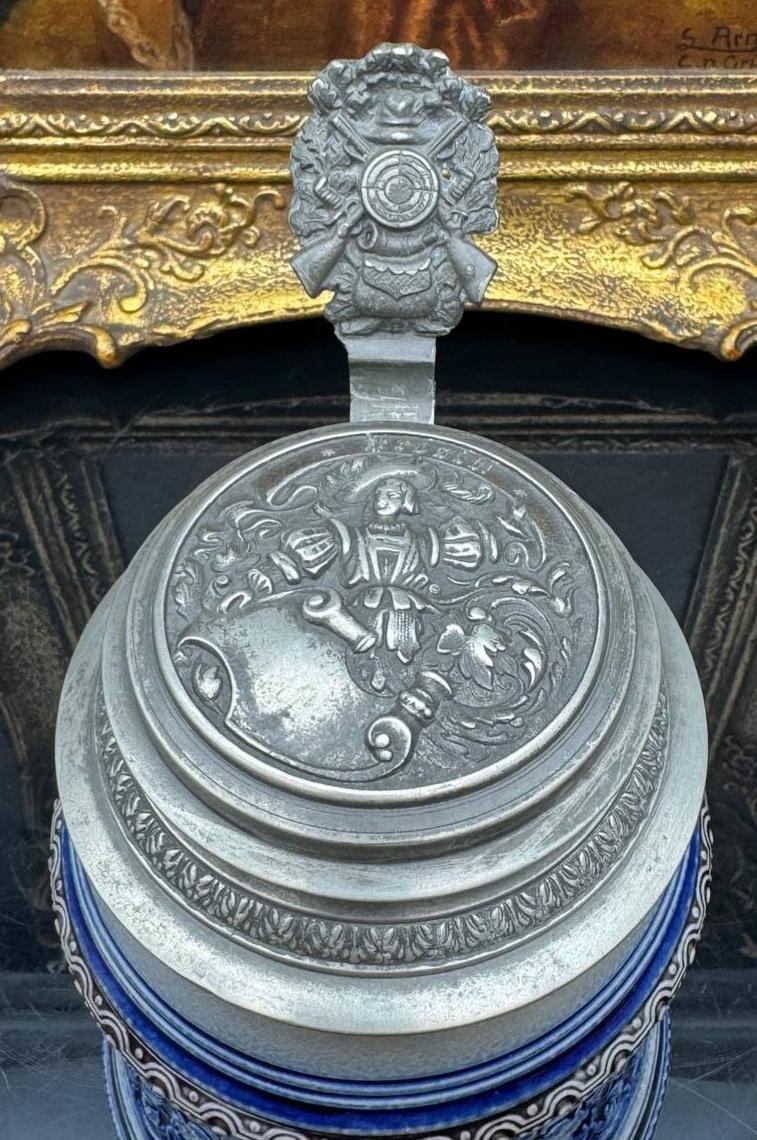
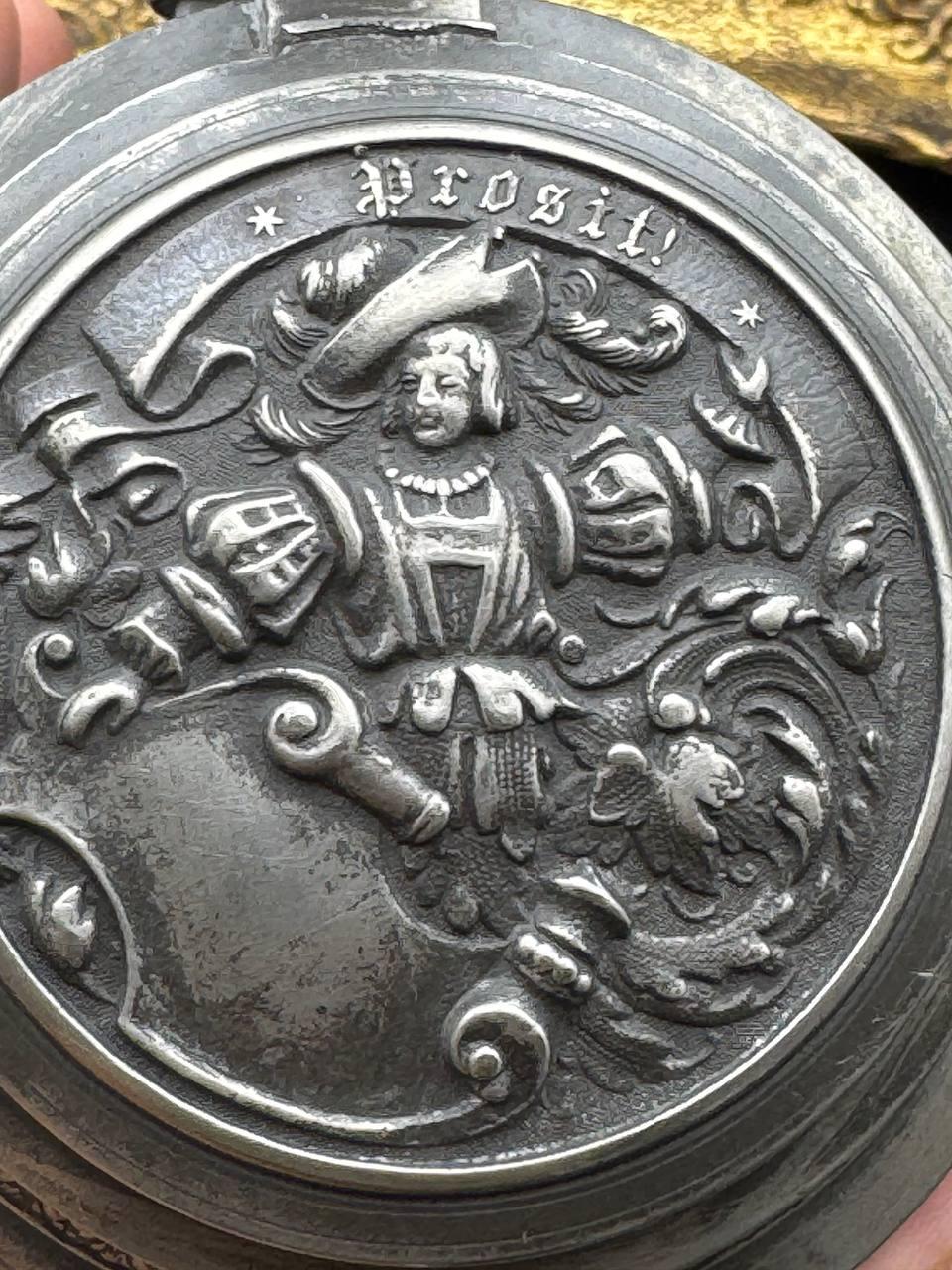
The mug is equipped with a massive pewter lid with an embossed pattern. It depicts a German Landsknecht in a distinctive historical costume with feathers on his hat and puffy sleeves, raising a glass to toast. Above the head of the landsknecht, the word "Prosit!" is visible on the tape. This is a Latin word that is used in German culture as a toast and translates as "Your health!", "Let's be healthy!" or "For your well-being!". It is the basis for the more popular colloquial German word "Prost!".
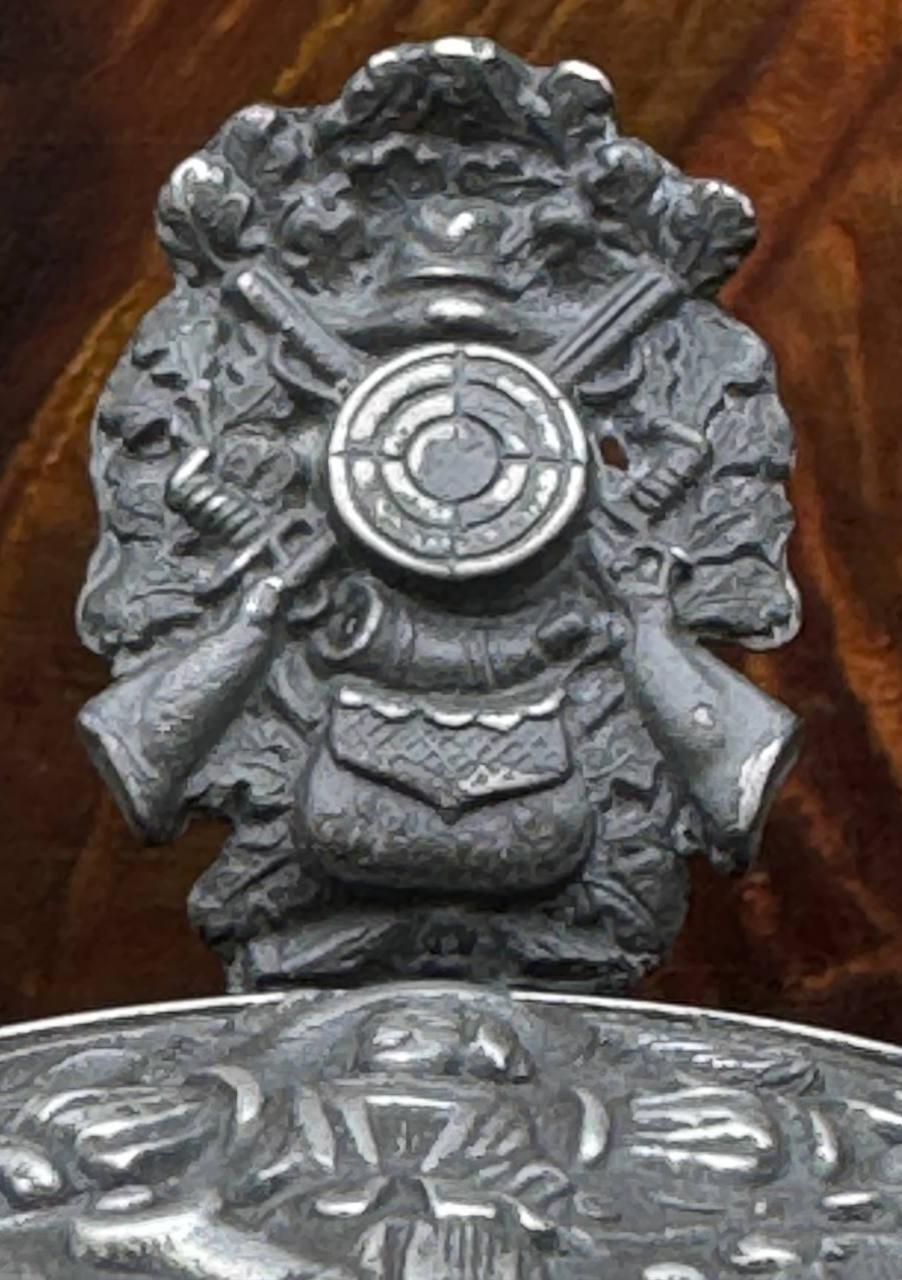
The lever of the lid lifting mechanism is designed in a special way. It is decorated with traditional hunting symbols: a target for shooting rifles, behind it two crossed rifles, from behind which the handles of knives stick out. A hunting hat is visible above the target. A hunting bag is placed below the target. All this furniture is surrounded by oak leaves. Such an exquisite decoration of the lid may indicate that this mug was a gift to a very high-status hunter.
[link]
View the collection of Paulo Vik Falcon
 Producer info
Show items by producer Merkelbach & Wick

Comments (0)
Log in to add a comment.