


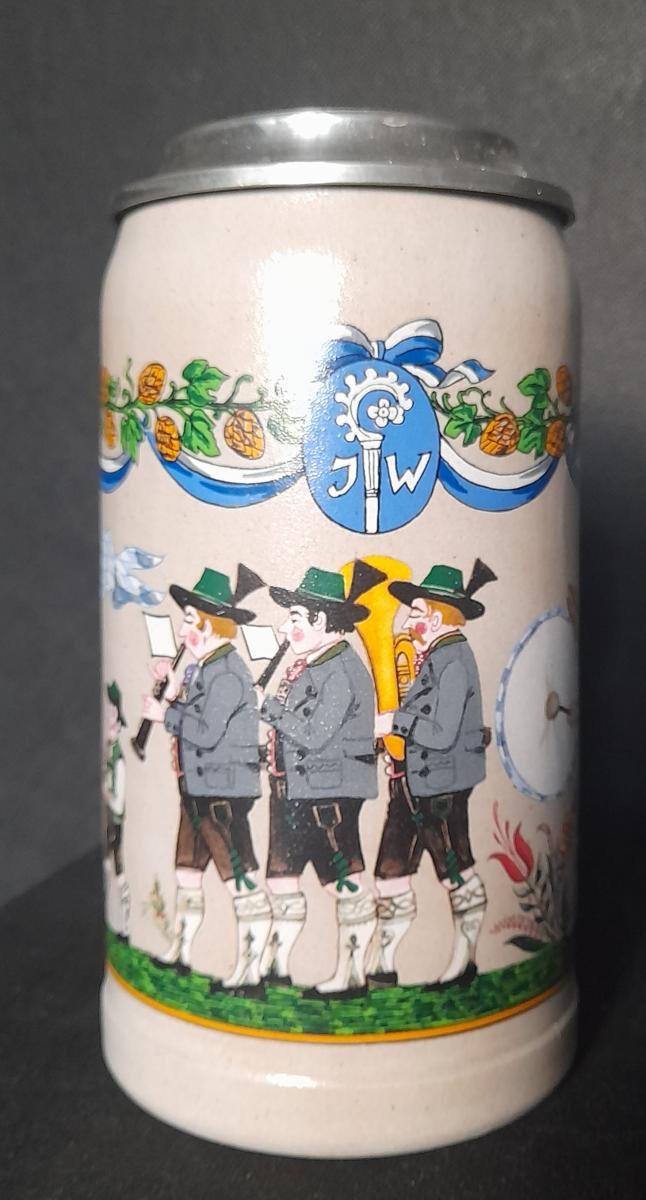
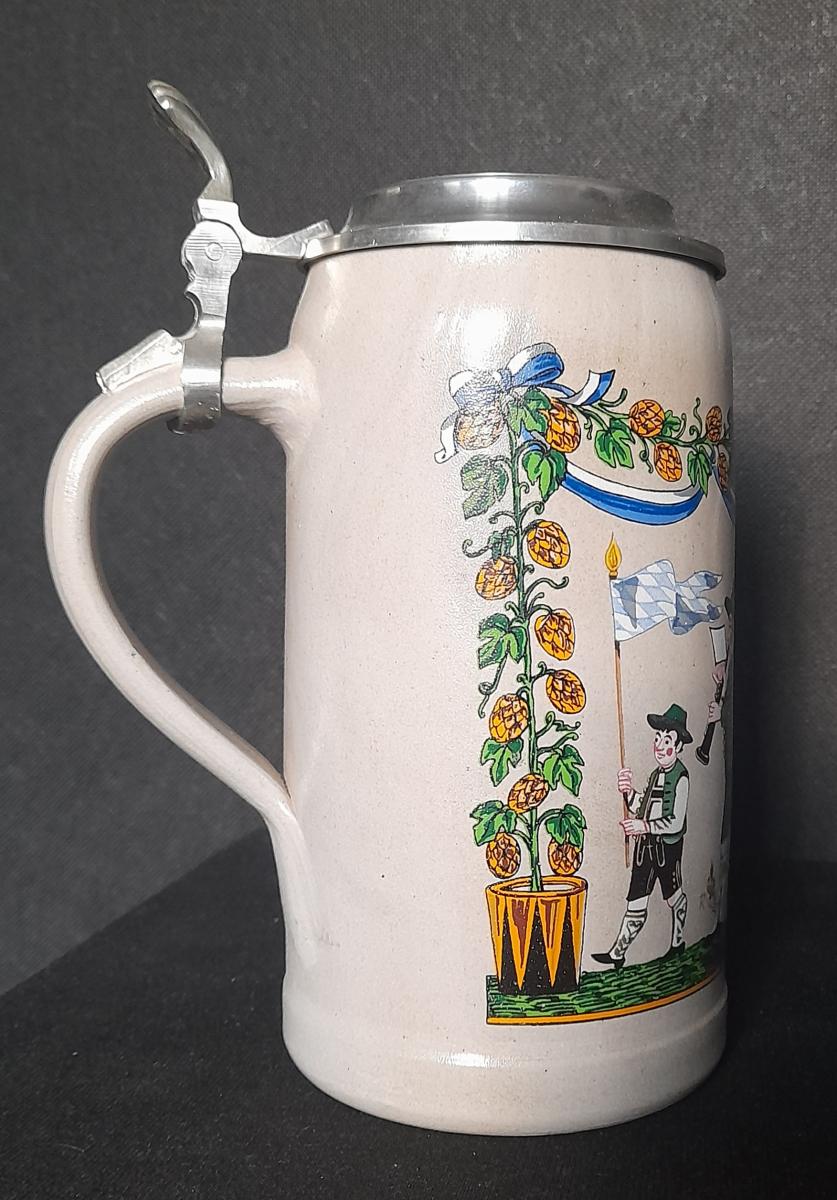
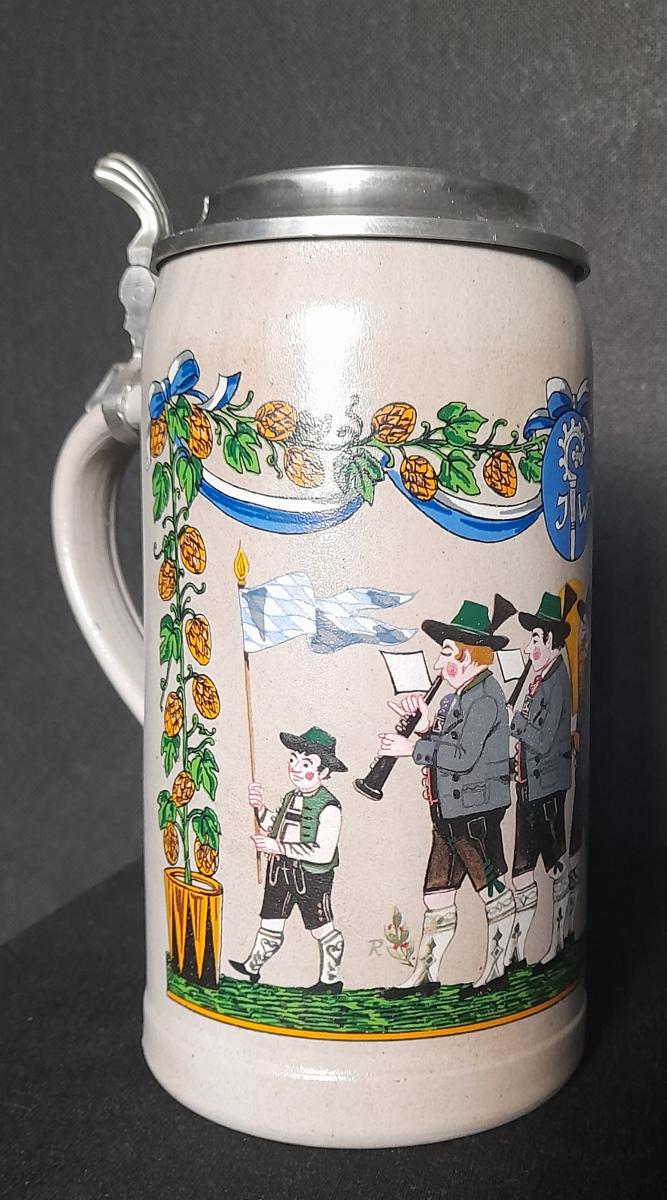
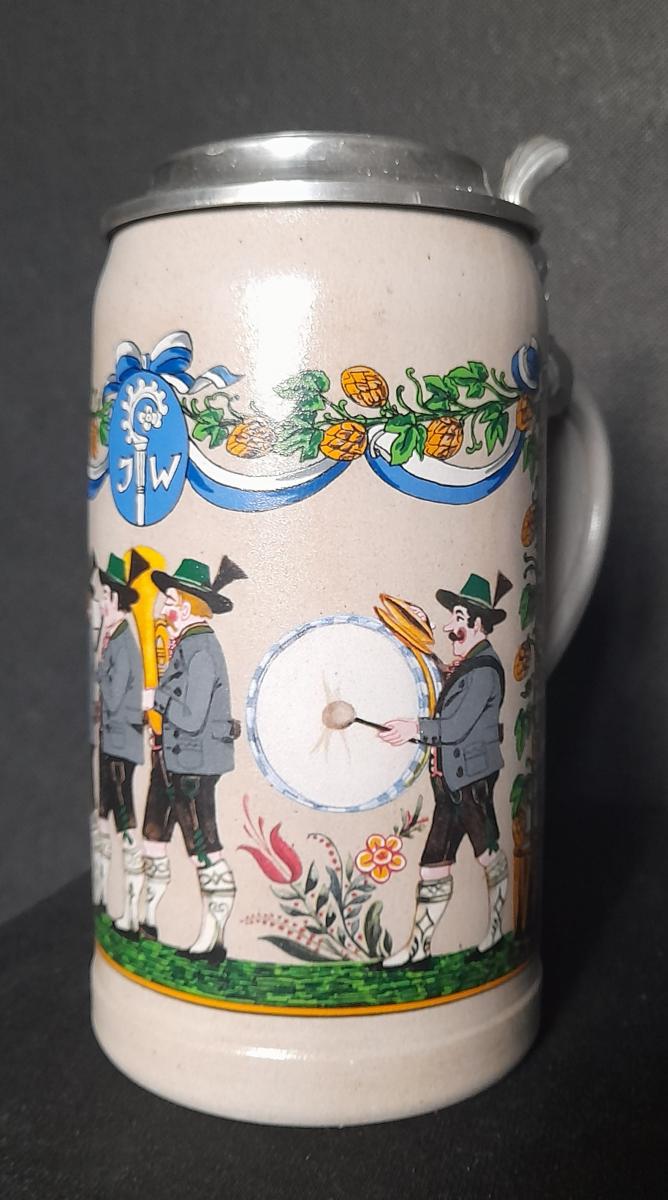
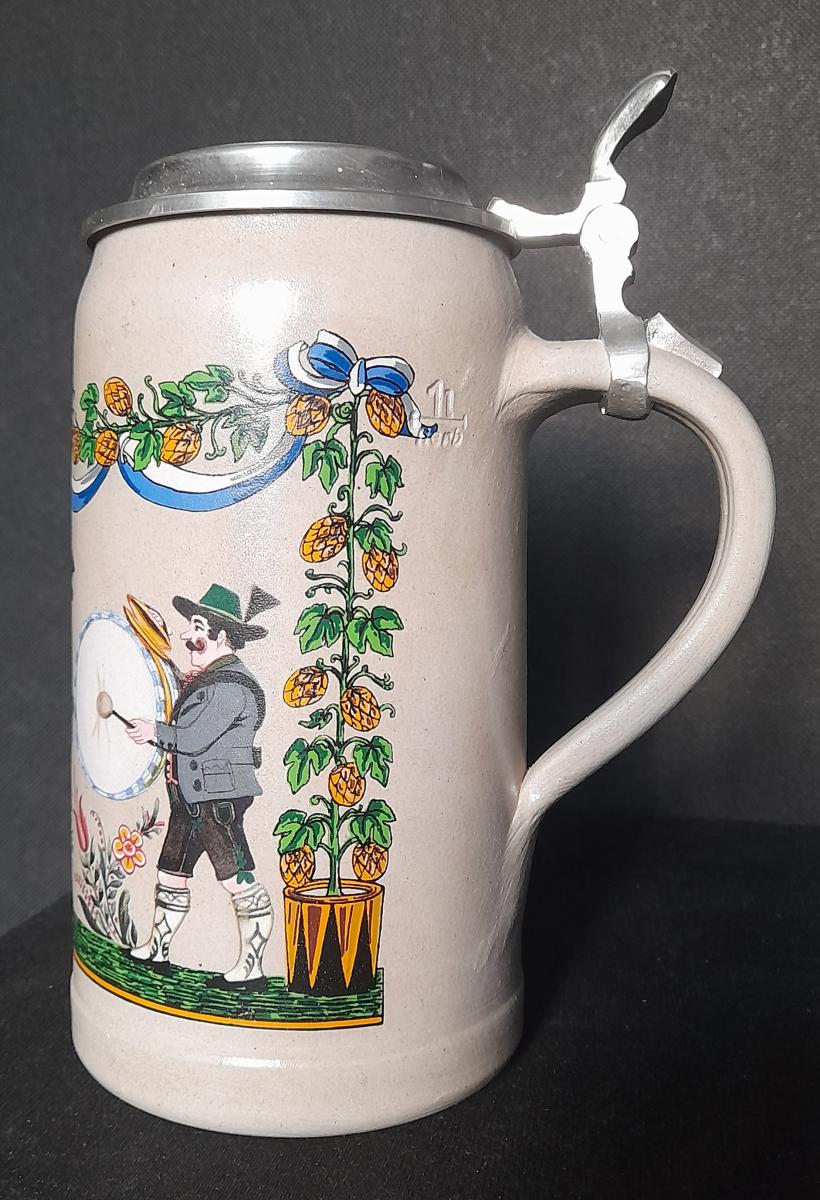
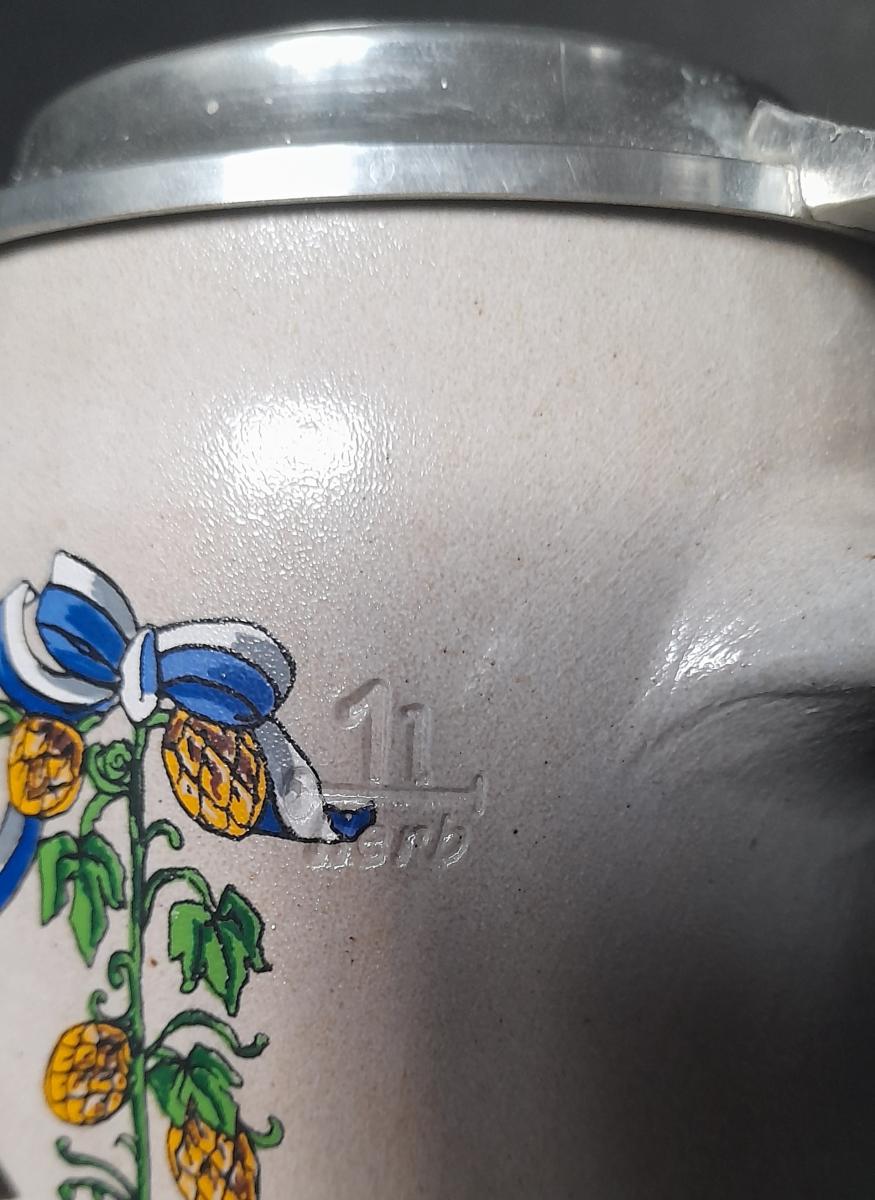
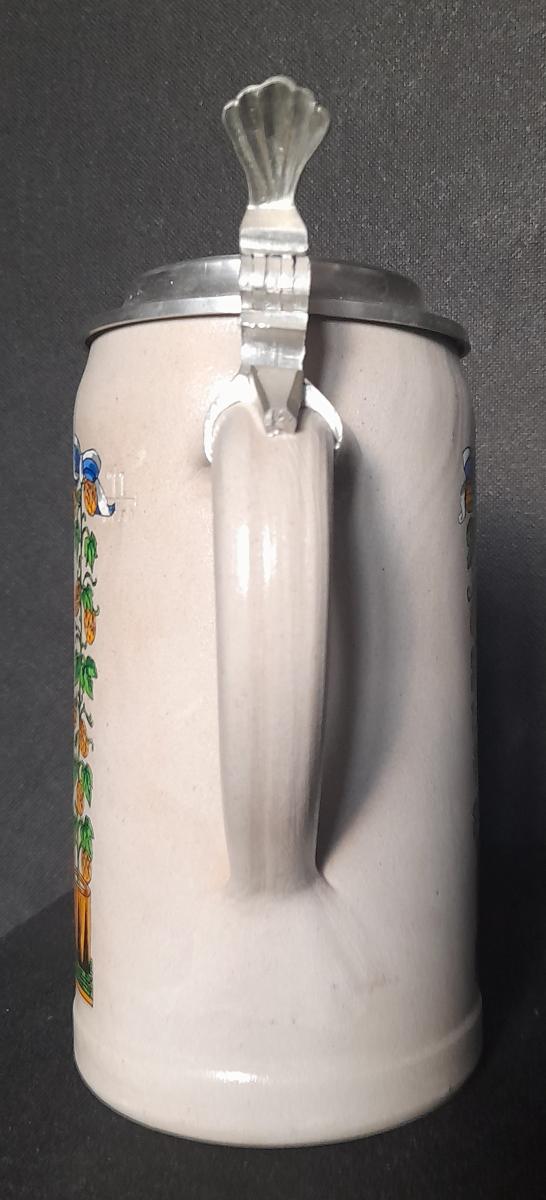
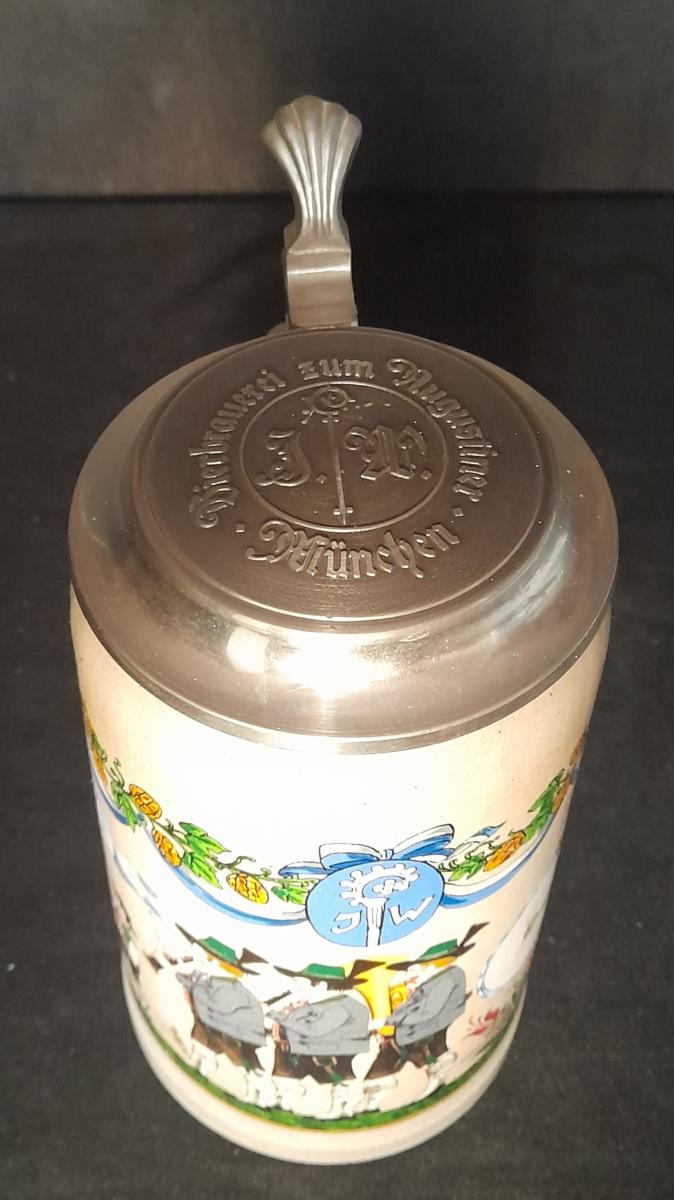
Beer mug from Franz Herb "Augustiner-Bräu. Oktoberfest 2004".
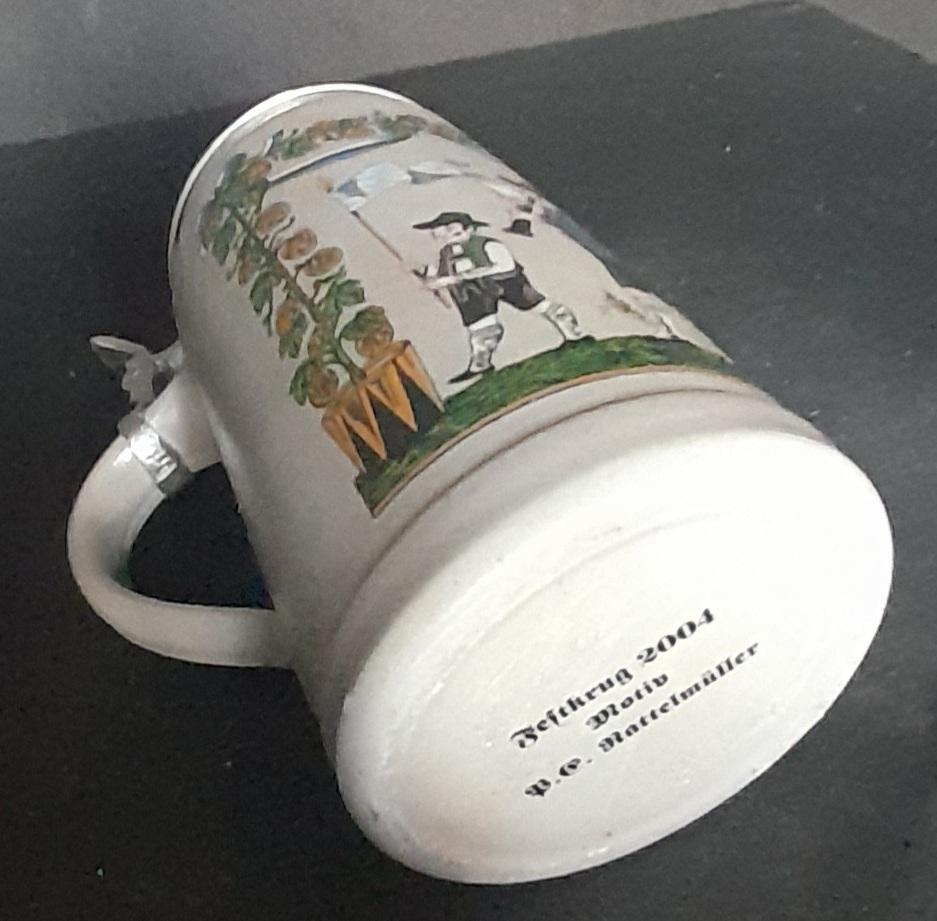
The mug depicts the traditional Bavarian scene of the opening ceremony of Outerberfest — musicians in national costumes (lederhosen and Tyrolean hats) participating in a festive procession.
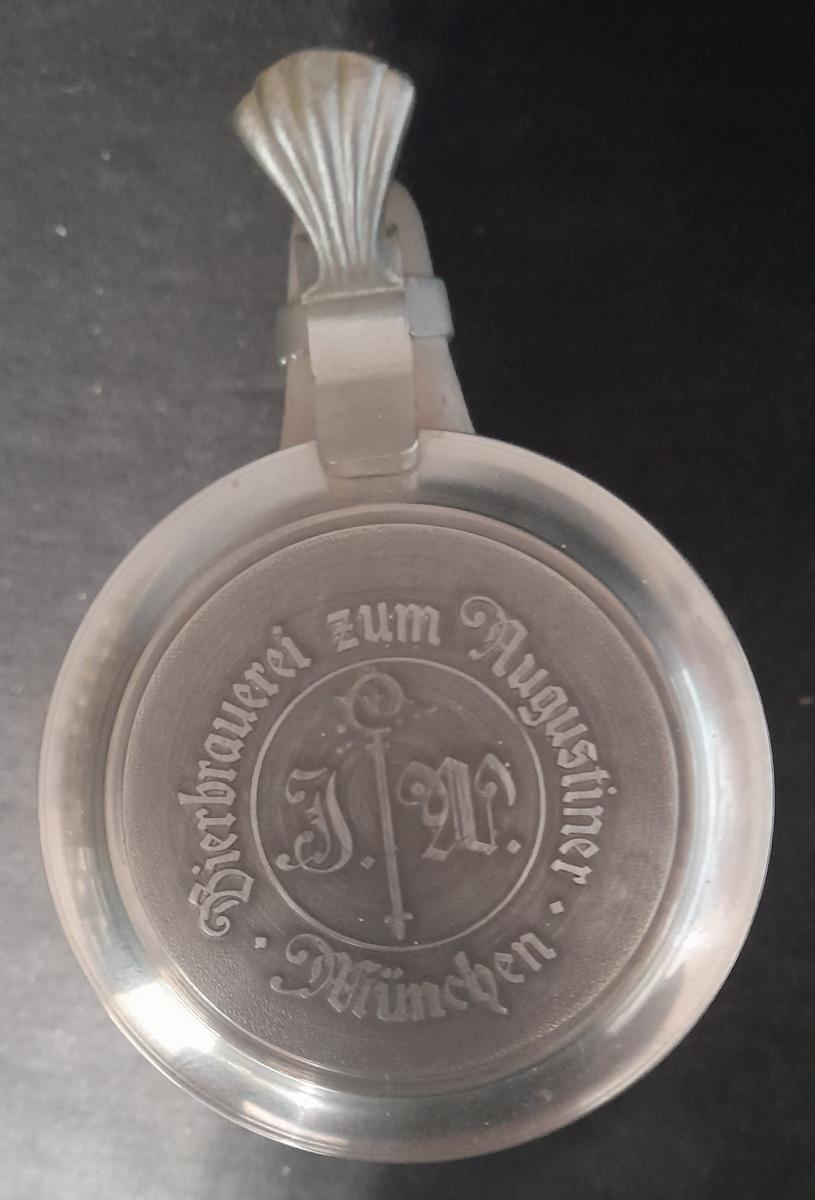
At the top is the brewery's logo with the letters JW (in honor of Joseph Wagner, whose family owned the brewery) and the abbot's staff, framed by garlands of hops.
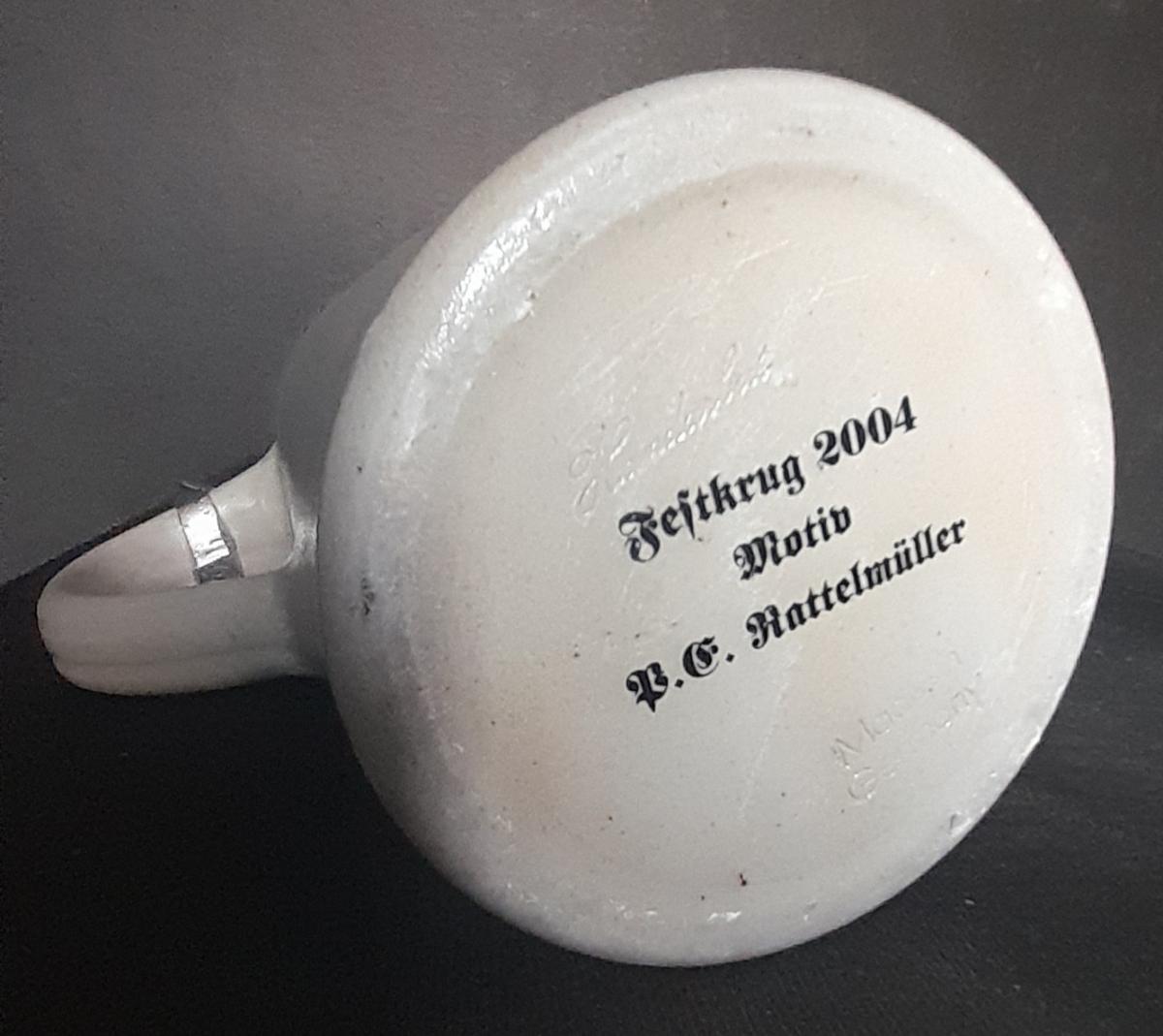
There are inscriptions at the bottom of the beer mug, allowing you to learn its history. "Festkrug 2004" indicates that this is a "festive mug" (German: Festkrug), released for a specific event in 2004. In Germany, such mugs are often released in limited editions for annual festivals such as Oktoberfest.
The inscription "Motiv P.G. Rattelmüller" indicates that the design of the mug motif was developed by P.G. Rattelmüller (Paul Ernst Rattelmüller). He was a renowned Bavarian researcher of folk traditions, writer and artist, whose work was often used to decorate traditional German tableware. The pewter lid of this festive beer mug features the symbols of Munich's oldest brewery, Augustiner-Bräu. In the center is the coat of arms of the brewery, adopted in 1887. It includes the letters "JW" in honor of Joseph Wagner and a stylized abbey staff, referring to the founders, the Augustinian monks. The text in German is visible on the edge of the lid: "Bierbrauerei zum Augustiner München". Translated from German, it means: "U Augustinets Brewery, Munich".
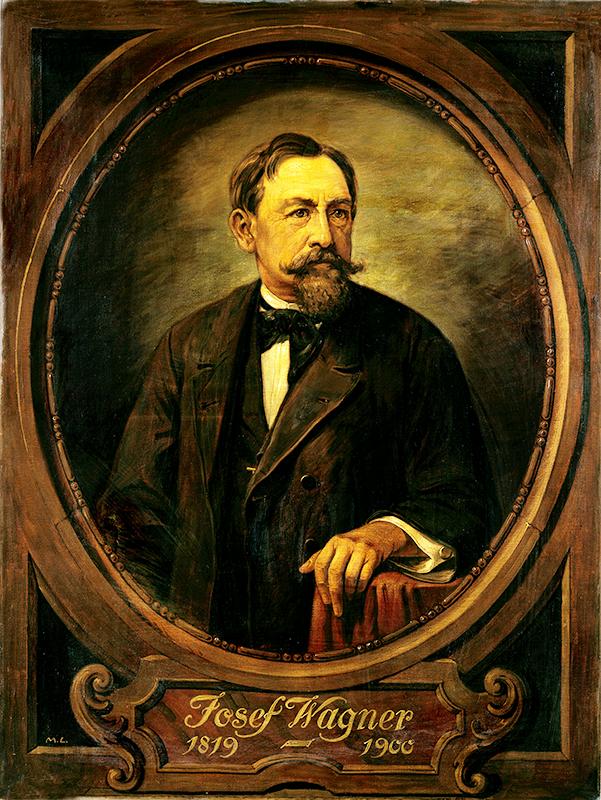
Joseph Wagner (born on 23 September 1819 in Munich ; died on 21 October 1900 in Munich. Its initials JW are still part of the trademark and logo of the Augustine brewery. Joseph Wagner was the son of Anton Brewers and Teresa Wagner from Atting near frying (brewery suburb Munich). After the end of the Royal gymnasium Ludwig I in Munich Joseph Wagner studied at Munich technical University and the Brewery Academy of Wyenstein in Freising. In 1841 he became a member of the Bavarian Corps Munich.
In 1829, his parents acquired the augustiner-Bräu brewery, which after secularization in 1803 was no longer managed by the August monks. Joseph Wagner's father died in 1845. However, only after his mother died Teresa in 1858, Joseph Wagner inherited the brewery.
He greatly expanded his business and turned it into a big brewery. To expand production capacity in 1862 he acquired the Augustine Keller beer cellar at Arnulfstrasse as a warehouse space. There was a beer Hall in the Hall and garden where Munich residents arranged noisy parties. The Augustine beer tent is mentioned at the Oktobberfest since 1867. In 1883 Wagner moved the brewery to its current location on Landsbergerstrasse. In the former place in Noahauserstrasse, he instructed the architect Emanuel von to come to build a prestigious restaurant building in 1896. Joseph Wagner and his brewery Augustine were one of the founders of the Bavarian Association of Brewers, created on July 15, 1880. He died in Munich in October 1900. His sons Richard Wagner (who was a member of the leadership since 1890) and Max Wagner inherited his powers as the leaders of the brewery company.
The mug is made at the Franz Herb factory.
The history of the company's development.
1920 - Franz Herb founded the company on Ligzalzstrasse in Munich.
1930 - relocation and expansion of the enterprise to Nymphenburgerstrasse.
1943 - World War II: the factory building was destroyed by bombing.
1949 - reconstruction at the old location: Emil and Frida Gensthaler run the company.
1972 - transfer of the entire production to the city of Puchheim.
1978 - Franz and Peter Gensthaler join the company as partners.
1995 - fully automatic sticker production is put into operation.
1998 - the introduction of an automated production system.
2008 - expansion of the logistics center.
2013 - The direct printing department is reinforced with another fully automatic 8-color machine.
2015 - the launch of innovative digital ready-to-print products.
2016 - Sixtus Gensthaler, a representative of the next generation of the Franz Herb family, joined the management of the company.
2018 - A computer-controlled heat recovery system was installed in the company's own silkscreen printing. The result: energy savings in this area amount to about 60%.
2019 - successful further development and implementation of a modern ERP system as the basis for Industry 4.0.
2020 - Florian Gensthaler joins the company in the jubilee year.
2024 - the most advanced "Made in Germany" screen printing on the market is put into operation. Source of information on the link: [link]
The Franz Herb factory produces ceramic and glass mugs with the logos of large breweries by order of the distributors of these breweries. At the same time, the company is engaged in the design development of new forms of glass wine glasses and ceramic mugs for drinking beer. See the link: [link]
View the collection of Paulo Vik Falcon

Comments (0)
Log in to add a comment.