


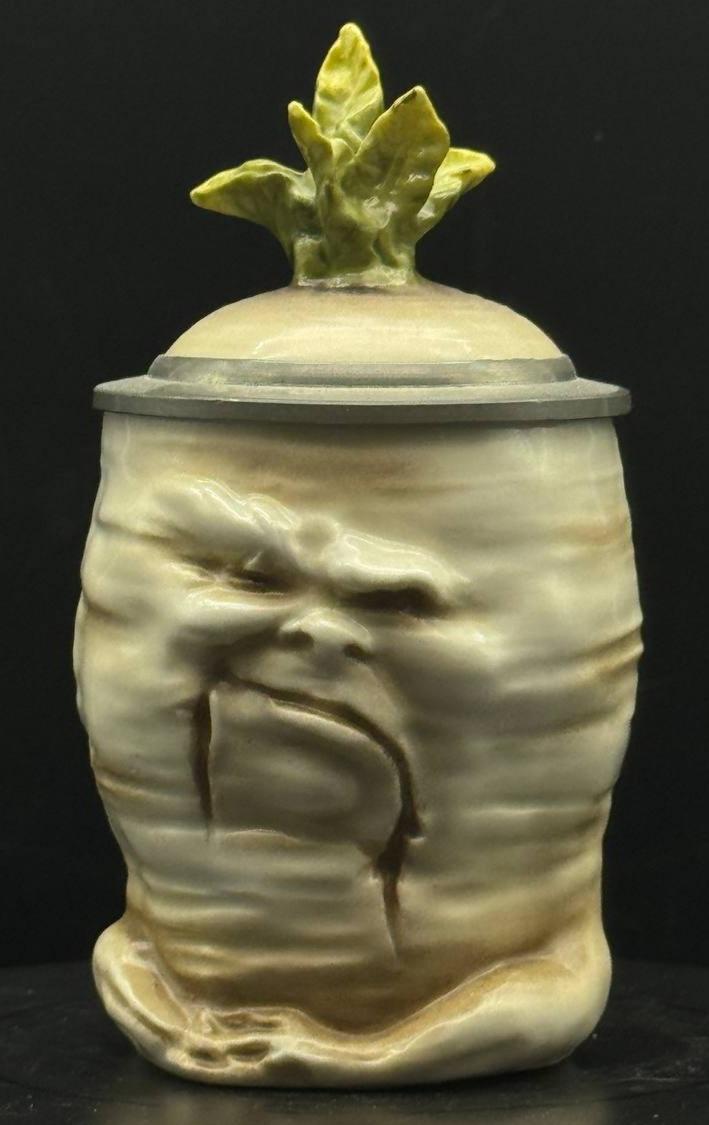
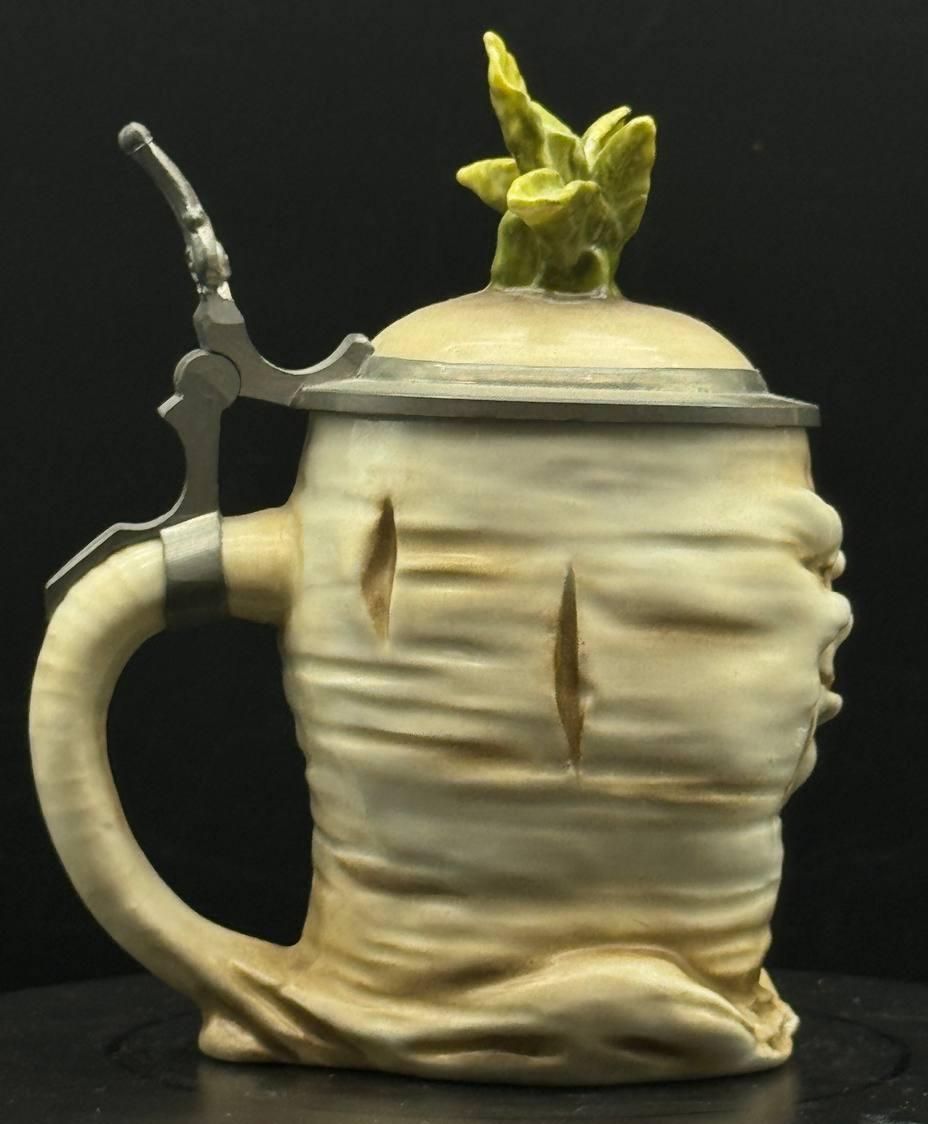
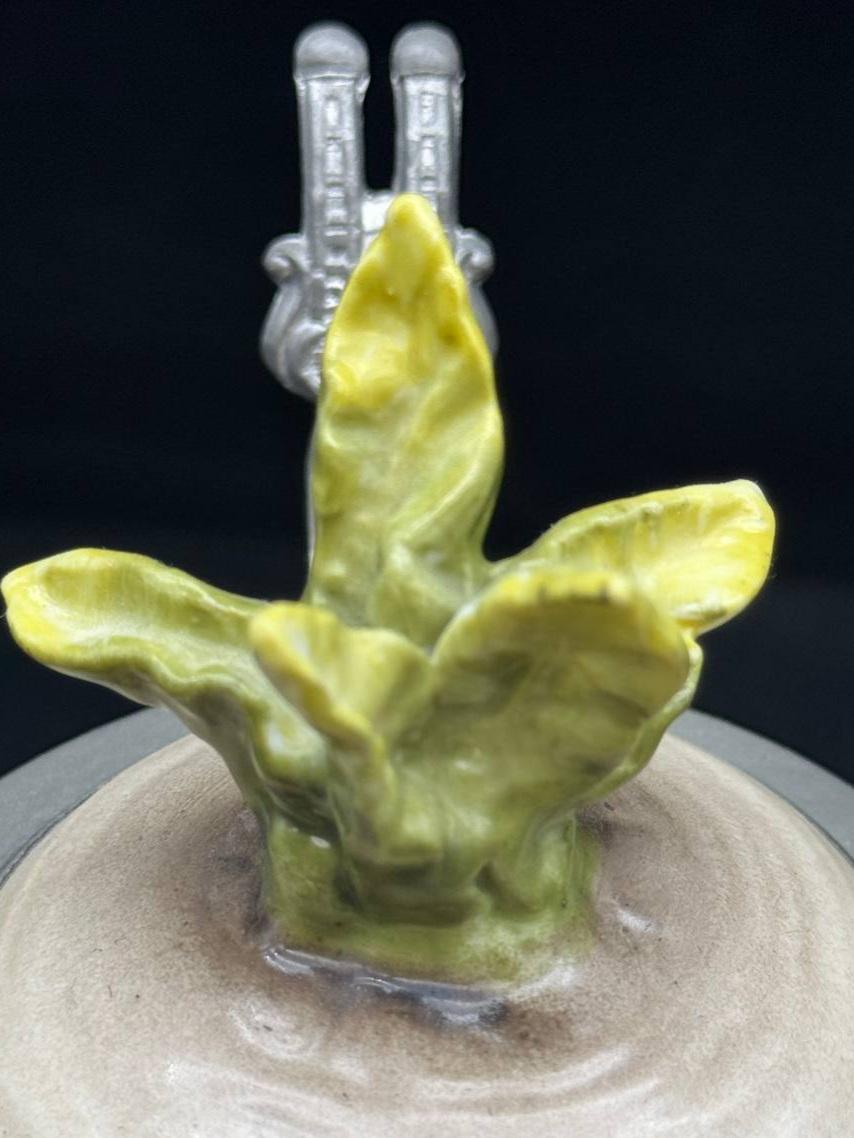
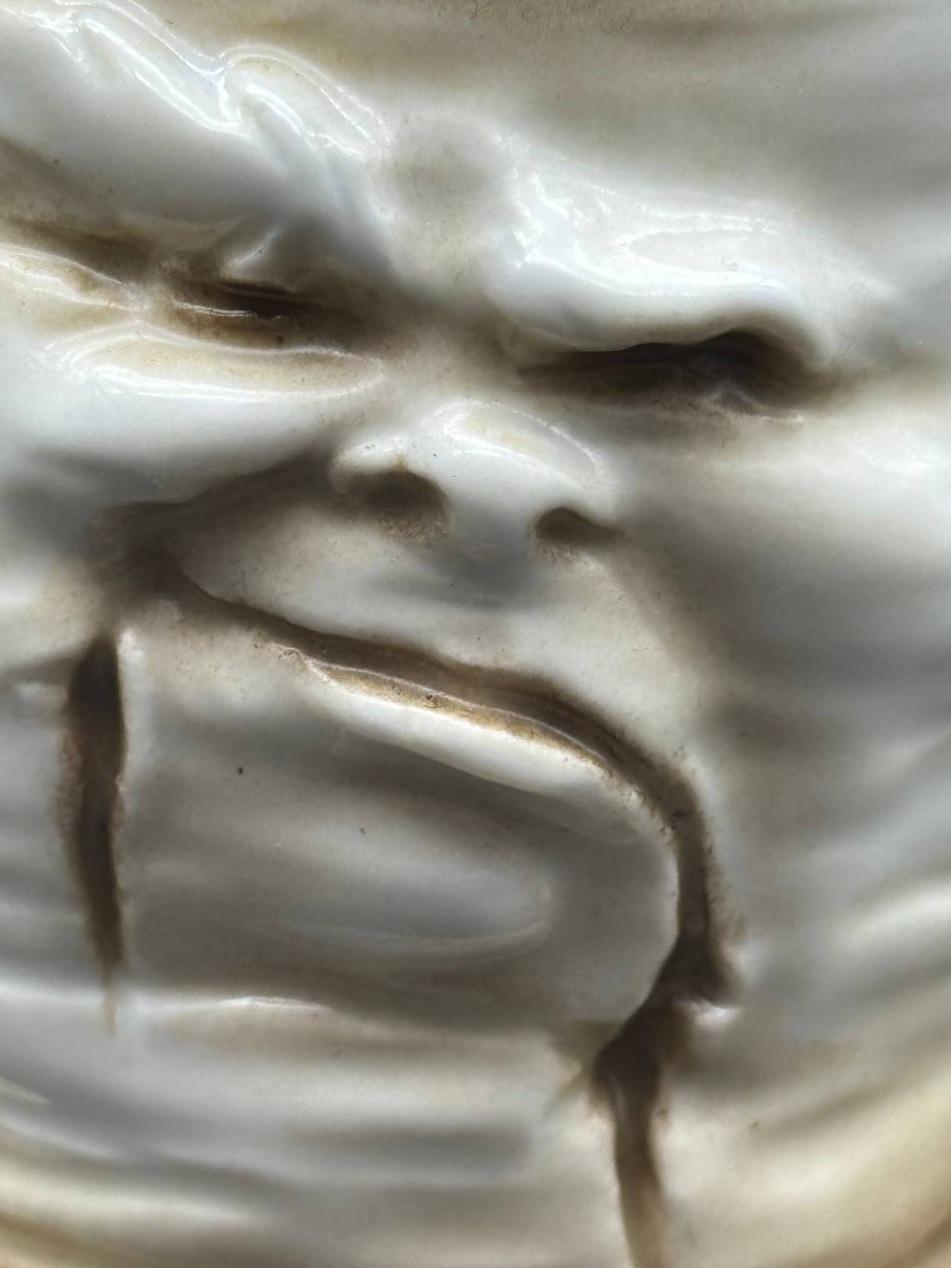
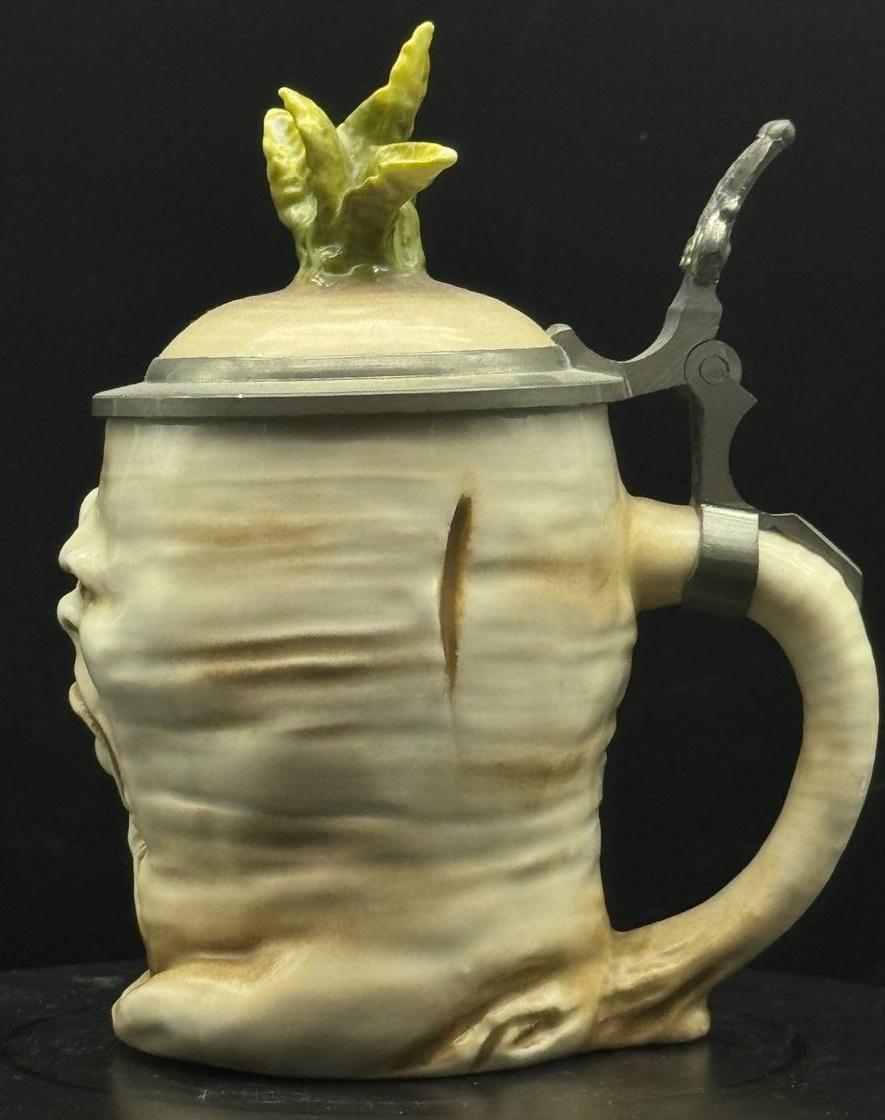
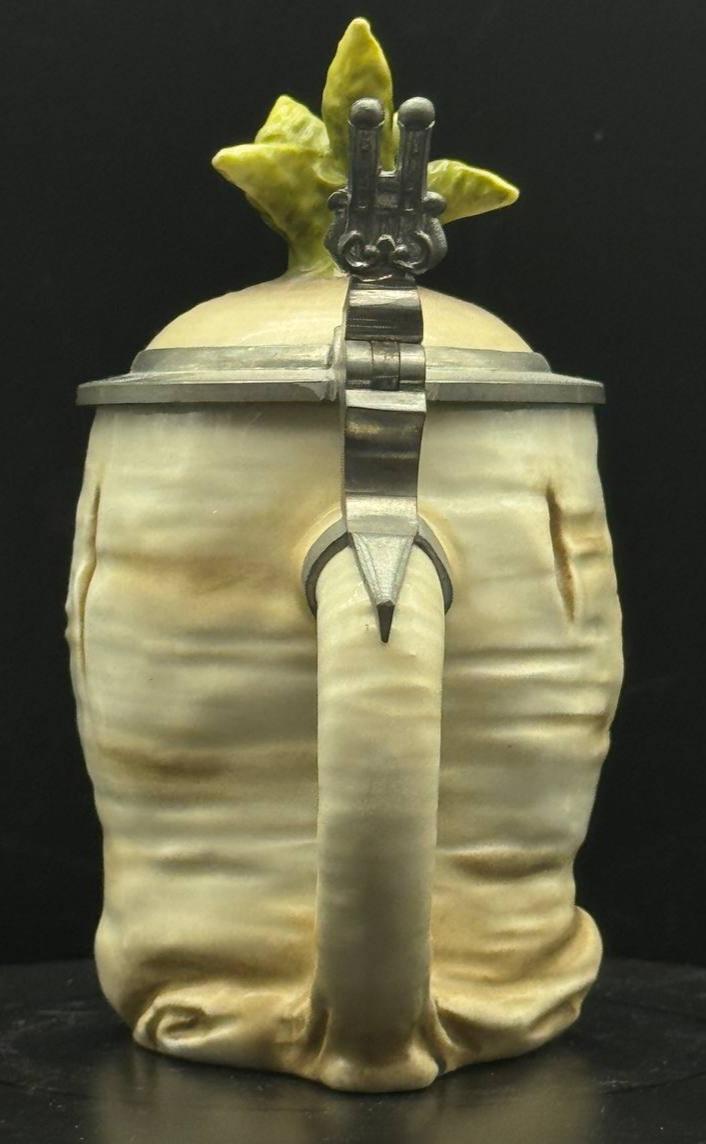
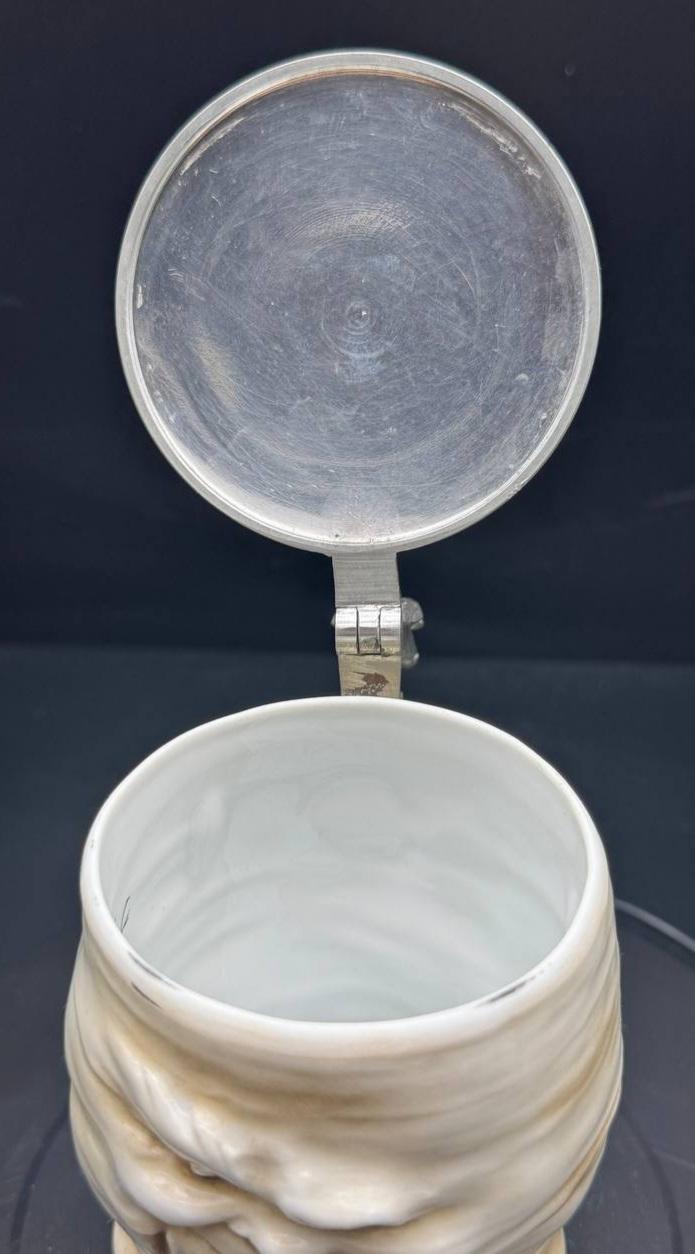
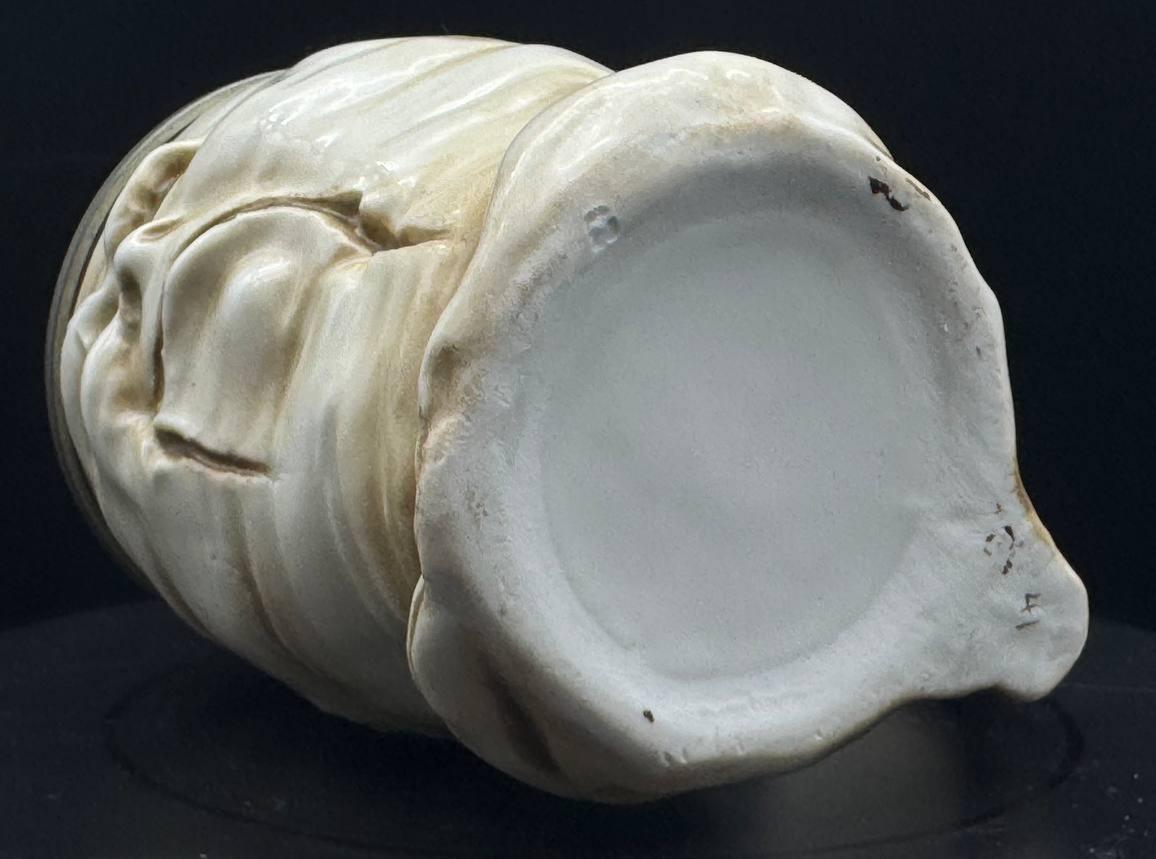
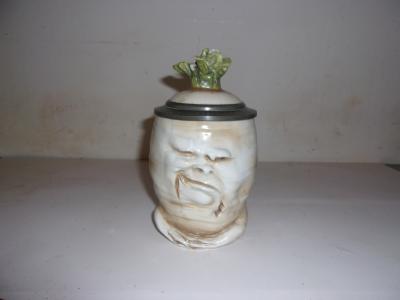
Stein Schierholz #8 "Sad Radish".
A video about this mug can be viewed at the link:
[link]
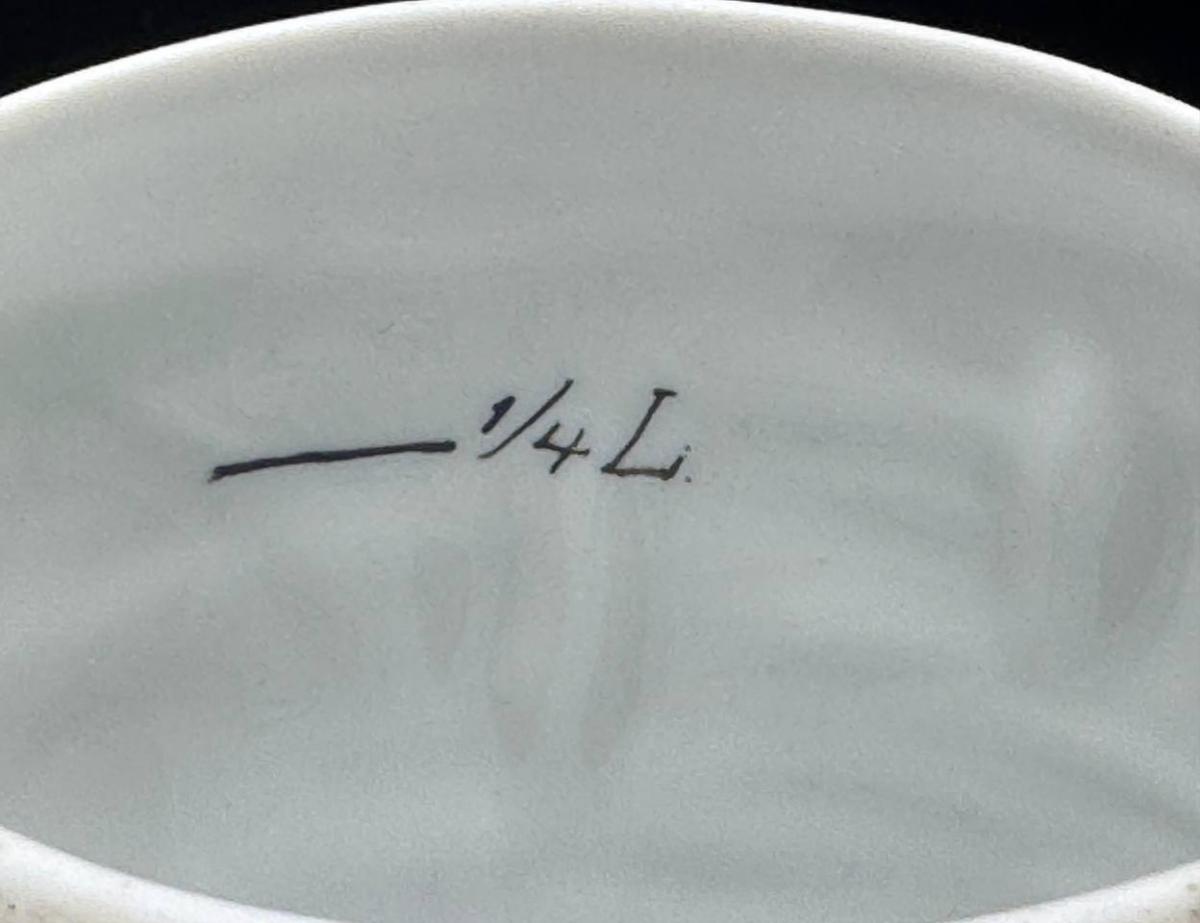
The antique figured porcelain beer mug "Sad Radish" was made in the years 1887-1890 at the legendary German factory Schierholz & Sohn. The capacity of this mug is 1/4 liter (0.25 liter). The height of the mug, taking into account the lid, made in the form of an aboveground part of the root crop, is 16 cm. In the catalog of products of the Schierholz & Sohn porcelain factory, the mold of this mug is registered under the number 8 with the name
"Trauriger Rettich", translated from German as "Sad radish".
Large white radish has long been considered a favorite addition to beer in the Bavarian Alps. This product has even become one of the elements of the main symbol of the city of Munich in the form of a boy in a monk's habit with a mug of beer and a radish in his hands. For this reason, radishes have become a popular element in various decorations of Bavarian beer mugs.
The masters of the Schierholz & Sohn manufactory were the first to humanize the white radish root crop, giving it characteristic facial expressions. The sad expression on his face is explained by the fact that the radish, once on the table, understands the proximity of its end. It makes anyone sad. However, soon after the beer party begins with songs and jokes, radish's mood improves. He understands that every vegetable will end its life, but not everyone can make it so much fun. In furtherance of this theme, the Schierholz & Sohn factory produced the "Glücklicher Rettich" mug, which means "Happy Radish" in German. The mold of the Happy Radish mug is included in the Schierholz & Sohn catalog number 5.
The Schierholz & Sohn factory produced mugs of mold number 8 in various capacity sizes from 1/8 (0.125 liters) liter to 1 liter. More information about this can be found at the link: [link]
On December 29, 1817, Christian Schierholz, a representative of a wealthy merchant family from Arnstadt, managed to obtain a license to operate a porcelain factory in Plaue, Thuringia, one of the oldest porcelain production clusters in Western Europe. In 1849, the company began producing lithophanes and became one of the largest manufacturers of lithophanes in Germany in the second half of the 19th century.
In April 1886, Schierholz & Sohn succeeded in recruiting Edmund Haase, a recognized master of the time, to the position of chief sculptor-modeler. See the link for the source of information: [link]
Before that, Haase managed to become famous for creating sketches for Meissen porcelain, which were used to decorate the castles of the Bavarian king Ludwig II in Linderhof, Herrenkimsee and Berg. Moreover, even in Neuschwanstein's "Castle of Dreams", the most refined and mysterious king of Bavaria, Ludwig II. Given these data, it is safe to say that Hasse was one of the best fashion designers of his time.
According to Schierholz & Sohn, Hasse has been responsible for all the design work on the creation of shaped porcelain mugs since 1887. Thus, the design of the "Sad Radish" was created under the author's curation of the master Edmund Haase, whose works were admired by the Bavarian fairy tale king Ludwig II.
View the collection of Paulo Vik Falcon
 Producer info
We see another item in our database with the same mold number and the same producer:
Show items by producer Schierholz

Comments (0)
Log in to add a comment.