


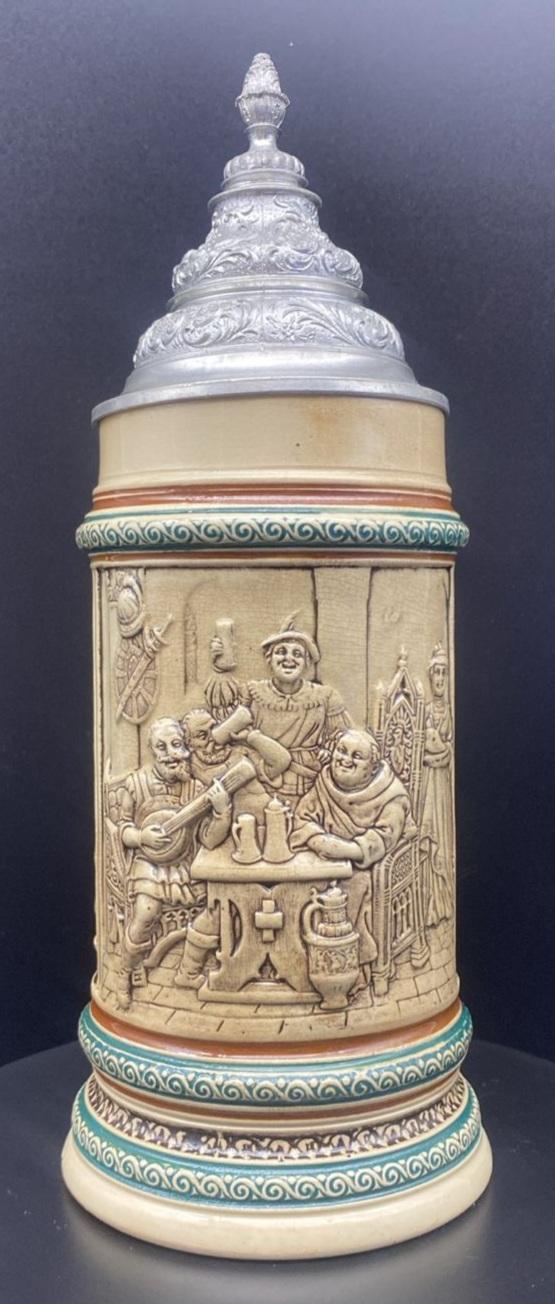
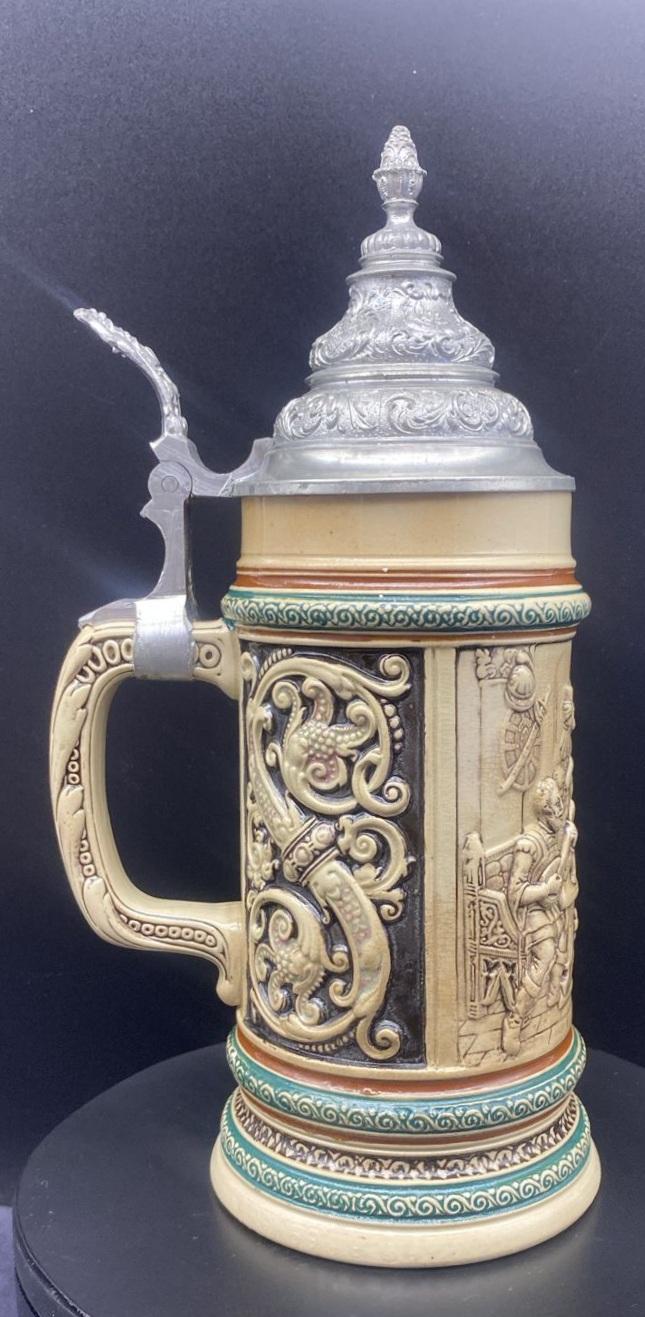
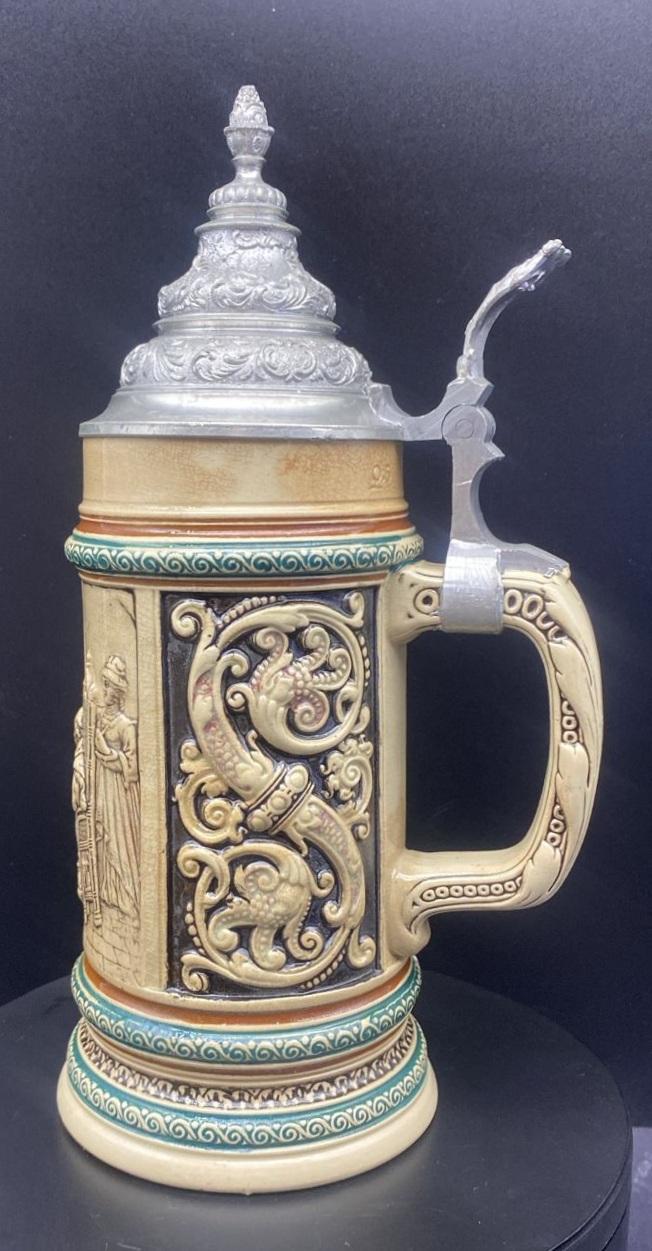
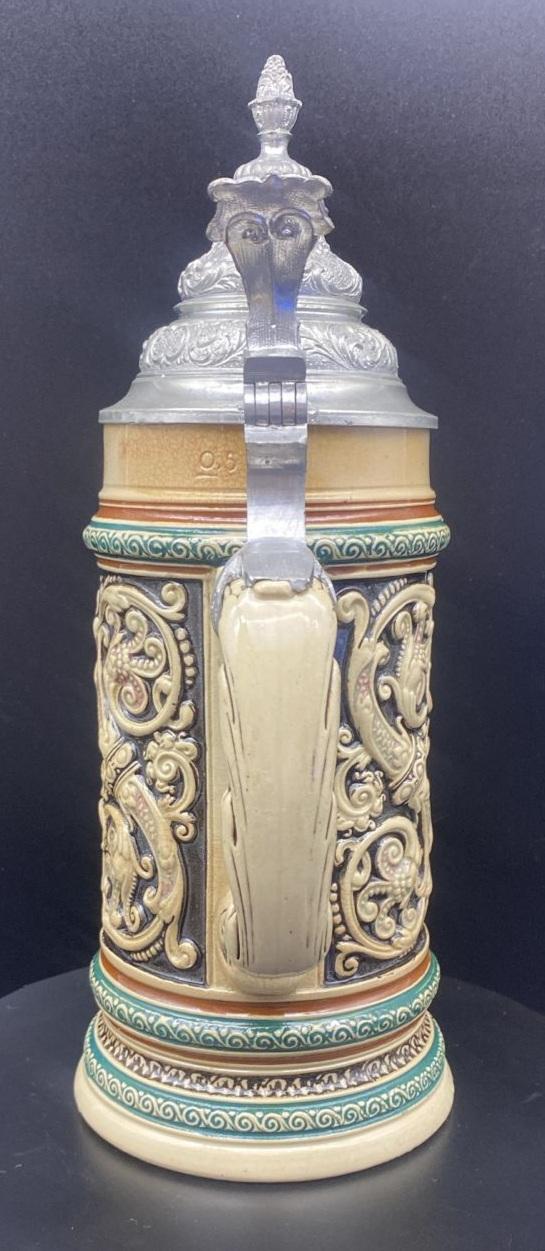
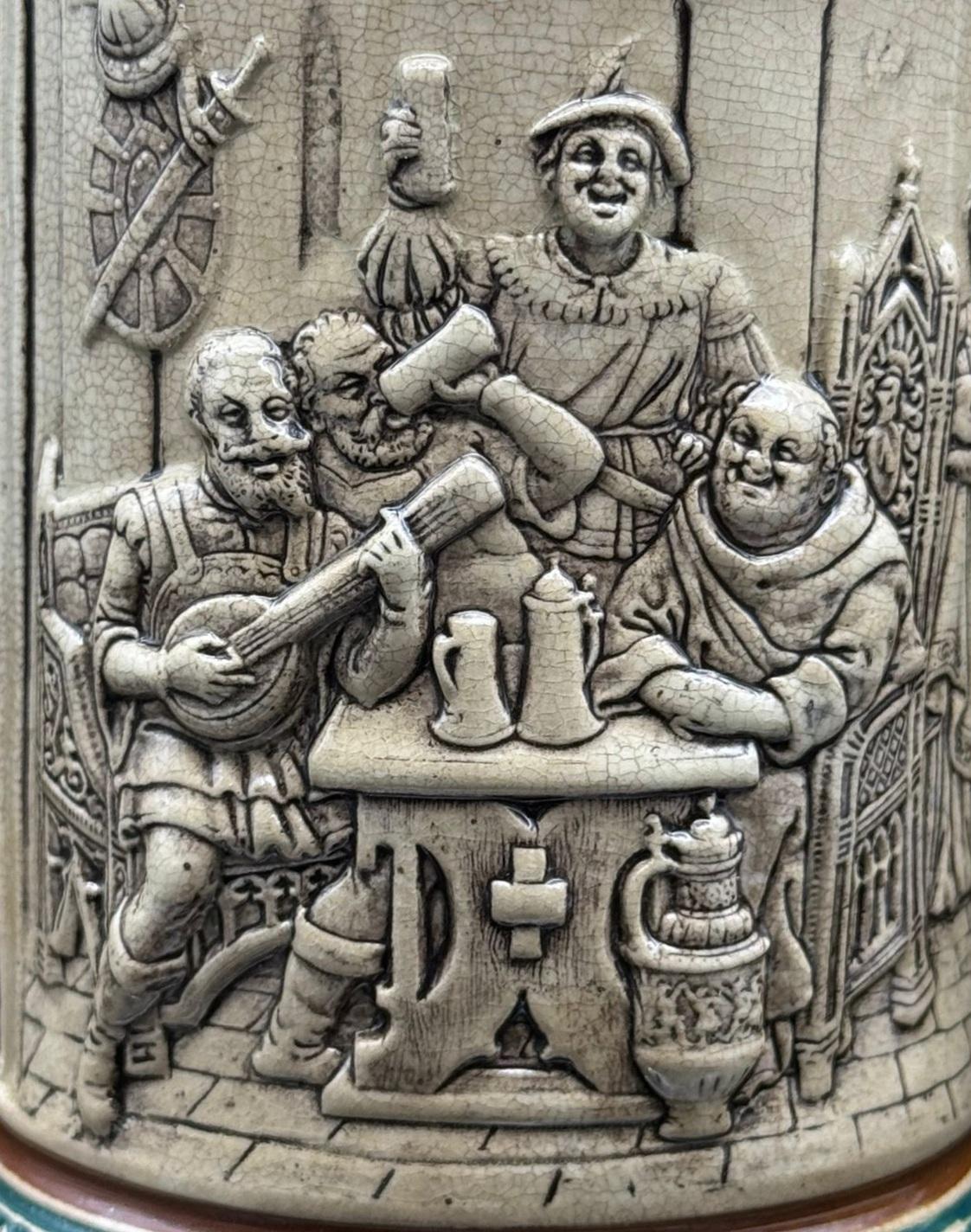
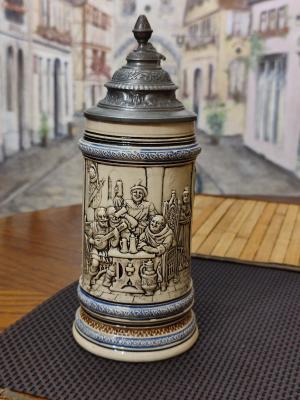
A large jug for bottling beer with the image of "peasant dances".
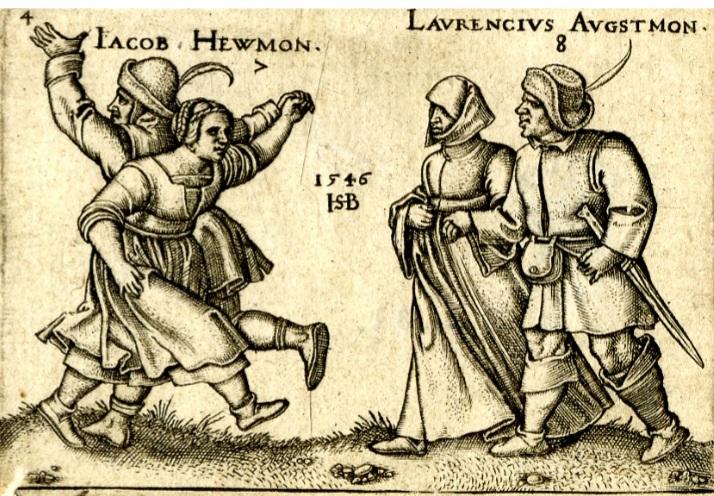
Engraving by Hans Sebald Beham "Festive dances of peasants"
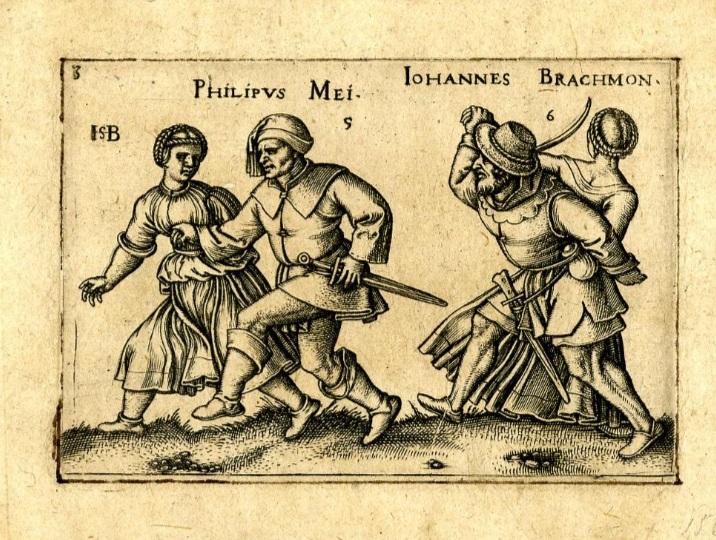
Engraving by Hans Sebald Beham "Festive dances of peasants"
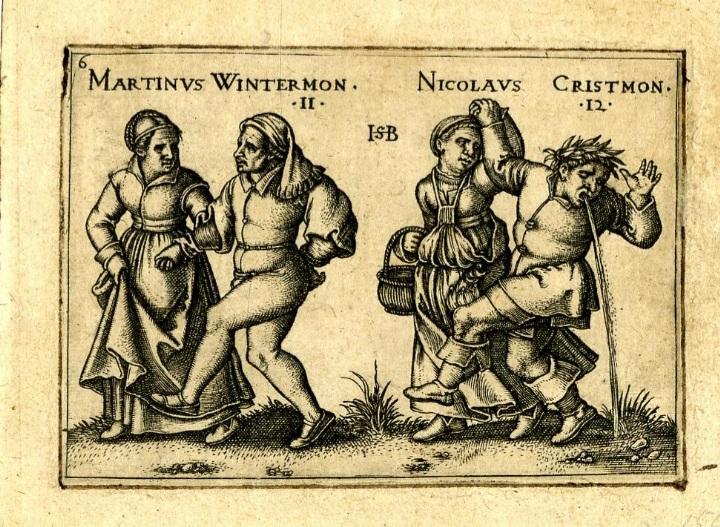
Engraving by Hans Sebald Beham "Festive dances of peasants"
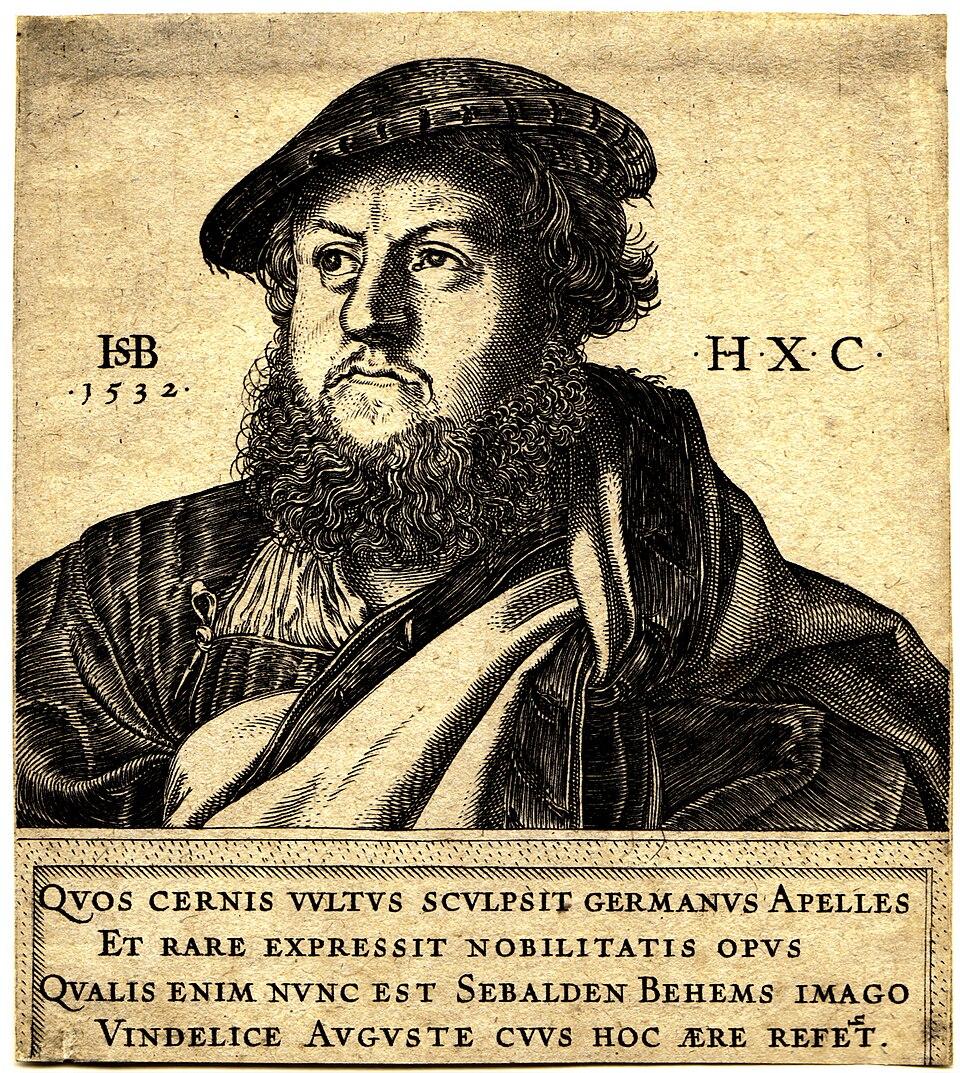
Hans Sebald Beham (1500-1550).
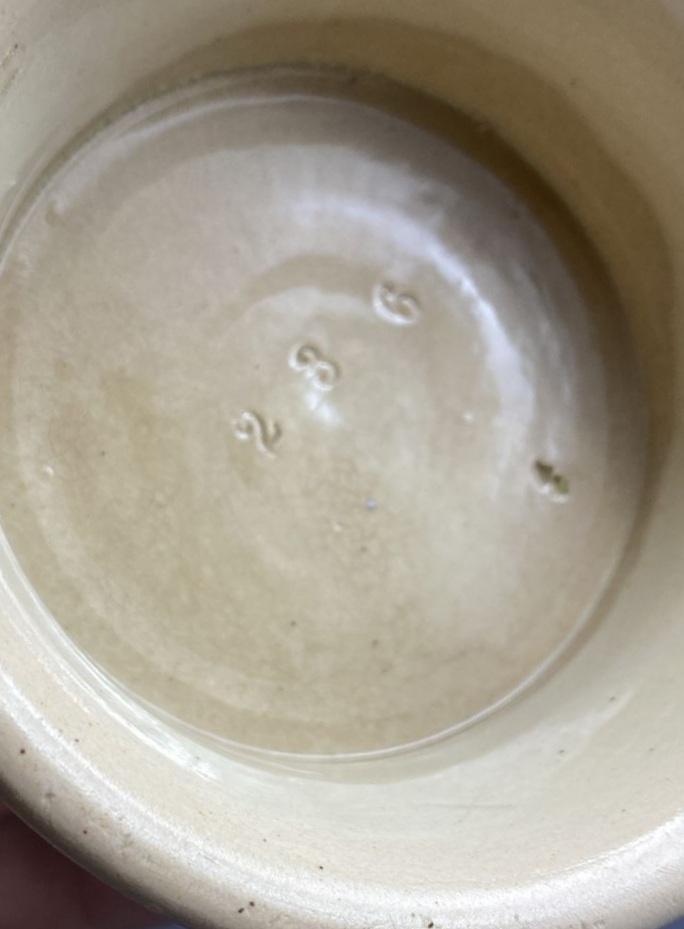
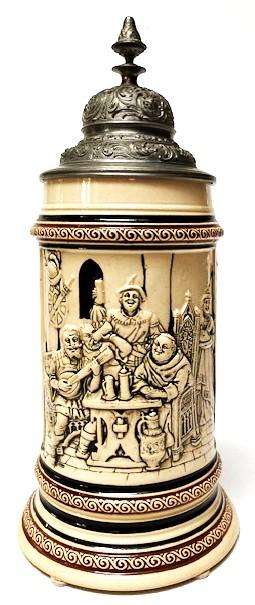
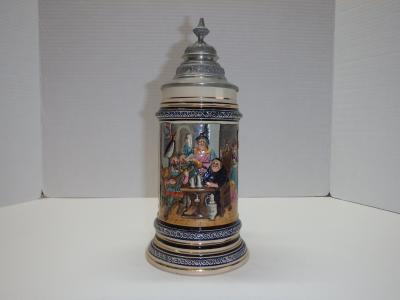
Stein Dümler & Breiden #236, “Monk with Minstrels”.
A video about this mug can be viewed at the link: [link]
The plot of the drawing on this mug is unique in that it contains an artistic time travel technique. This is a postmodern technique. Although the design of the mug was designed in 1890, long before the post-modern era. The feast scene dates back to the 15th century. At the same time, the artist placed a large jug for bottling beer in the foreground of the painting, the central frieze of which is decorated with a "peasant dancing scene" based on engravings by Hans Sebald Beham (1500-1550). Although such decorations began to be applied to the frieze of large jug for bottling beer only from the middle of the 19th century. Read the details in my essay. It is described below.
This antique German beer mug was made at the Dumler manufactory. & Breiden. In the Dumler catalog & The Breiden mold of this mug is registered under the number 236 and has the author's name "Monk with minstrels". The mug is executed in the technique of artistic relief.
The Dumler company & Breiden was founded in 1883 by Peter Dumler, who by that time was already a recognized ceramic artist from the westerwald, and his brother-in-law Albert Breiden, a potter and ceramic manufacturing technologist who took over the manufacturing part of the business. After Dumler's death in 1907 and Braden's departure, the factory's activities were no longer the same as under its founders. See the link for details:
[link]
On average, the Dumler factory per year & Breiden has developed 35 new mold designs. Peter Dumler himself could have demanded such an annual increase in new molds. As a businessman with rich successful experience as a ceramic artist, he subtly sensed the market's demand for the pace of product renewal and compared it with the capabilities of competitors' factories. Thus, it can be unequivocally stated that the design of the decoration of our mug was developed in 1890. See the link:
[link]
The mug depicts a scene of fun with music and drinking beer. The monk brewer is entertained by minstrels with their singing and dirty jokes. In response, he treats them to a beer of his own making. Such a seemingly simple plot of the painting looks like a typical illustration of the moment of rest of the influential German monk brewer of the 15th - 16th centuries. Nevertheless, there is a fragment in the painting that allows us to talk about Peter Dumler's ability to weave visual riddles and puzzles into his works.
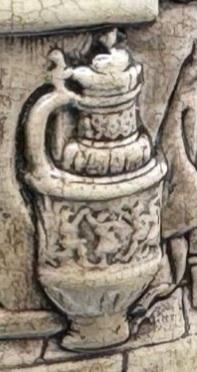
As confirmation, I suggest you pay attention to the large jug for bottling beer, which stands on the floor in front of the foot of a satisfied monk-brewer. If you look closely at this jug, you'll notice that its central frieze is decorated with "peasant dancing scenes."
The most famous and widely recognized founder of the genre of artistic depiction of "peasant dancing scenes" was the German Renaissance artist Hans Sebald Beham (1500-1550). He worked in the technique of engraving. She made it possible to make the artist's works massive and easily accessible even to peasants. Engravings by Hans Sebald Beham about the life and holidays of peasants were in demand at seasonal fairs. Over time, scenes from engravings by Hans Sebald Beham about the life and holidays of peasants became part of the cultural heritage of the German lands. This was especially evident in the second half of the 19th century. All the important pottery manufactories of that period used Hans Sebald Beham peasant plots to decorate their wares. Dümler & Breiden also had such beer mugs. Dümler & Breiden has released molds for such mugs under the numbers 87, 293, 295, as well as under the numbers 1469, 1470 and 1530, executed in the art deco style.
With all this in mind, the question arises: what secret meaning was the artist trying to convey by depicting a jug for bottling beer with such subtle and complex details in the foreground?
To find the answer, let's mentally go back to the era of the 15th and 16th centuries. The life of peasants in those days proceeded exclusively in the rhythm of seasonal agricultural work. At the same time, the social structure of rural communities was regulated by the decisions of clerical officials assigned to the territories. It was only before and after the end of the main agricultural work that the peasants could afford wild celebrations with dancing and drinking. The clergy controlled these processes. Right up to the decision about which of the visiting minstrels should be allowed to earn money on the peasants' holiday. As a result, the moral of the plot of the picture is as follows. A local official in the rank of a priest conducts minstrel screenings at his place before giving them permission to amuse the peasants.
View the collection of Paulo Vik Falcon
 Producer info
We see 4 more items in our database with the same mold number and the same producer:
Show items by producer Dümler & Breiden


Comments (0)
Log in to add a comment.