


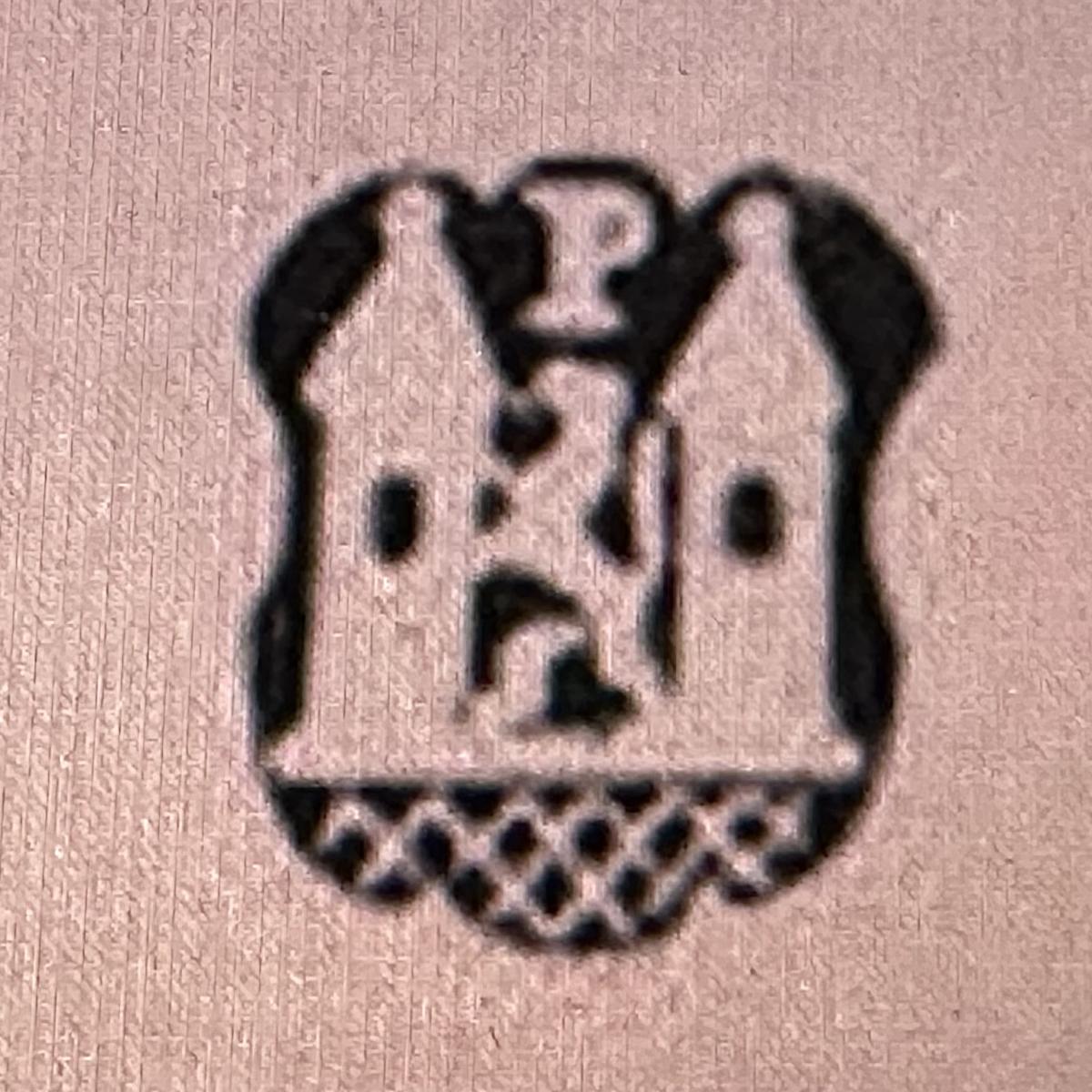
Item 1105 Hintze, Edwin, Sächsische Zinngiesser, 1921.
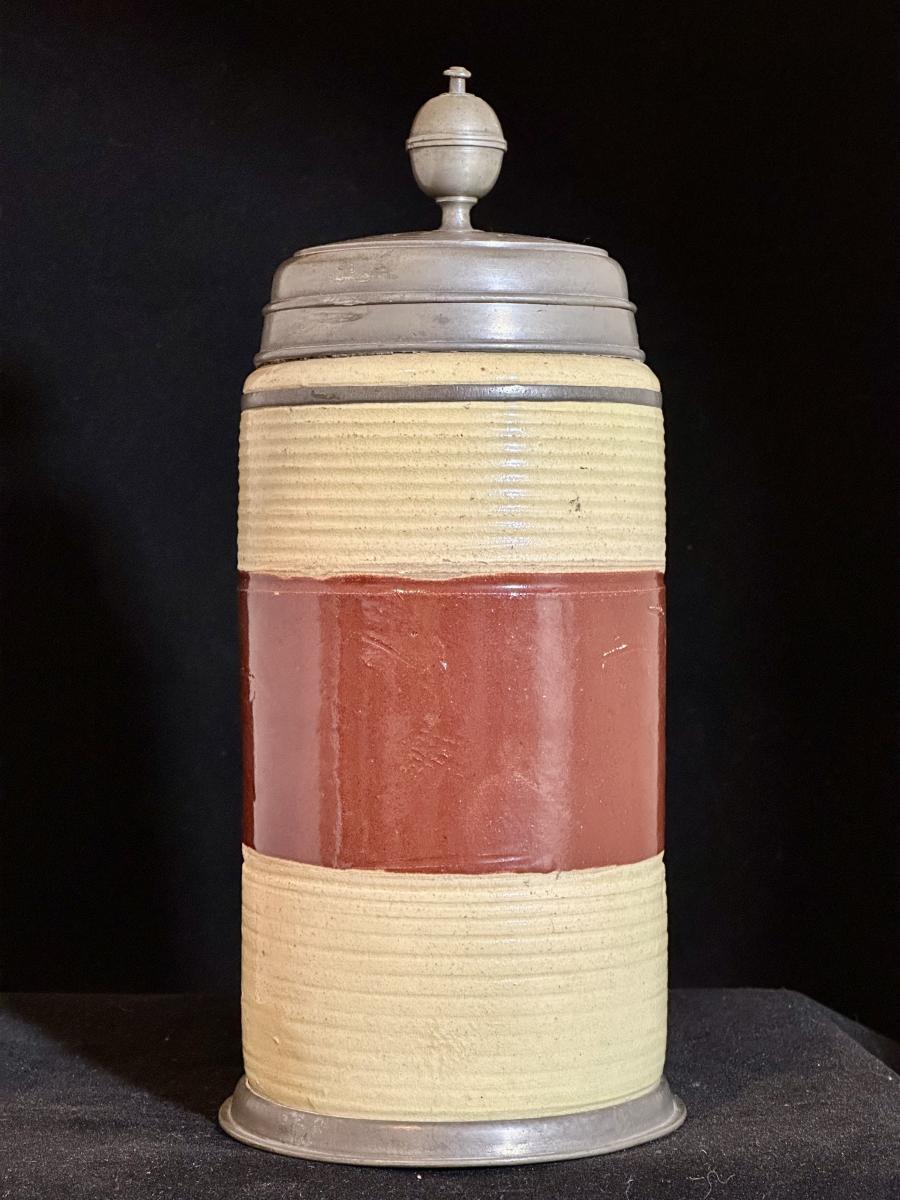
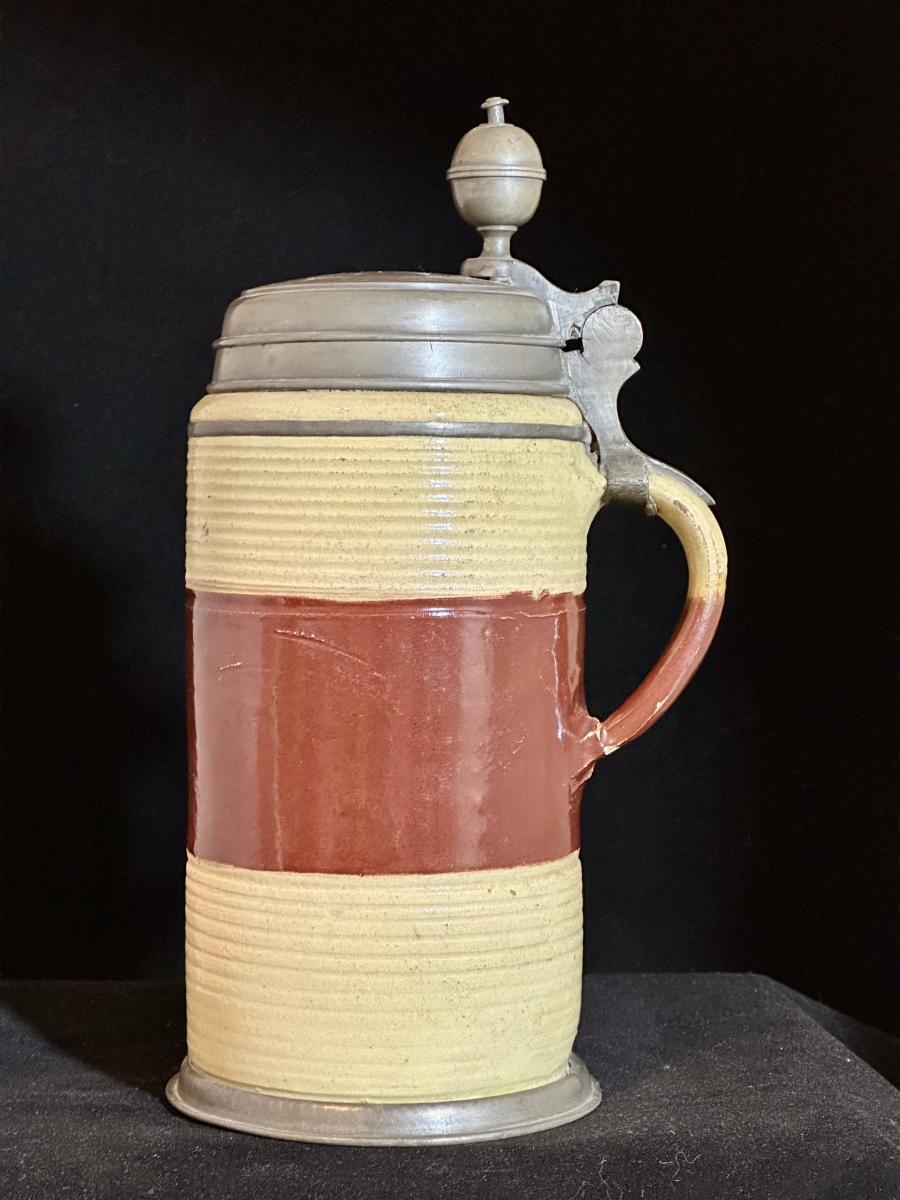
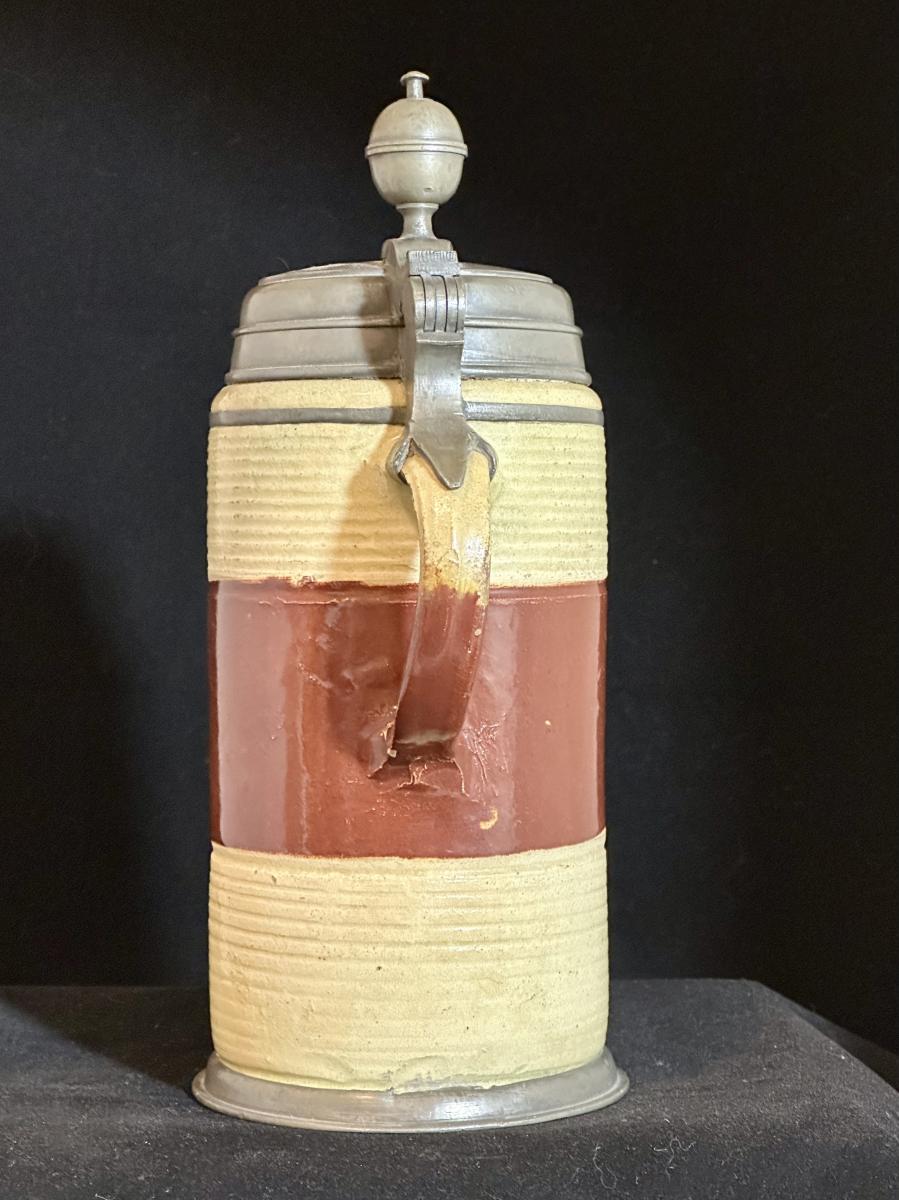
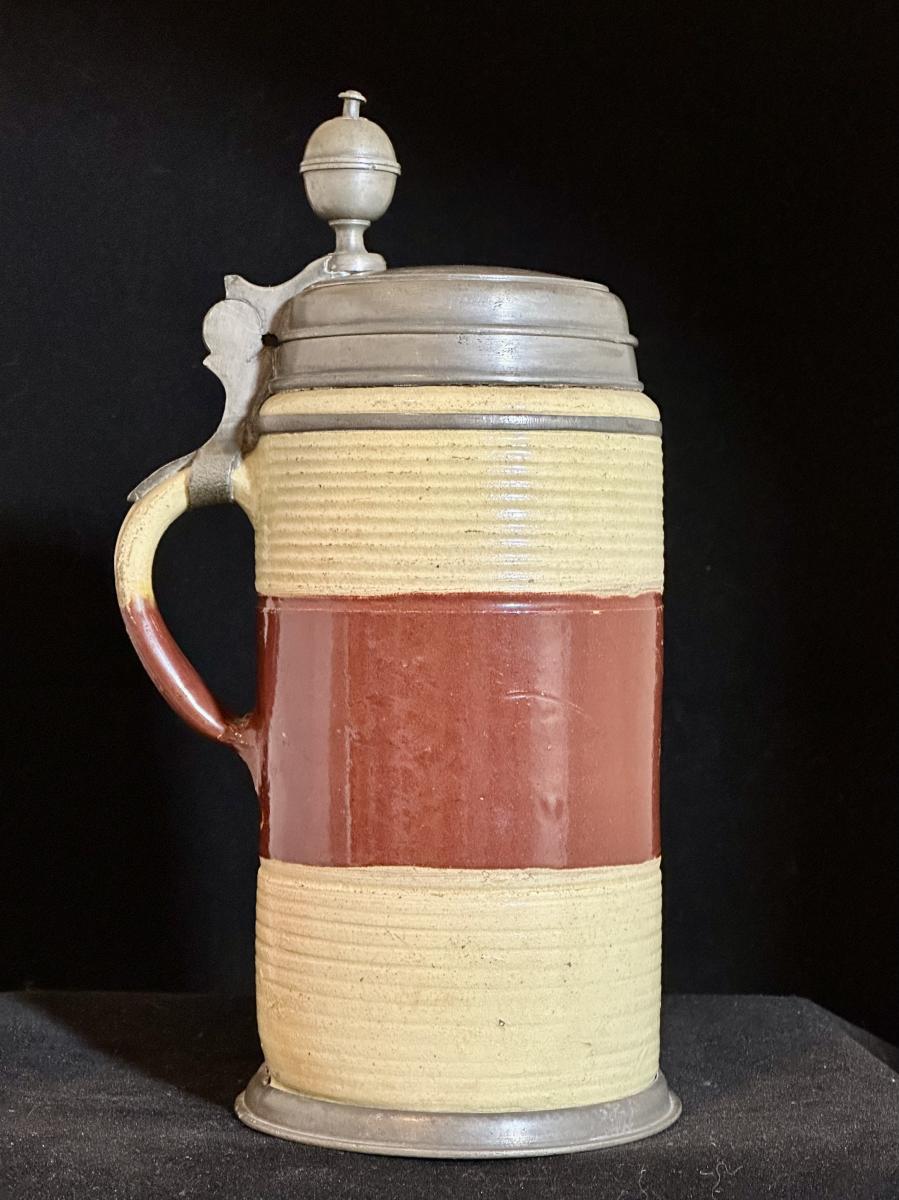
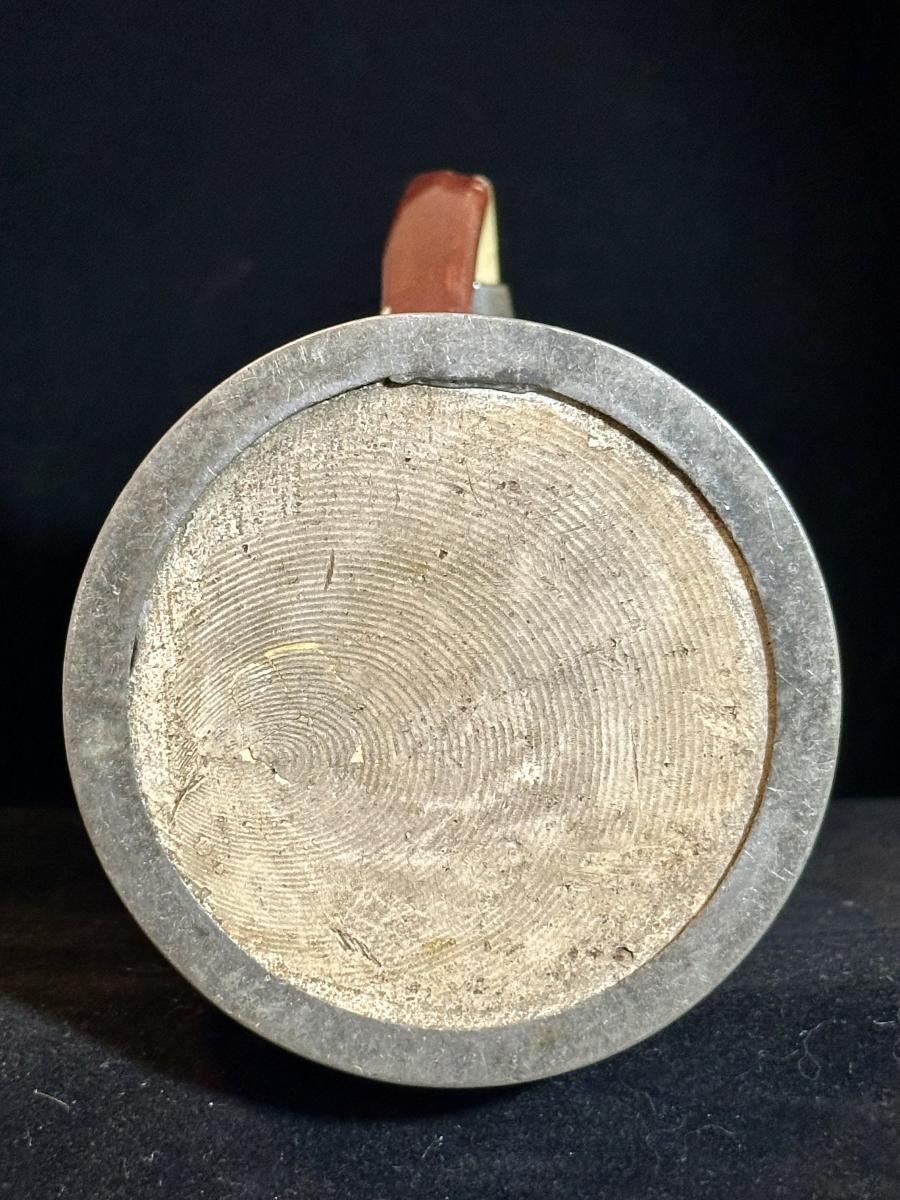
This is an example of a Rochlitz “honey stein”. This type of high fired earthenware stein was produced in the small Zwickau Mulde River valley towns of Rochlitz and Lunzenau, Germany, an area where suitable clay deposits were located. Production is believed to have begun in the first half of the 18th Century and continued until the early third of the 19th Century.
The cylindrical, dual colored, ribbed steins were the only style known to have been produced there. These were produced as inexpensive, utilitarian objects, with the only decorative elements being the honey color, attributed to the oxidizing firing, and the brown, resulting from the application of a clay slip, or engobe.
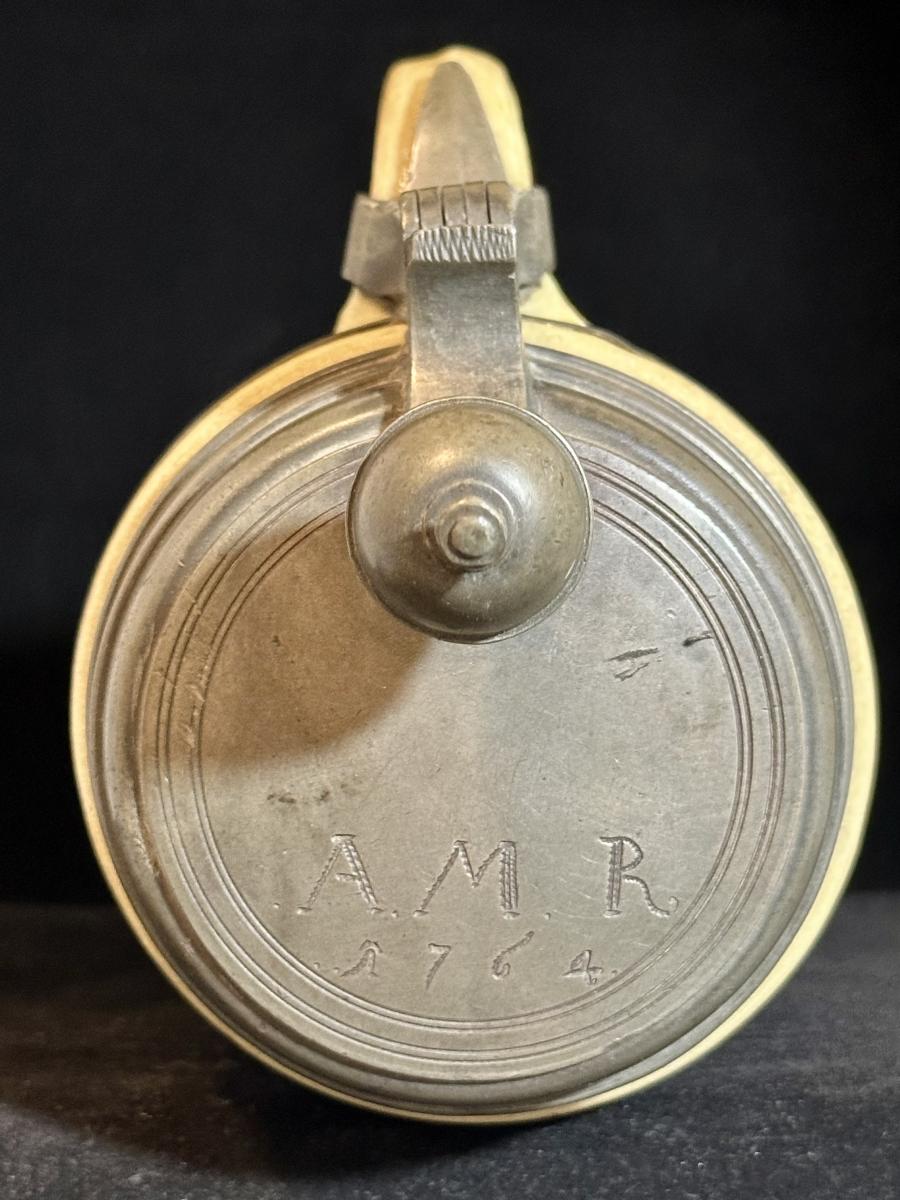
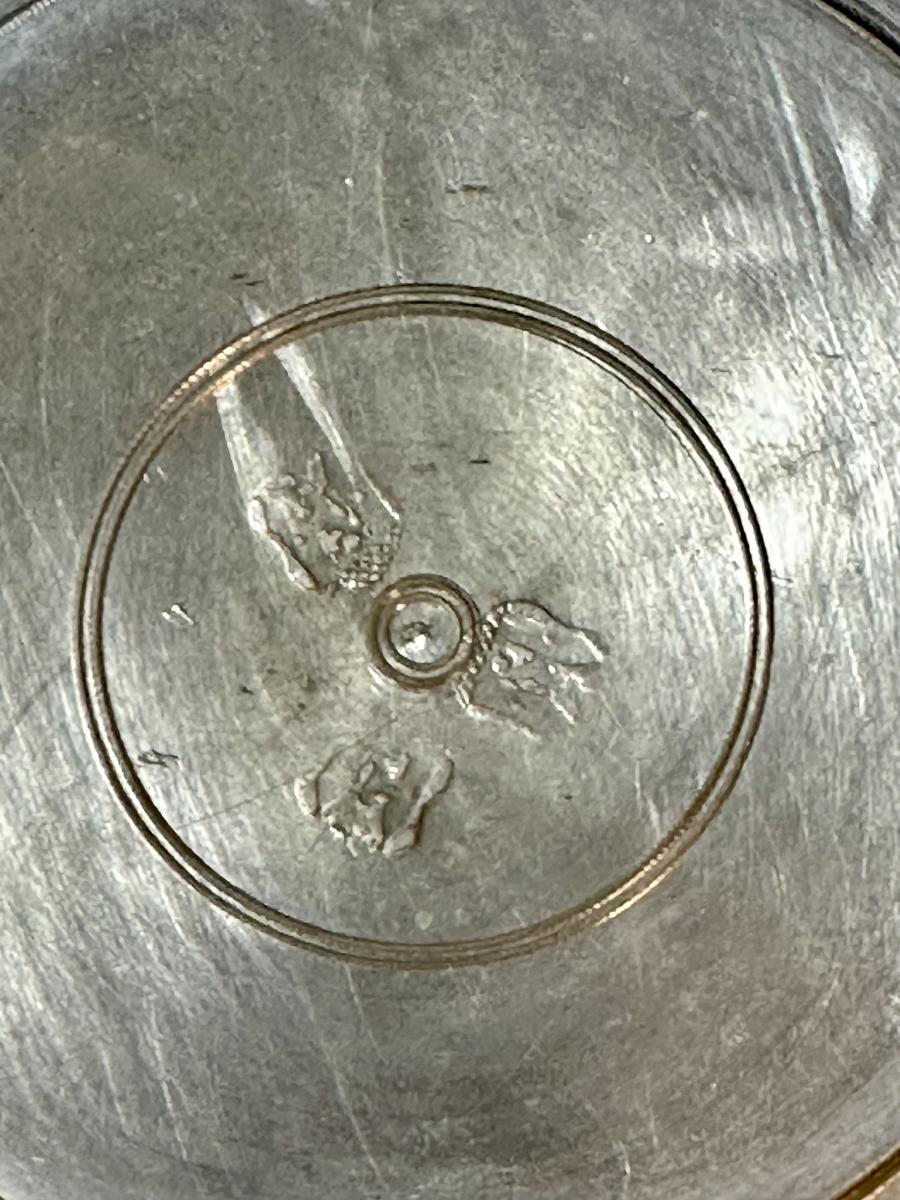
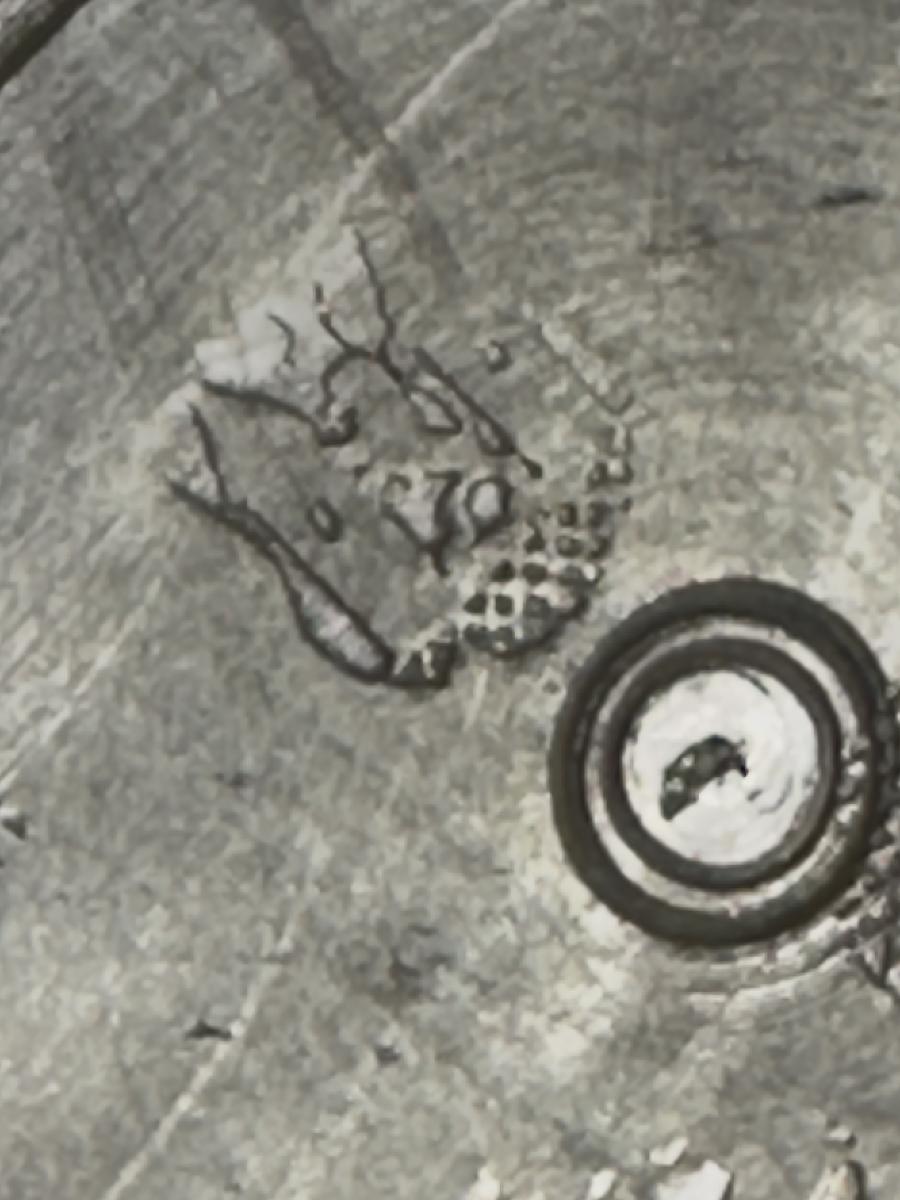
The lid on this stein has a five pin, closed hinge and is engraved with “A.M.R. 1764”. The initials presumably represent the owner’s name. The date aligns with the belief that this stein was produced in the second half of the 18th Century. Although difficult to make out, one of the three touchmarks inside the lid appears to be two towers with a lion in the center and is consistent with the Plauen city mark as reported by Edwin Hintze in his 1921 publication Saechsische Zinngiesesser.
Sources:
Finke, Uwe. Historical Salt-Glazed Stoneware from Central Germany. Prosit, March 1992, pp. 14-16.
Adler, Beatrix. Early Stoneware Steins From the Collection of Les Paul, pp. 280-287. Dillinger/Saar, Germany. Krüger Drück + Verlag, 2005.
View the collection of Walter Swett

Comments (0)
Log in to add a comment.