


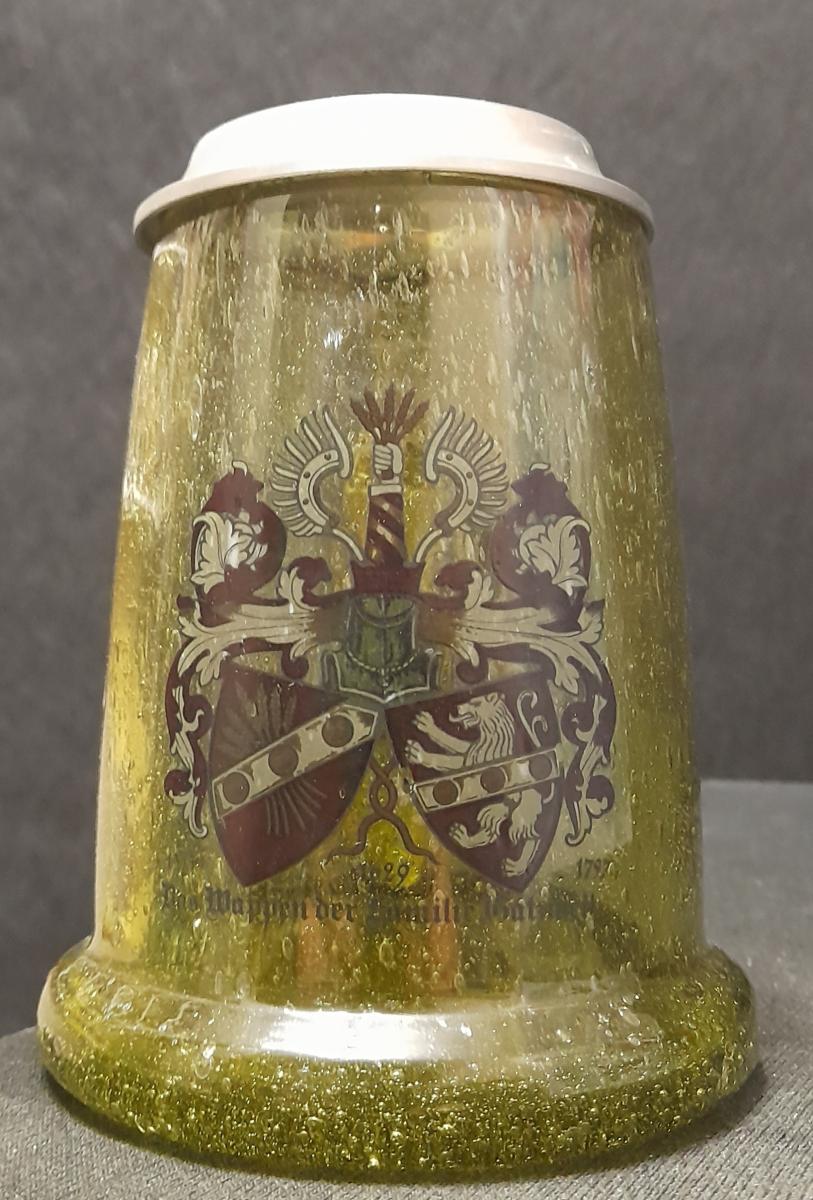
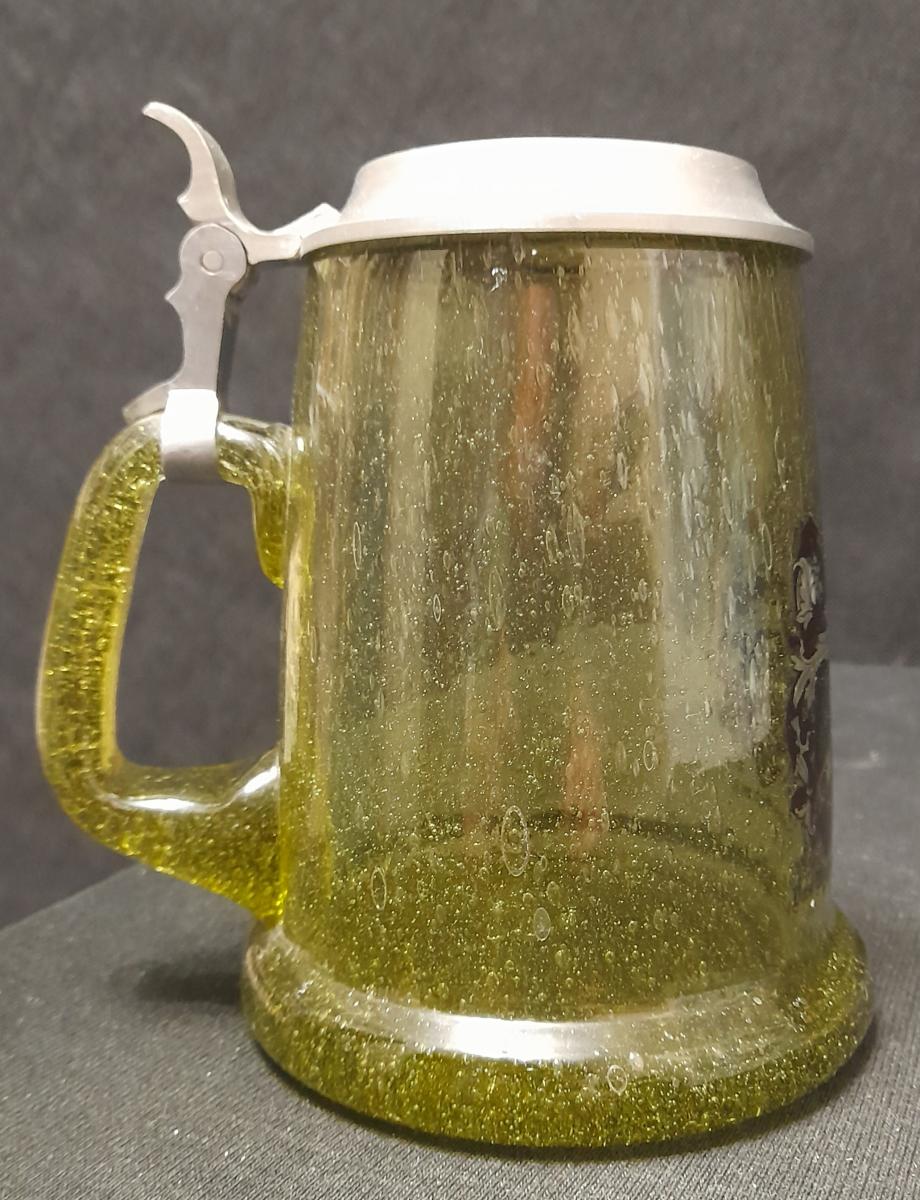
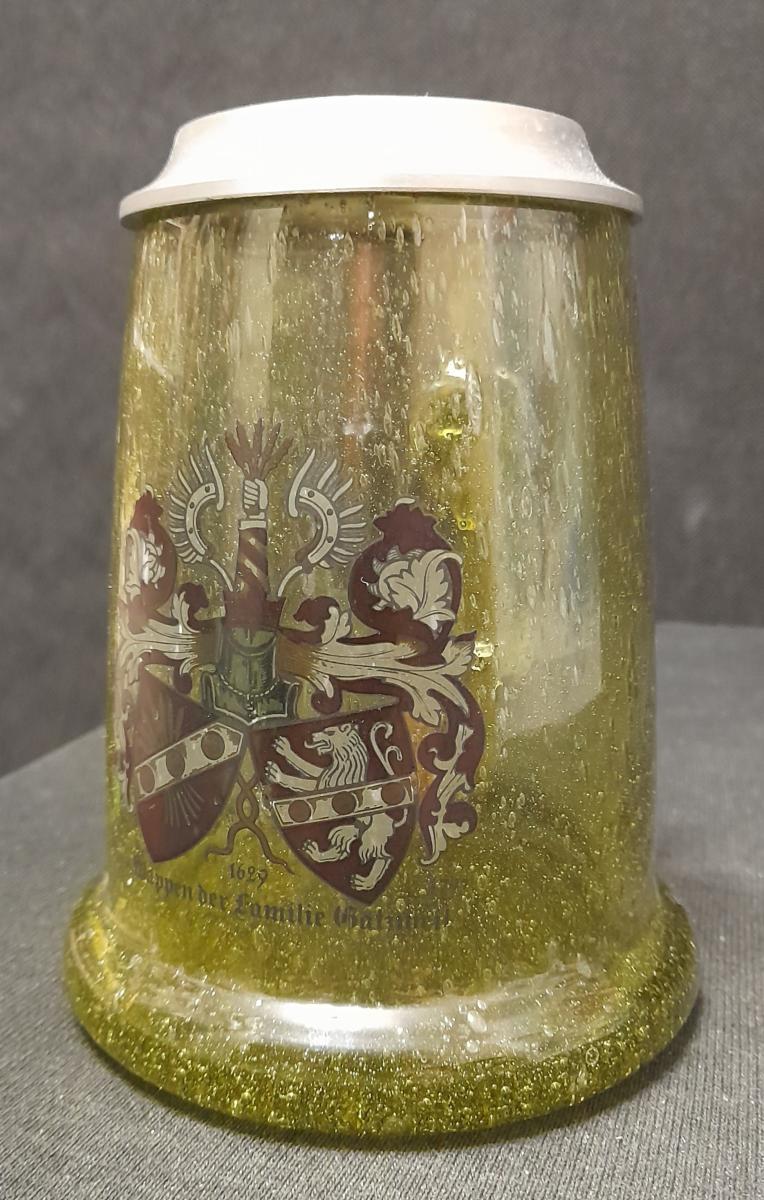
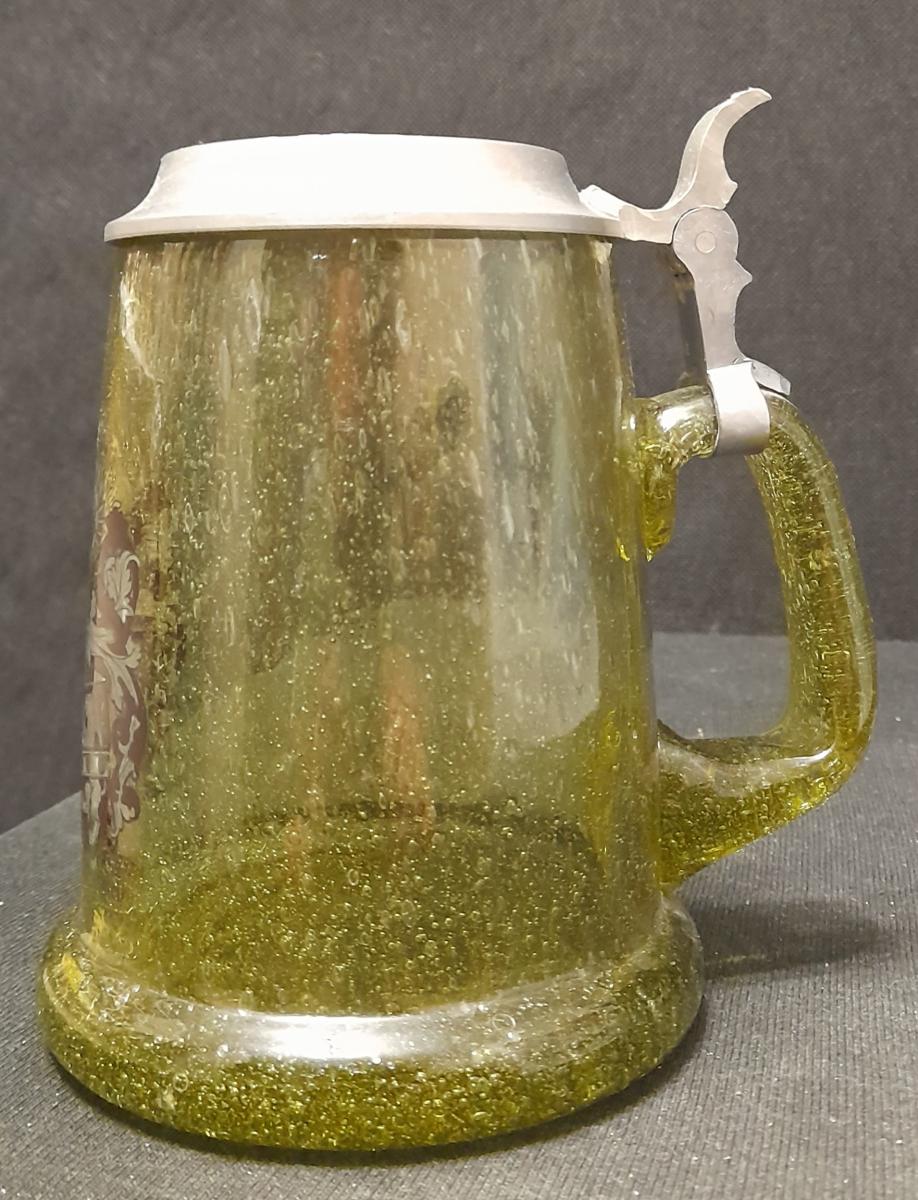
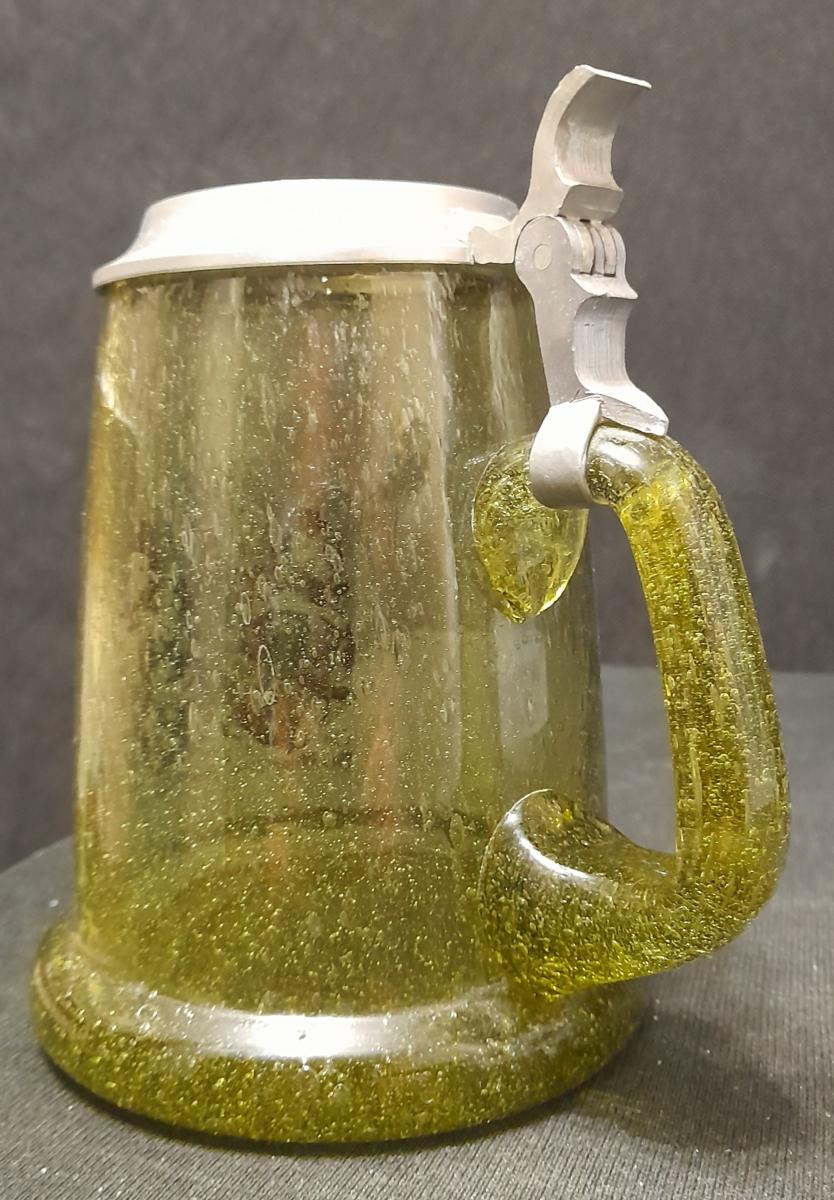
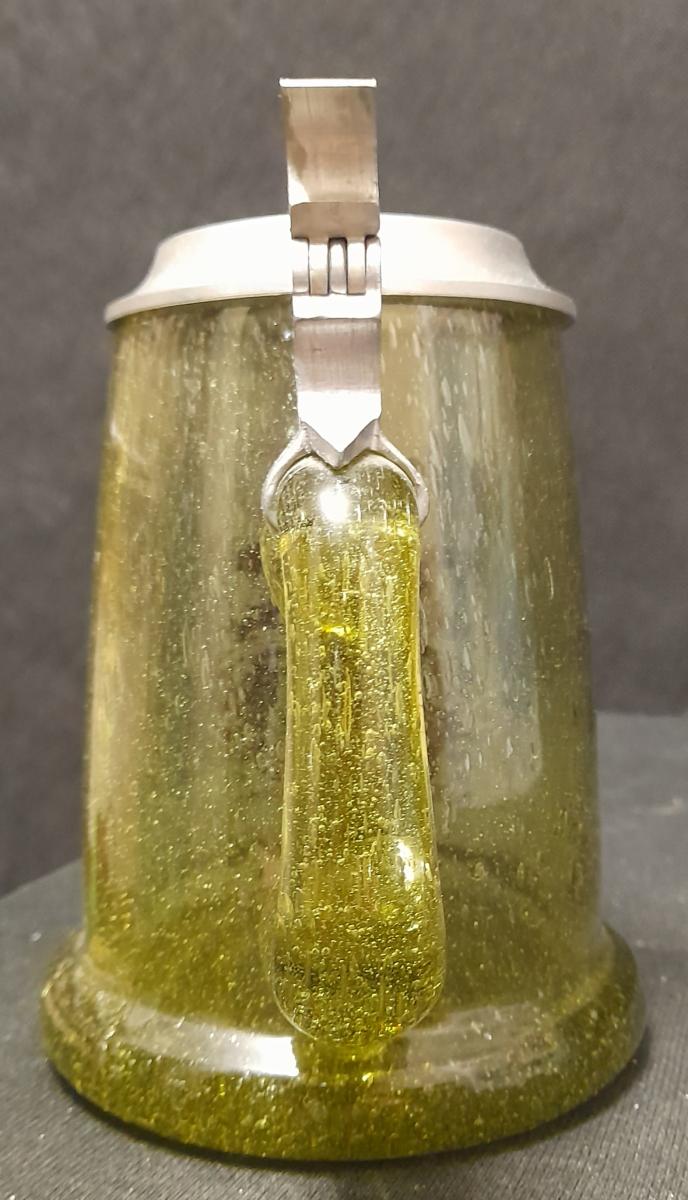
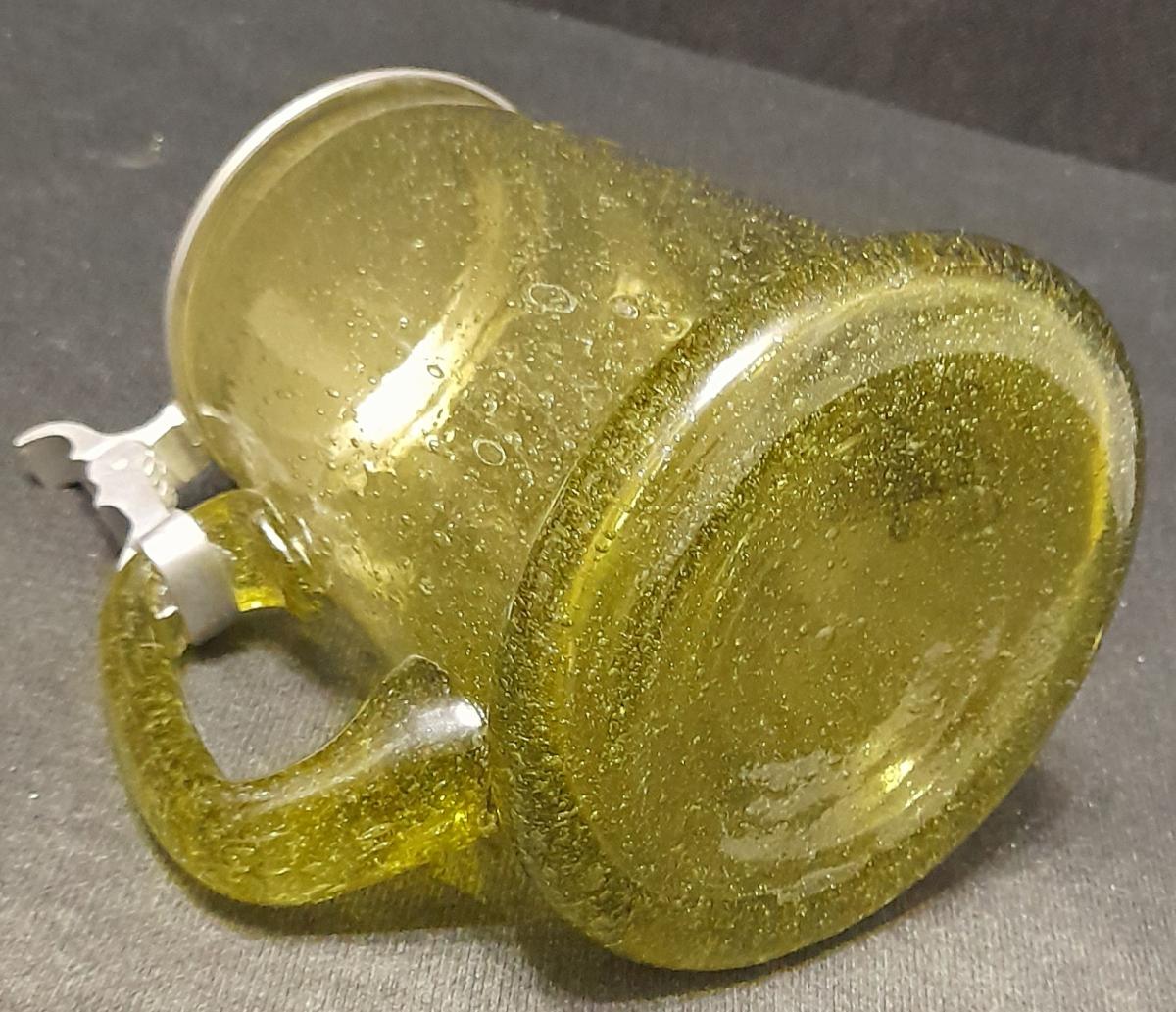
A beer mug made of green bubble glass. Glass with air bubbles was specially created by artists for decorative purposes, for example, in the fusing style.
Green bubble glass is a popular decorative material known as "bulgaze" (in the gut technique) or seeded glass. The effect of many small air bubbles inside the glass creates a unique texture that beautifully refracts light.
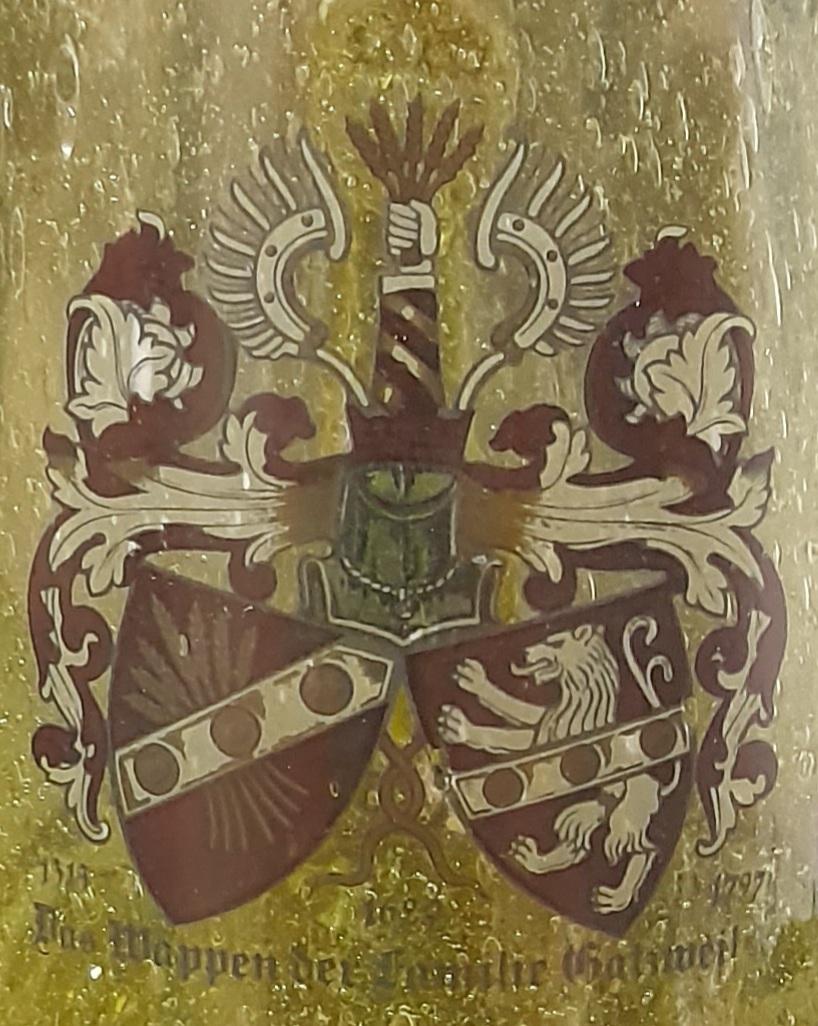
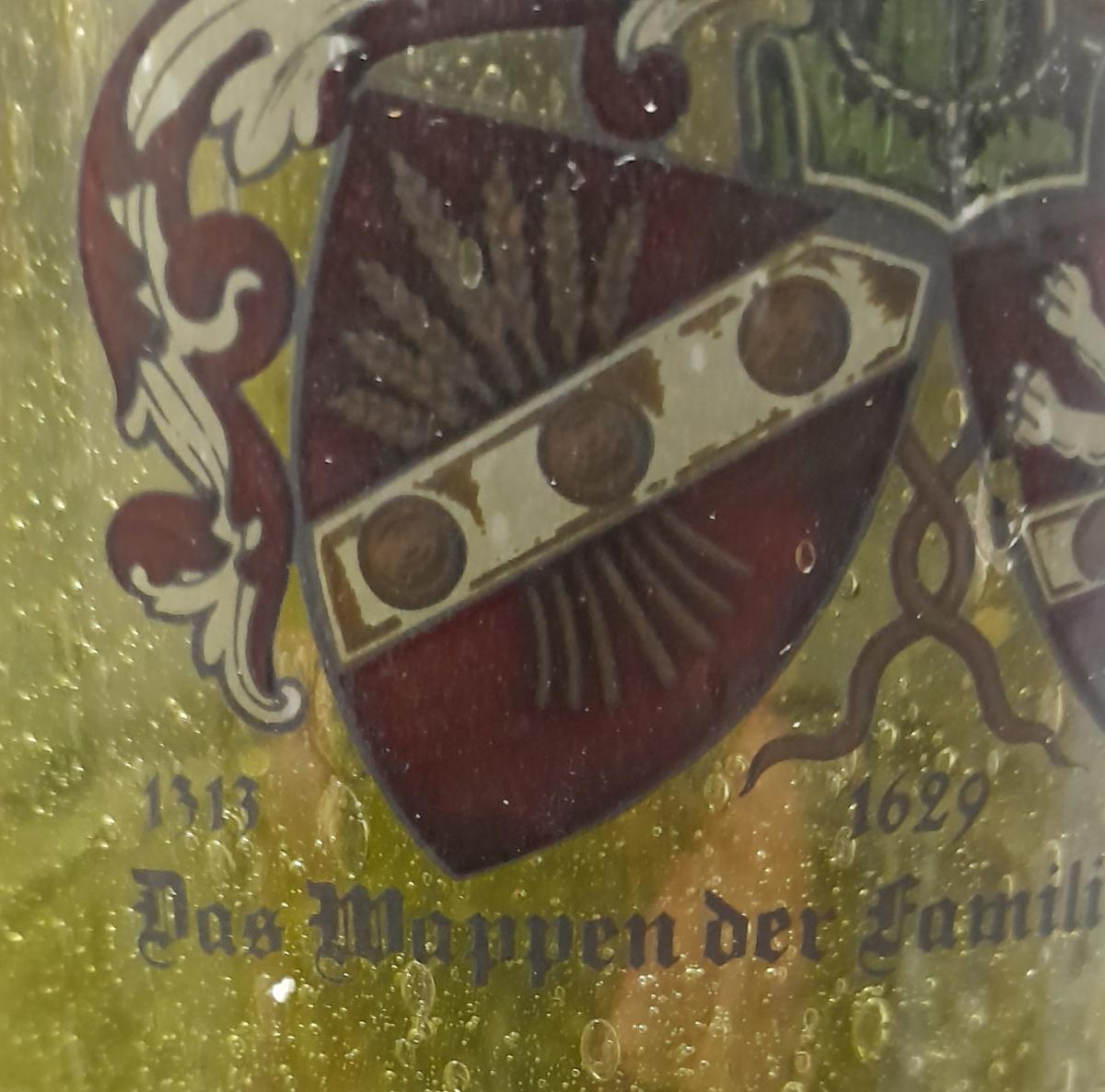
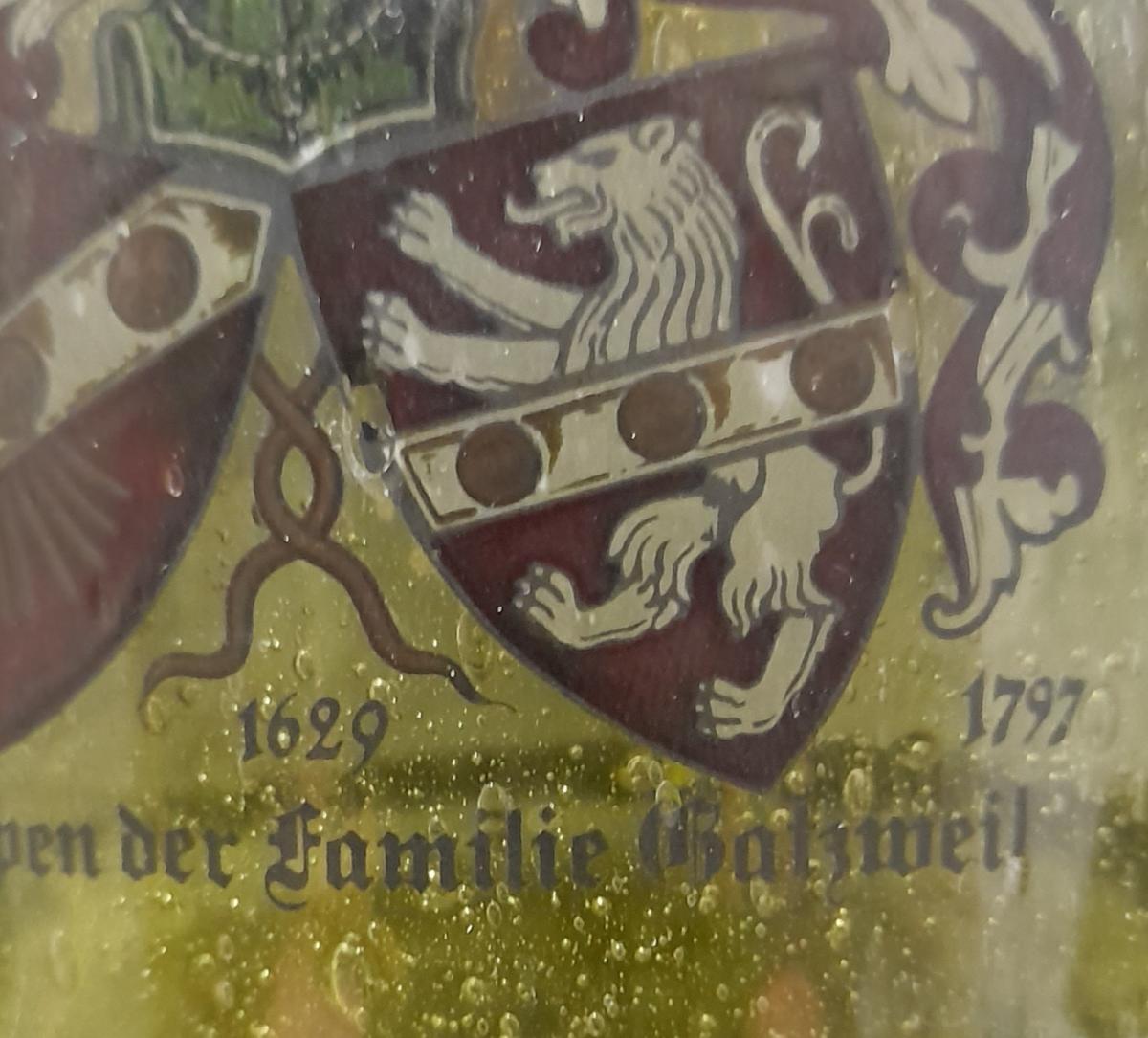
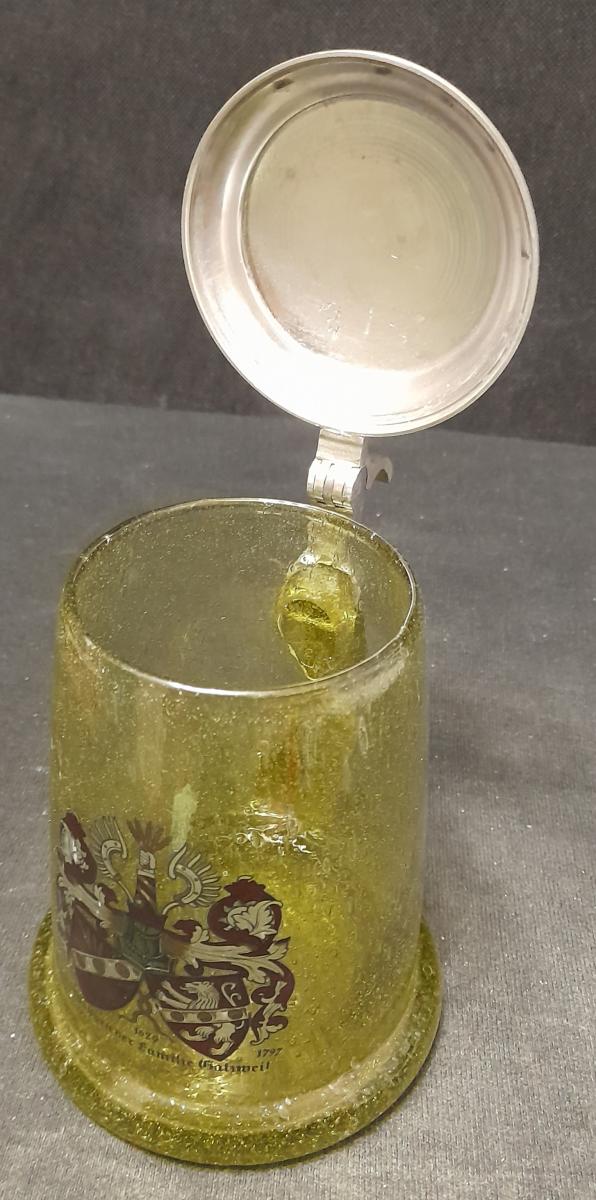
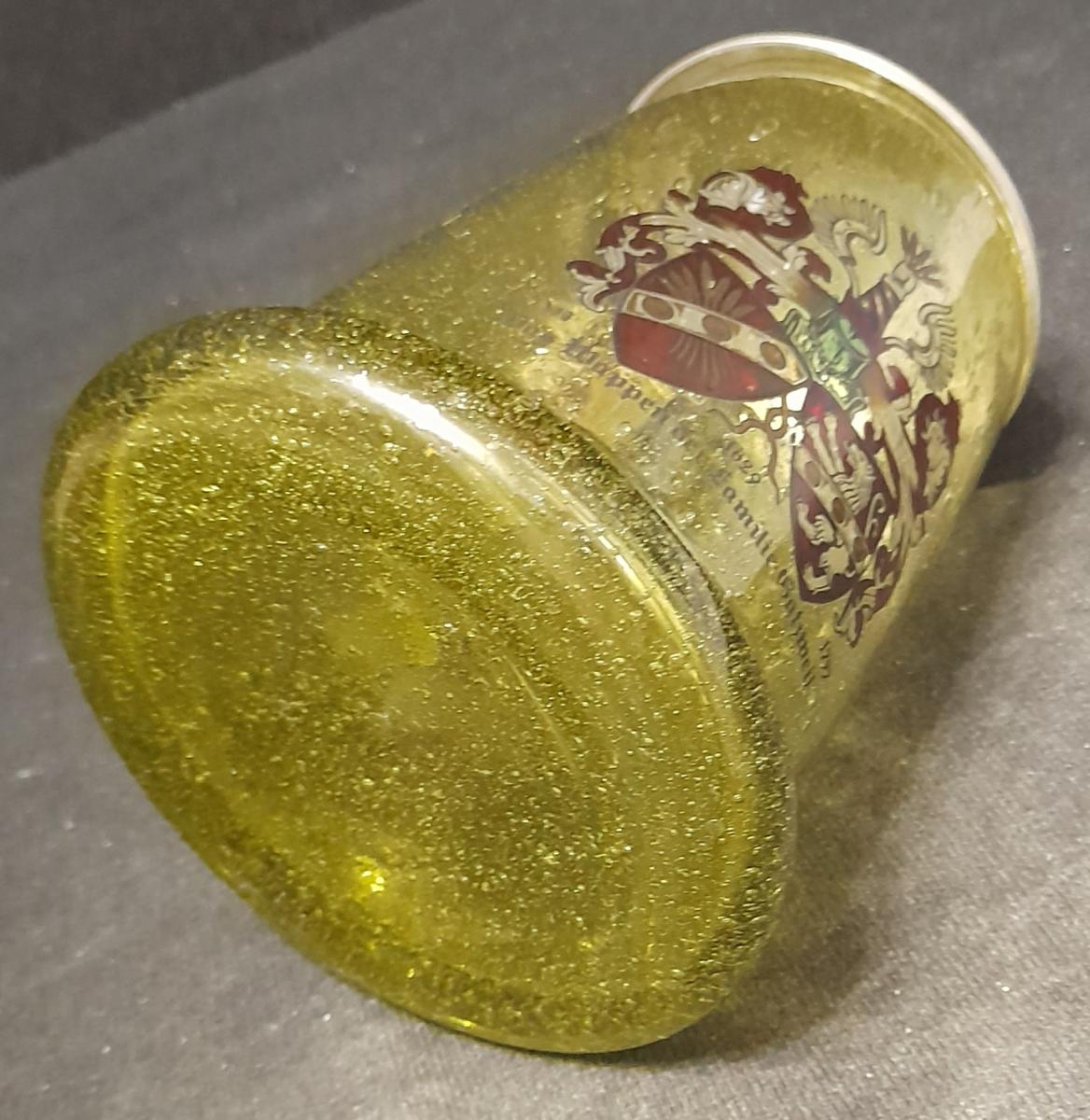
On the mug there is a coat of arms with the inscription "Das Wappen der Familie Gatzweil" (Coat of arms of the Gatzweil family) and memorable dates for this family. The coat of arms depicts two heraldic shields topped by a knight's helmet with a winged helmet.
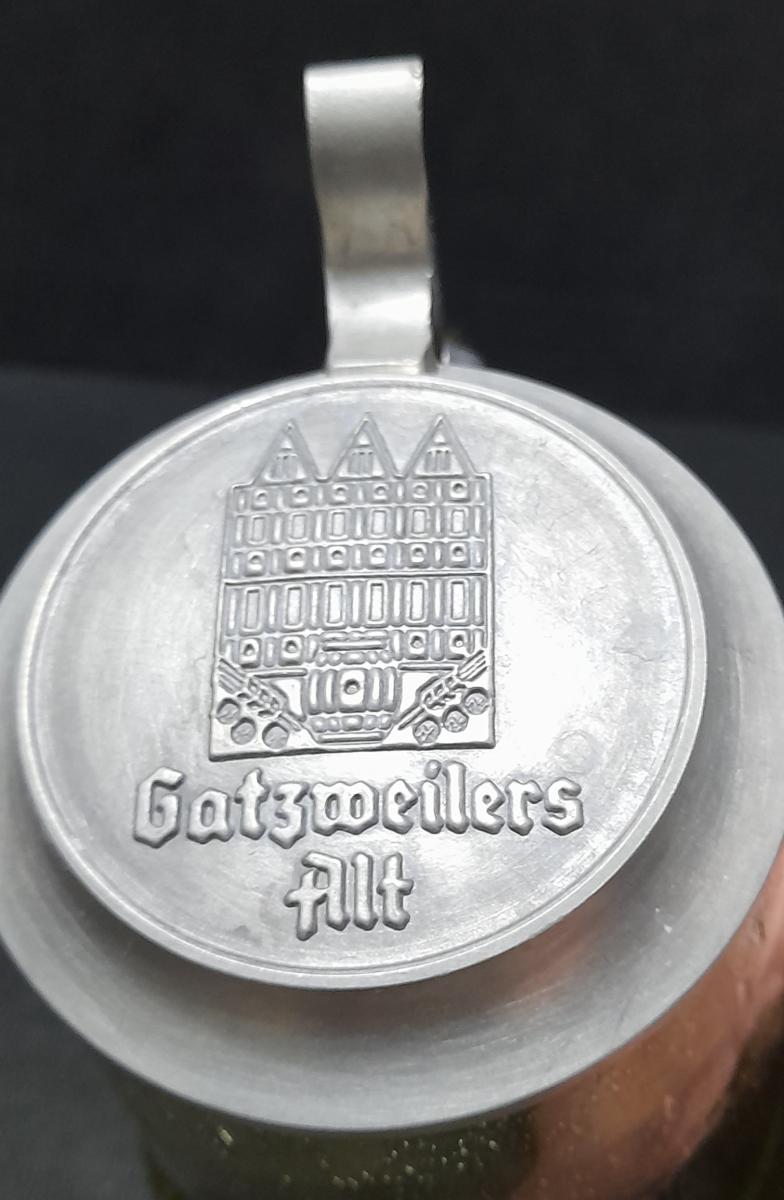
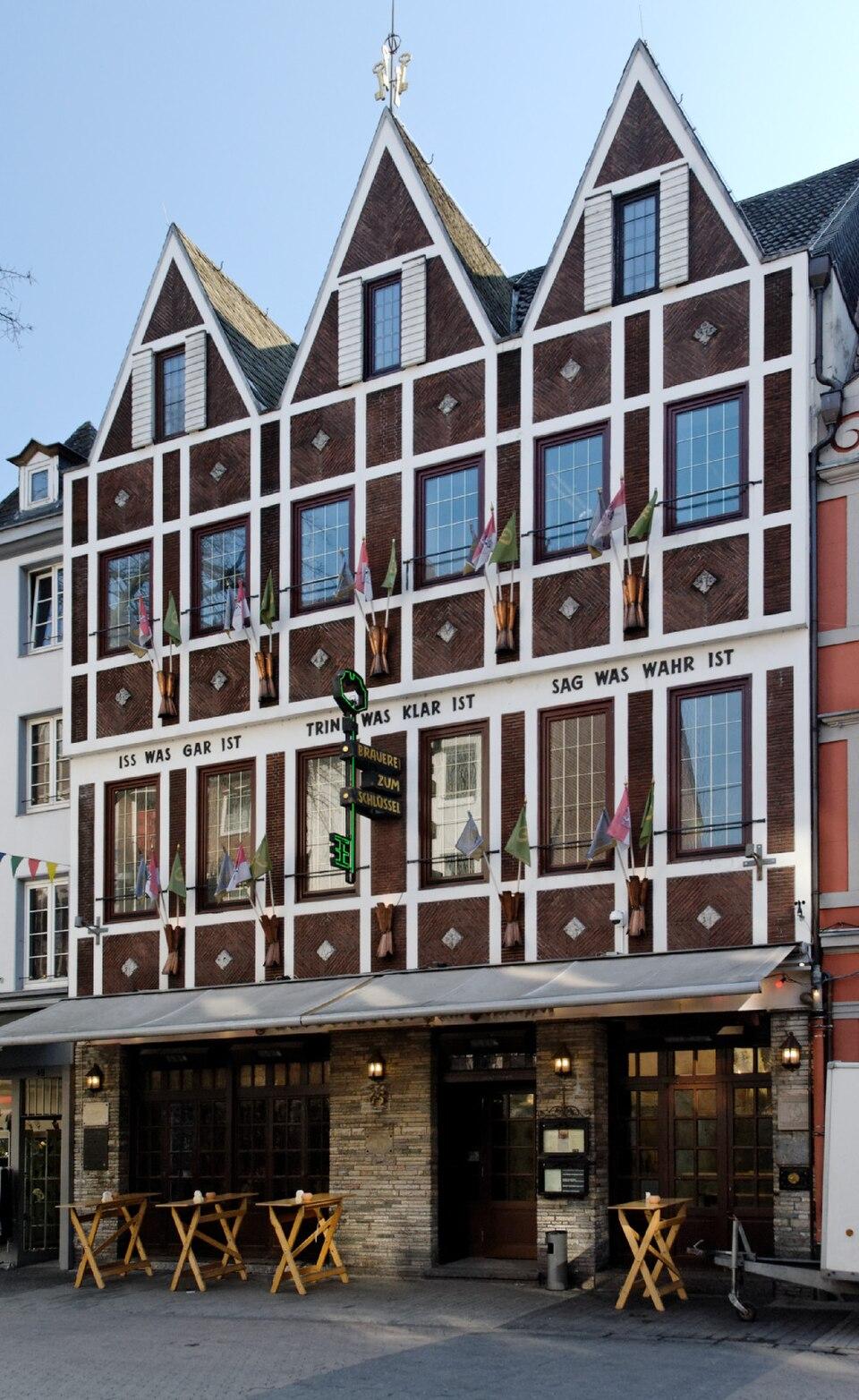
The glass mug is topped with a tin lid. The historic building and the inscription "Gatzweilers Alt" are engraved on the lid. The building depicted is the facade of the old town brewery (Altstadt) Dusseldorf, where the piaa brand of the Gatzweil family originated.
Gatzweilers Alt's predecessor was Schlüssel (translated from German as "the key"). Zum Schlüssel is a Dusseldorf brewery that produces beer of top fermentation (alt), typical for the northern territories of Germany, founded in 1850. Located on Bolkerstrasse, it has been producing Schlüssel Alt beer since 1850. Due to limited production facilities, the brand's sales area is concentrated in Dusseldorf itself and its surroundings. Zum Schlussel is the smallest of the four traditional Altbier breweries in Dusseldorf's Old Town. Beer at Zum Schlüssel was first brewed around 1850 in the house "Zum roten Ochsen" (Bolkerstrasse 47). Later, the neighboring houses "Zu den drei Königinnen" (#45) and "Im Schwarzen Pferd" (#43) were added to it. The name "Zum Schlussel" ("At the key") appeared at the end of the 19th century. In 1936, the Zum Schlussel brewery was headed by Karl Gatzweiler, who came from the Neuss family, which had been brewing since 1313. In 1963, the Gatzweiler family built a modern, large-scale brewery in Dusseldorf-Heerdte. There, besides Schlüssel Alt, brewed beer of the mass brand Gatzweilers Alt (Gatz) .
Now about the history of the Gatzweilers Alt brand. The Altbier beer style is a traditional German top—fermented ale, typical of Dusseldorf. The brand belonged to the Gatzweiler private family brewery in Dusseldorf, which existed as an independent company from 1963 to 1999.
In 1963, the Gatzweiler family built a modern, large-scale brewery in Dusseldorf-Heerdte . There, besides Schlüssel Alt, brewed beer of the mass brand Gatzweilers Alt (Gatz) . The brewery reached its peak production in history in 1977, producing 530,000 hectoliters. In 1990, the restaurant and the brewery in the original building underwent extensive renovation. Sales have more than halved since the mid-1990s. As a result, it was decided to sell the brewery in Heerdt and continue working only at the original brewery in the Old Town of Dusseldorf. The Gatzweilers Alt (Gatz) beer brand was sold to the Carlsberg Group and has been owned by the private Bolten brewery since 2022. Currently, Schlussel serves only its own brand beer Schlüssel.
In 2009, the Gatzweil family's Schlussel brewery employed about 80 people and produced about 19,000 hectoliters of beer. Although Altbier's sales have generally declined over the years, Schlüssel-Alt has been able to steadily increase its sales over a longer period. Nevertheless, in 2011, the production volume of 21,000 hectoliters was reached, and for the first time the brewery exceeded its target of more than 20,000 hectoliters.
A special feature of the Schlussel brewery is the beer garden, located on the territory of the churchyard of the Neander Church. The Schlussel Lädchen (Schlussel Store) has been operating right next to the brewery since October 2010, where many products related to Dusseldorf are sold. All products are produced directly in Dusseldorf. Initially, in Dusseldorf, the keys to the city gates were left overnight in nearby hotels. Not far from the Mulentor (Mill Gate) on Ratinger Strasse there was a hotel called "Zum Schlussel" (At the key). The name and trademark of the brewery are a reminder of this tradition. The key symbol can be found on glasses, coasters, and even on the facade of the building.
The ancient Neuss family has its roots in history, when Dyuseldorff did not exist.
Noys was founded on the site of the Ubii settlement by the Romans in 16 BC as Novaesium is a camp of the XIX Legion, partly wooden, partly earthen. Over time, the Roman troops withdrew under the influence of the ancient Germanic tribes. In the 9th century, Vikings moved from the north of Europe to the south along the waters of the rivers. Many European chroniclers of those years noted in their chronicles the presence of Vikings in Europe and the existence of the ancient Germanic city of Neuss. In the 12th century, the first stone fortification with towers was built in the city. In addition, the documents confirm the historical growth of the city, as well as the growth of its influence in the Middle Ages. In 1209, the Cathedral of St. Quirinus (German: Quirinus-Münster) was founded in Neuss in honor of Saint Quirinus, considered the patron saint of the city. Noyce grew to be a leading, influential, and thriving shopping center.
During the tenth century, the relics of the martyr and the tribune Quirinus of Noyes was moved to Noyes. This led to pilgrimages to Noyce even from countries outside the borders. The Holy Roman Empire. Neuss was registered as a city only in 1138.
One of the most important events in the history of the city was the siege of 1474-1475 by Charles the Bold. The inhabitants of Neuss resisted the siege, so they were rewarded by Emperor Frederick III. The city was granted the right to mint its own coins and bear the imperial coat of arms with an eagle and crown inside the coat of arms of Noyes, and in 1475 became a member of the The Hanseatic League, although this was not recognized by the other members of the League.
In 1586, a massive fire broke out in Neuss, which destroyed two thirds of all buildings.
Bekijk alles van Paulo Vik Falcon

Commentaren (0)
Log in om een commentaar toe te voegen.