


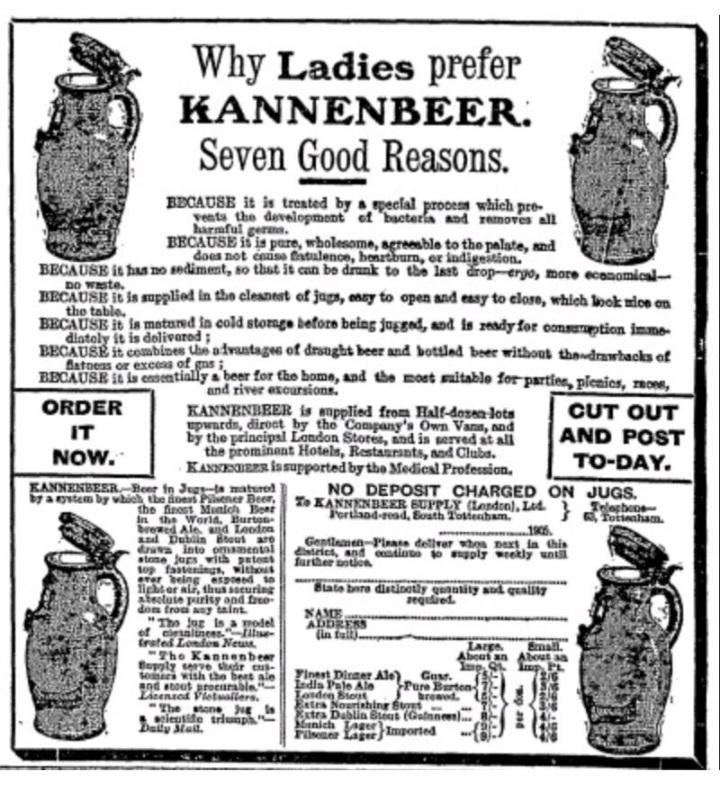
1905 advertising poster for Kannenbeer. London
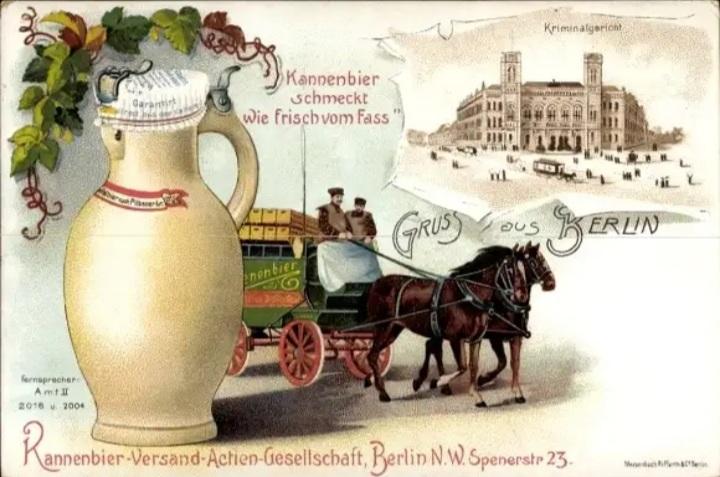
Postcard for ordering Kannenbier home delivery in Berlin
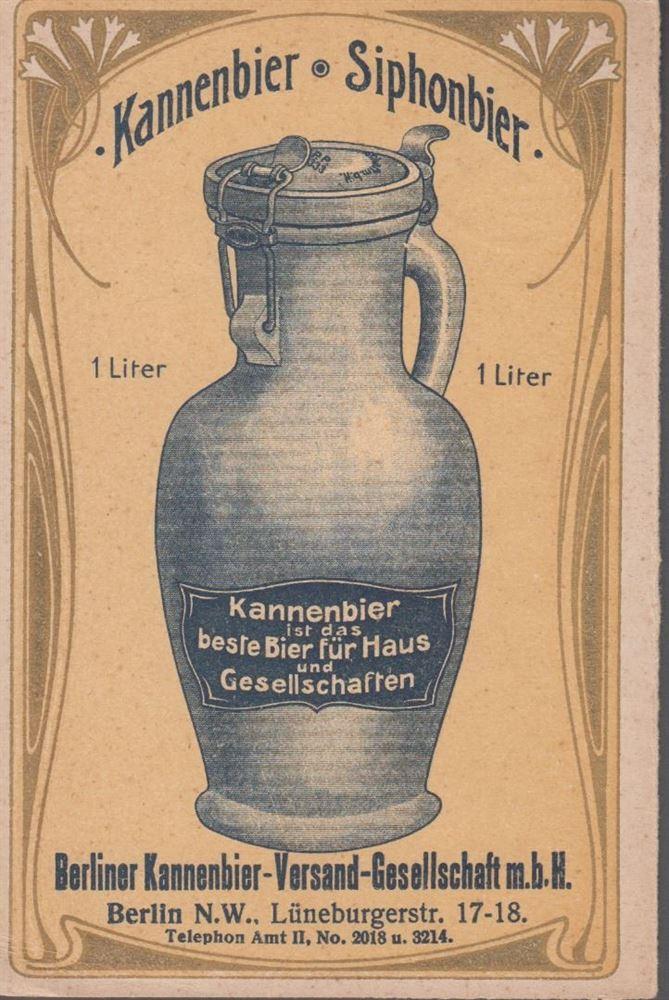
Postkarte der Berliner Kannenbier-Versand-Gesellschaft m.b.H.
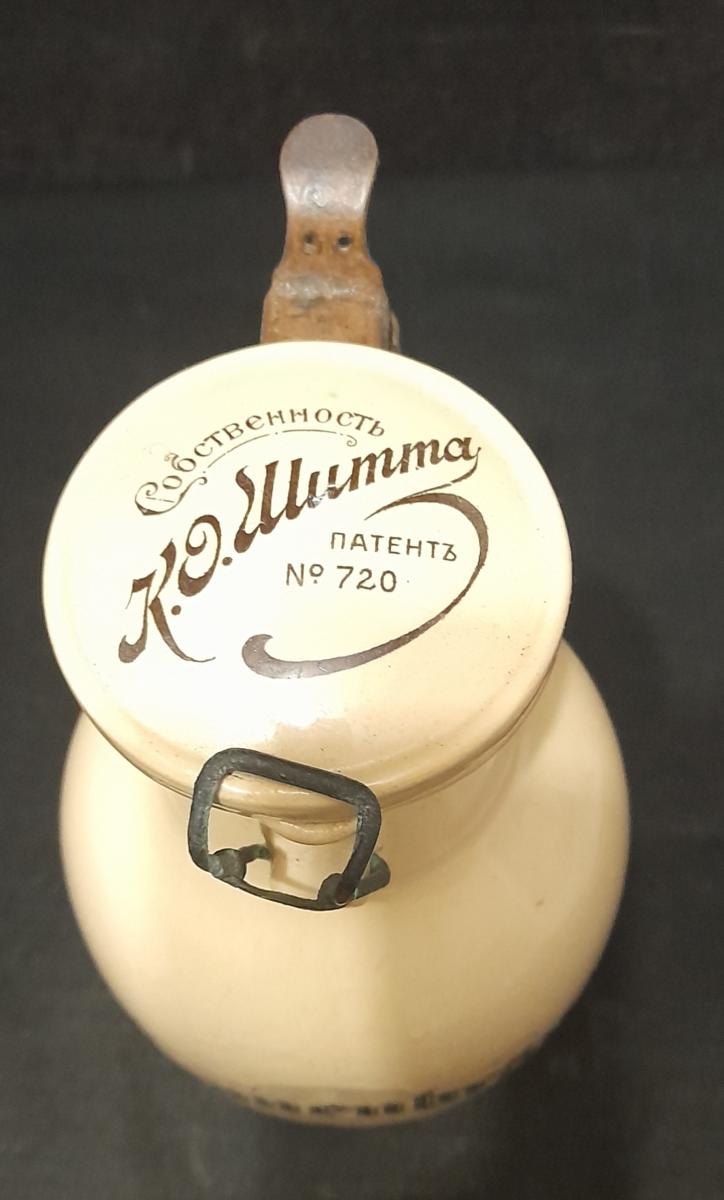
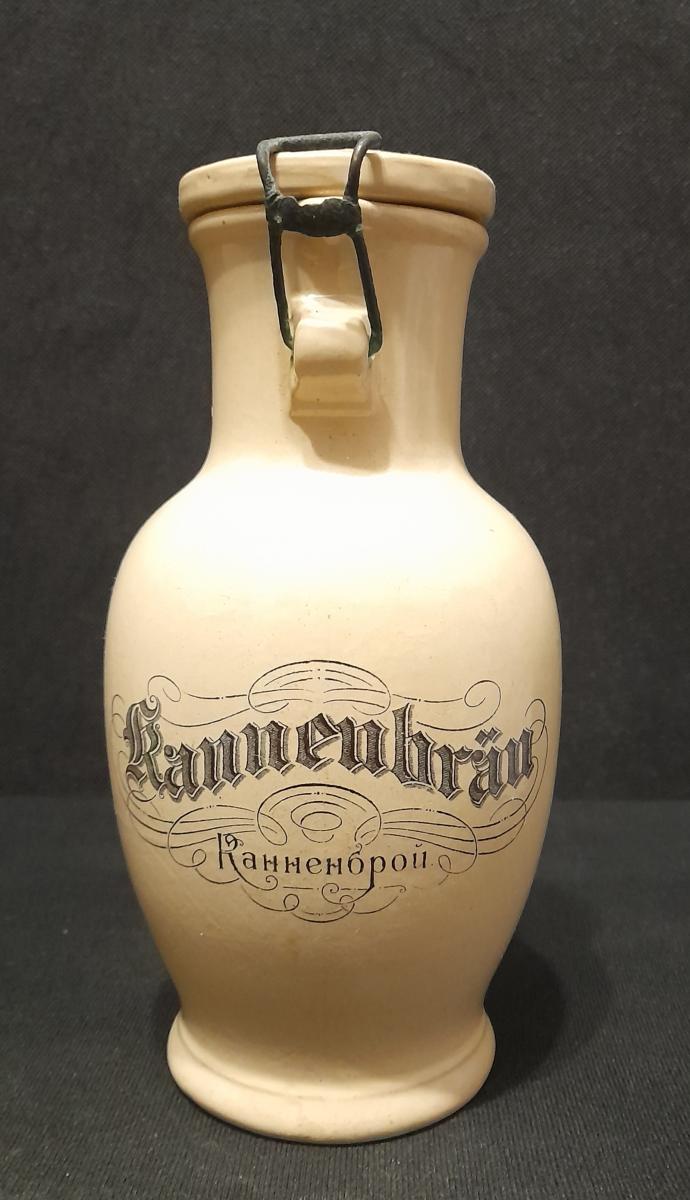
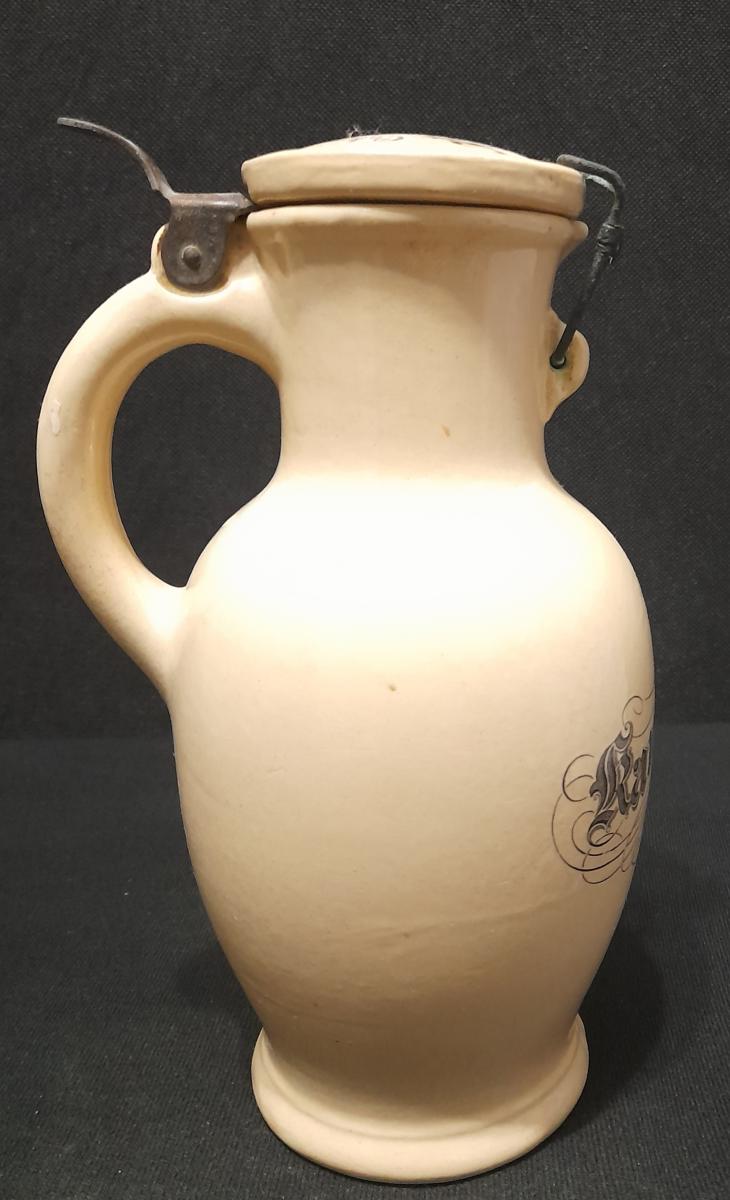
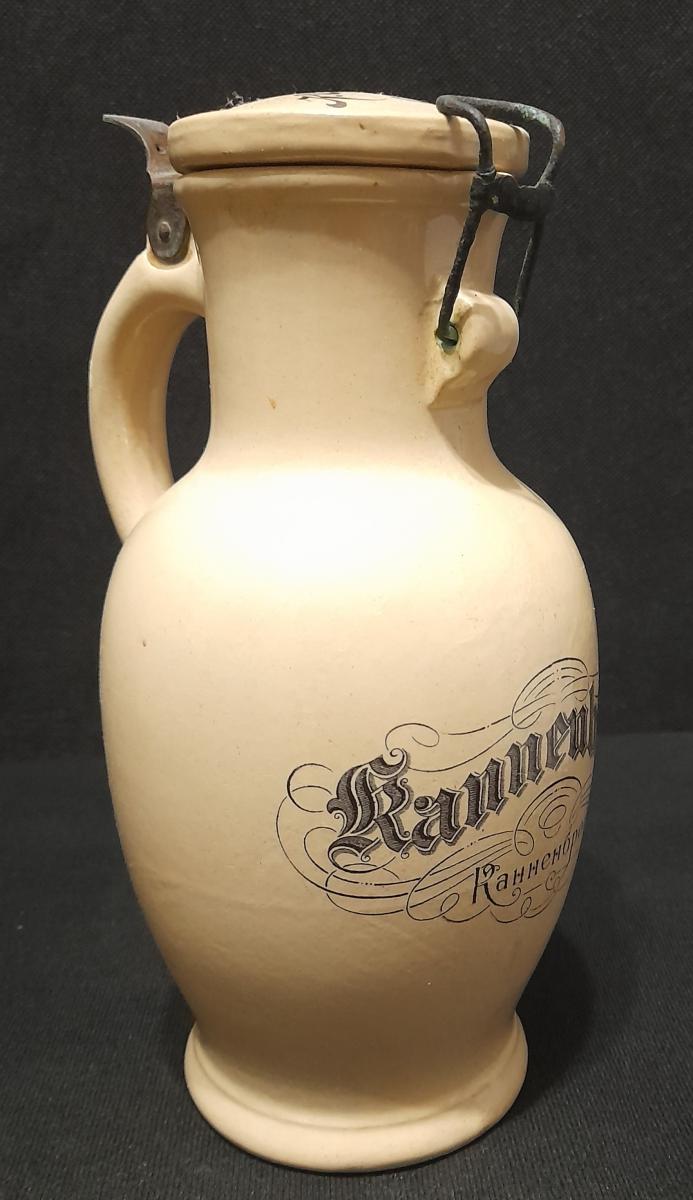
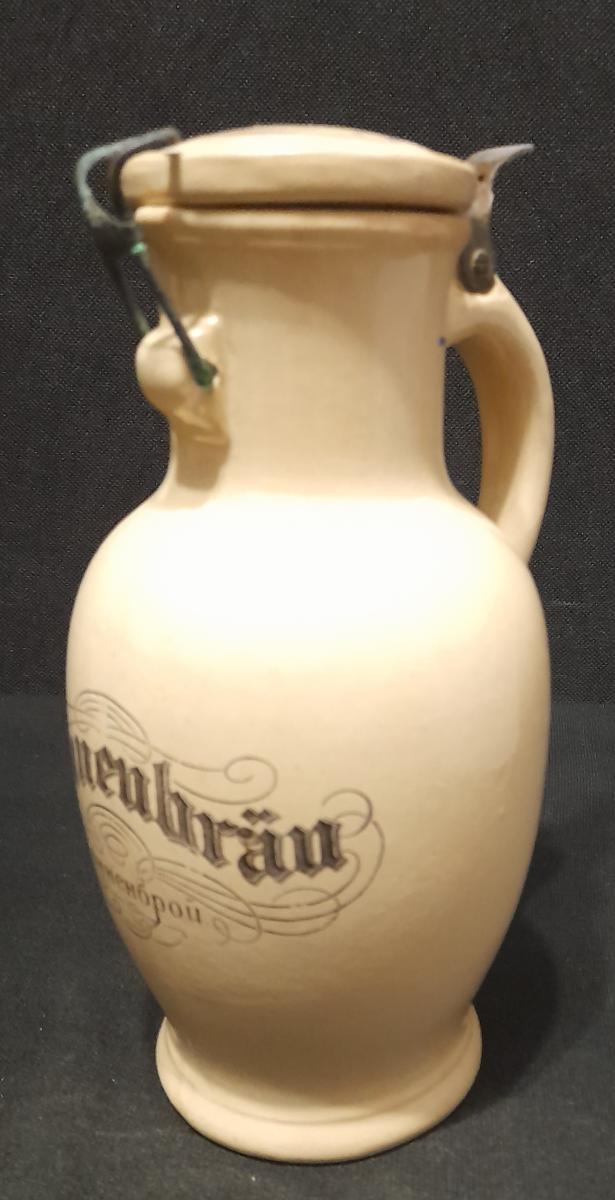
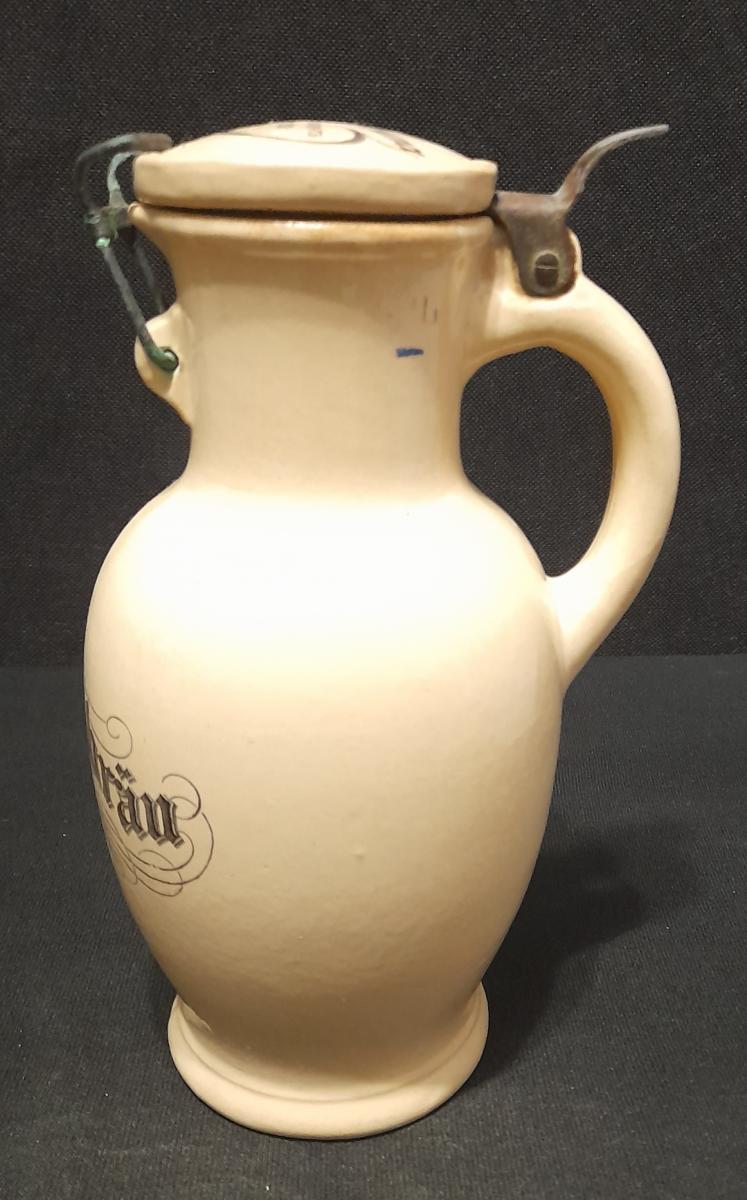
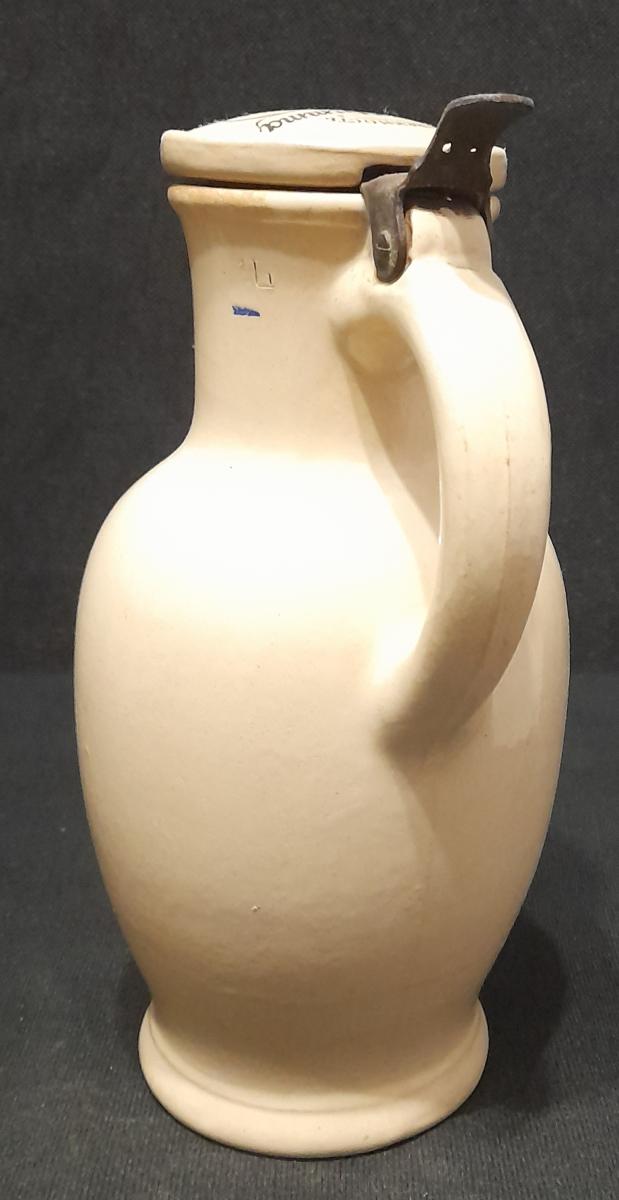
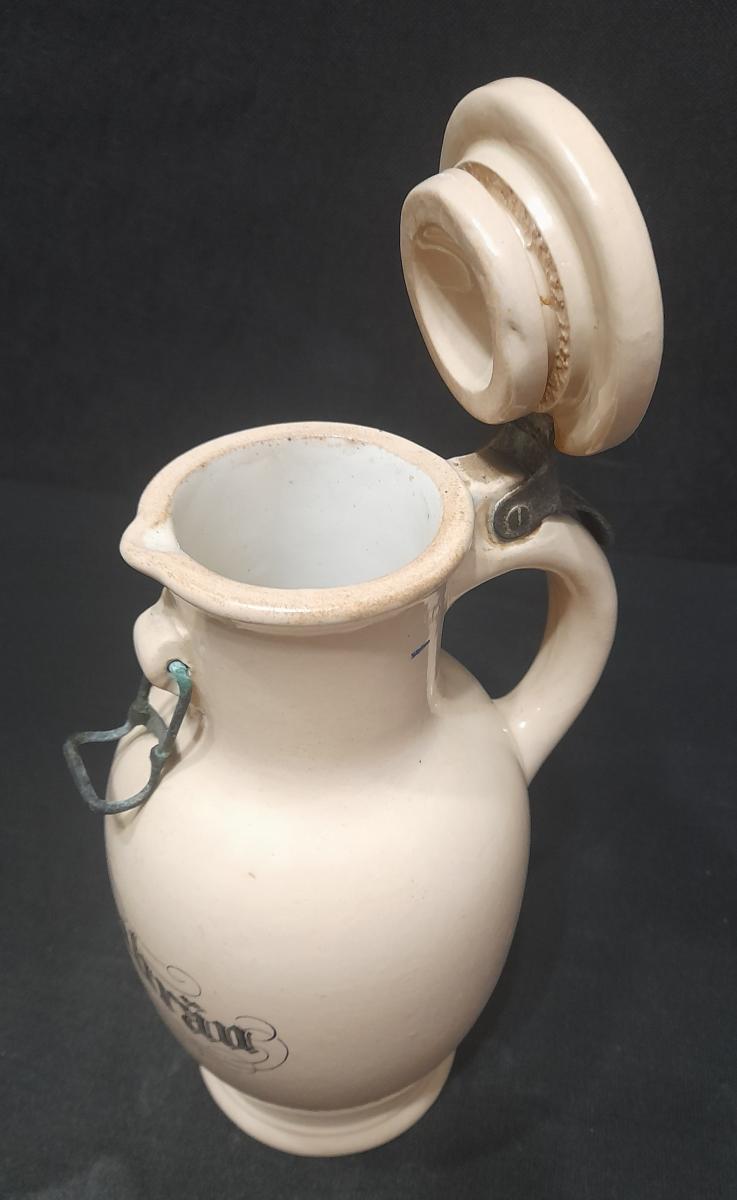
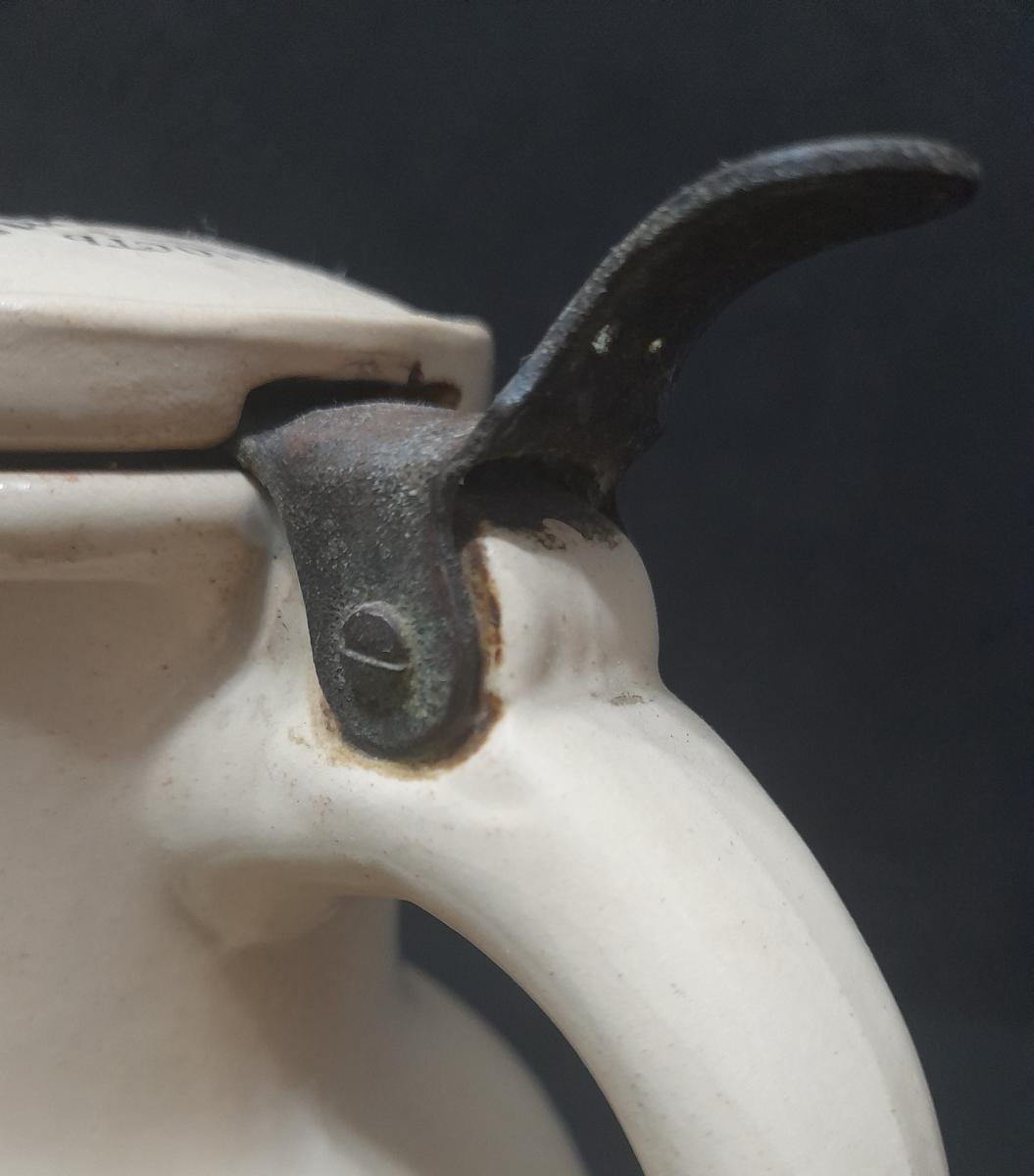
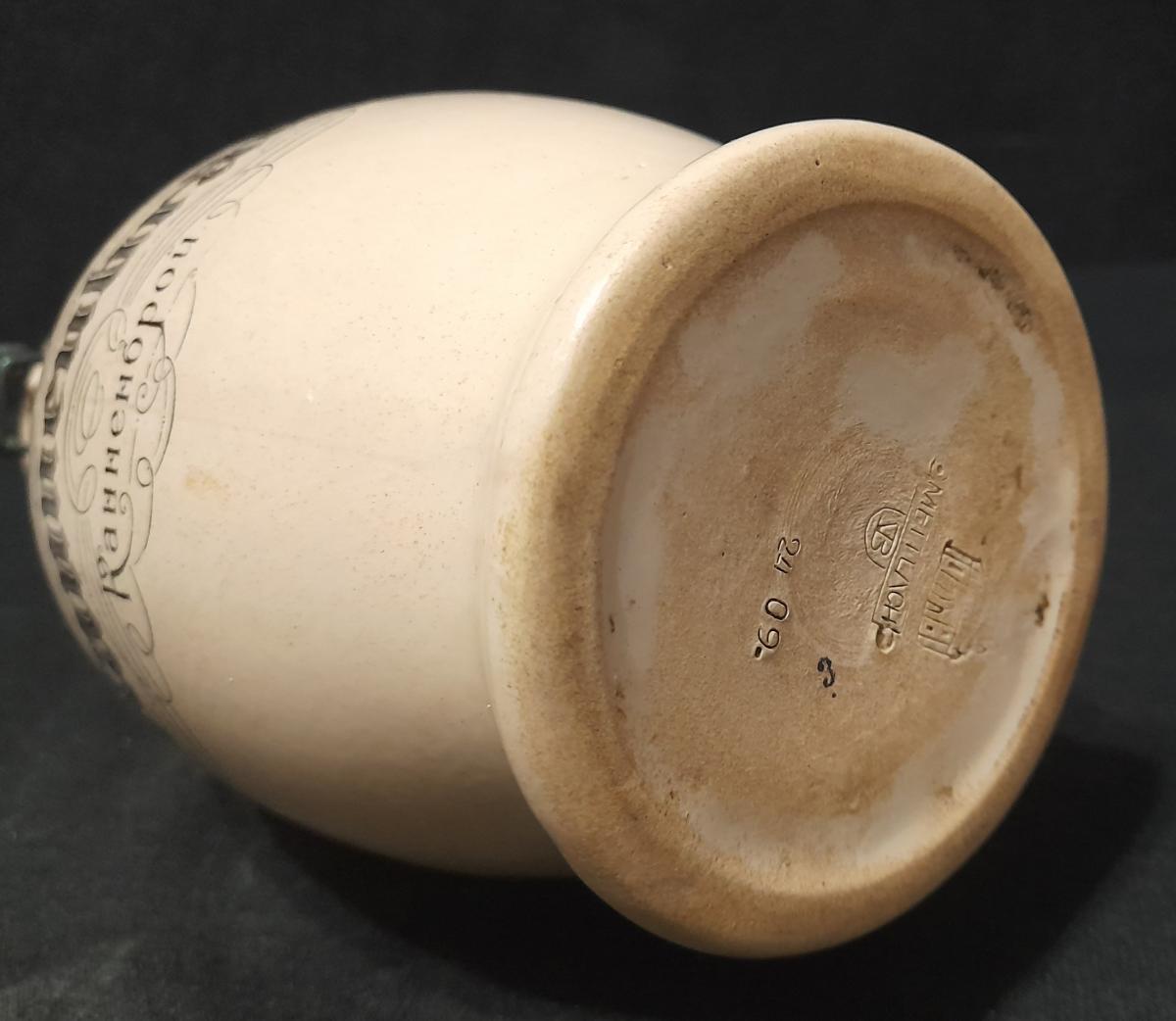
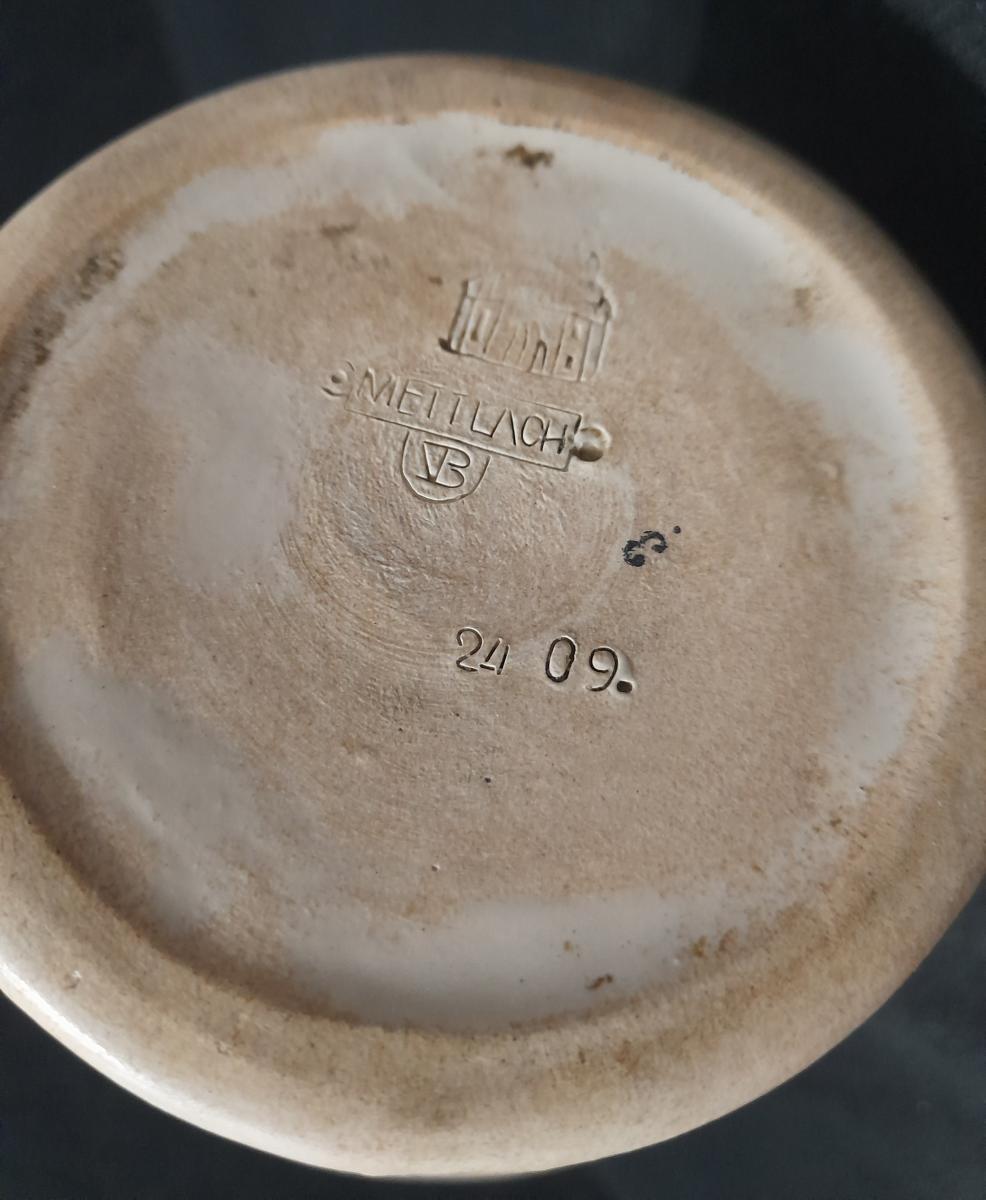
Villeroy & Boch Growler #2241, "Property of K.O. Shitt, patent #720".
A growler is a reusable, airtight container (usually made of glass, ceramic or stainless steel) for bottling and storing fresh draft beer or other beverages, which allows them to preserve their taste, aroma and carbonation for several days, preventing air penetration.
The equivalent of the English term growler in Germany is considered to be Kanne.
In the period from 1852 to 1915, the local brewery "Kannenbräu Lauingen" of the Sailer family operated in the city of Lauingen (Bavarian Swabia). By 1915, the brewery was known as "Kannenbrauerei Peter Sailer Lauingen". Source of information on the link: [Link]
In the 90s of the 19th century, due to rapid industrialization in Germany, the process of absorbing the business of small local and regional breweries accelerated. To survive in these conditions, it was necessary to create fundamentally new sales schemes and access new sales markets.
In 1895, Reich Patent No. 88333 was issued in Berlin. The subject of patent protection was a mechanism for snug fitting of the lid when closing a ceramic vessel. In 1896, the Kannenbier-Versand-Gesellschaft company (full name — Kannenbier-Versand-Gesellschaft m.b.H.) was founded in Berlin. The company was engaged in bottling and delivery of beer in special ceramic siphon jugs (Kannenbier), which allowed to keep the freshness of the drink longer. The products of Kannenbier-Versand-Gesellschaft were protected by the same patent of the German Empire — DRP No. 88333. The famous Villeroy & Boch manufactory (factory in Metlach) made ceramic jugs with a volume of 1 liter or more for her. Form No. 2241 was one of them. The advertising slogan of the Kannenbier-Versand-Gesellschaft company read: "The beer in Canne tastes like fresh draft beer".
At that time, high society used them as table kannes instead of bottles. Thus, because of this Kannenbier-Versand-Gesellschaft business idea, traditional beer sellers began to lose their wealthiest customers.
Kannes with beer in Berlin could be ordered by a postcard sent to Kannenbier-Versand-Gesellschaft. They were then transported to their homes by hand cart, cargo bike, or horse-drawn carriage. For example, at the turn of the 19th and 20th centuries in Berlin, it was possible to order home delivery of a variety of beers: Homemade camp, table or March beer, Munich and Nuremberg beer, Radeberger beer, beer from Pilsen (Czech Republic). The labels affixed to the kanne indicated its contents. In order to provide such a service, Kannenbier-Versand-Gesellschaft opened a transport and logistics base in Berlin, to which beer was delivered in barrels from various breweries. From here, it was distributed in kannes on private orders.
Later, similar companies followed in many other cities, such as the "Oberschl.-Kannenbier-Versandt-Gesellschaft" or the "Deutsche Kannenbier-Gesellschaft m.b.H. Köln".
These beer kanne also spread in the Benelux countries and in England. There was a Kannenbeer Ltd. in London, which distributed its vessels there. There was an inscription on their lids: "This Jug is the property of Kannenbeer Ltd. London, patented". The source of information can be found at the link: [Link]
The Villeroy & Boch manufactory accepted individual orders for the production of growler. The largest customer of growler in Russia was the trading house K.O. Shitt. From 1904 to 1913, he repeatedly ordered large batches of growler from Villeroy & Boch. The most widespread order was made by the K.O. Schitt growler trading house for Kannenbräu beer. One of them ended up in my collection.
In 1910, the K.O. Shitt trading house, after a second attempt, received the status of a supplier to the Imperial Court. From that moment on, he began ordering growler from Villeroy & Boch with the inscription "K.O. Schitt supplier for the Factory yard."
The trading house K.O. Schitt was founded in St. Petersburg in 1818 by the merchant Cornelius Otto Schitt, who was engaged in the wine trade. Trade was carried out through a network of "Renskovyh" (this Russian word originated from the consonance of "Rhenish wines") cellars, of which there were more than 37 in St. Petersburg by the beginning of the 20th century.
The cellar sign in the form of a golden bunch of grapes is mentioned in his memoirs by the Russian artist Mstislav Valerianovich Dobuzhinsky, a follower of the art nouveau style. He was a regular visitor to the cellars of the K.O. Shitt trading house.
At the time Villeroy & Boch completed orders for growlers, the K.O. Shitt trading house was headed by Vasily Eduardovich Shitt, a merchant of the first guild with the state rank of commerce adviser, an honorary citizen of St. Petersburg. V.E. Shitt's activity was not limited to the trading house. It is known, for example, that from 1903 to 1913 he was a member of the board of the Russian-Bavarian brewing society "Bavaria".
The Schittes originated from Hamburg. Cornelius Otto II Schitt (the younger) became the first member of the family to move to Russia. In 1865, after the death of Cornelius Otto II Schitt, his son Eduard Schitt (1826-1983) inherited the business and in 1868 was registered as a St. Petersburg merchant of the 1st guild. Vasily (Wilhelm) Shitt (1858-1920), the youngest of Eduard Shitt's sons, graduated from the sixth grade of the Karl May Gymnasium in 1875 and began working in a family network selling alcohol. In 1885, Vasily Shitt joined the St. Petersburg merchant class. On April 30, 1886, he married Mary Schuhmacher.
After the October 1917 events, the Shitt family ended up in Crimea, where they owned vineyards, a brandy factory, and warehouses in Balaklava. After the debacle V. E. Shitt, for unknown reasons, did not leave Wrangel's Russian army in the Crimea. He was shot as a class-hostile element on December 1, 1920, during the Red Terror in Sevastopol. For more information about the history of the Schitt family, see the link:
[Link]
Zeig alles von Paulo Vik Falcon
 Hersteller info
Wir sehen 5 weitere Items in unserer Datenbank mit der gleichen Formnummer und dem gleichen Hersteller:
Zeig alles von Hersteller Villeroy & Boch


Kommentare (0)
Einloggen um ein Kommentar ein zu geben.