


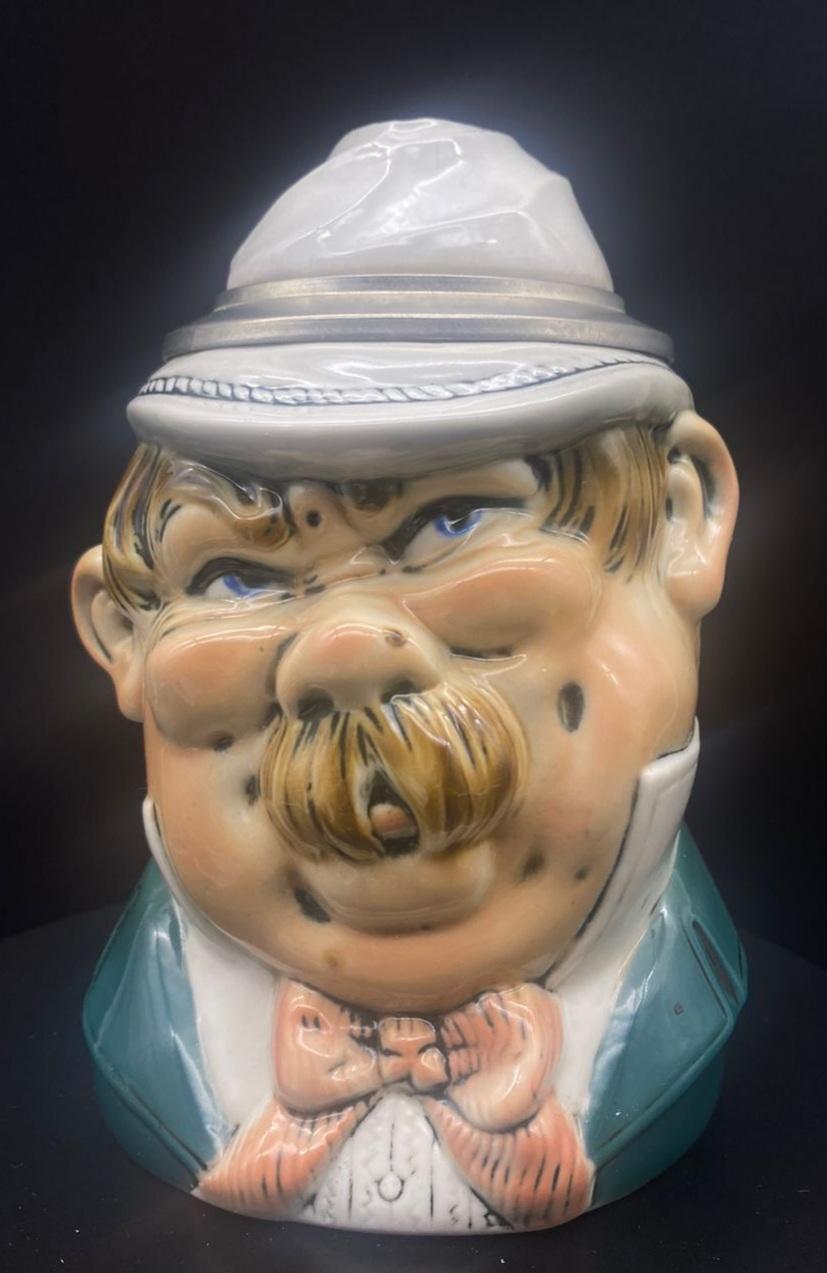

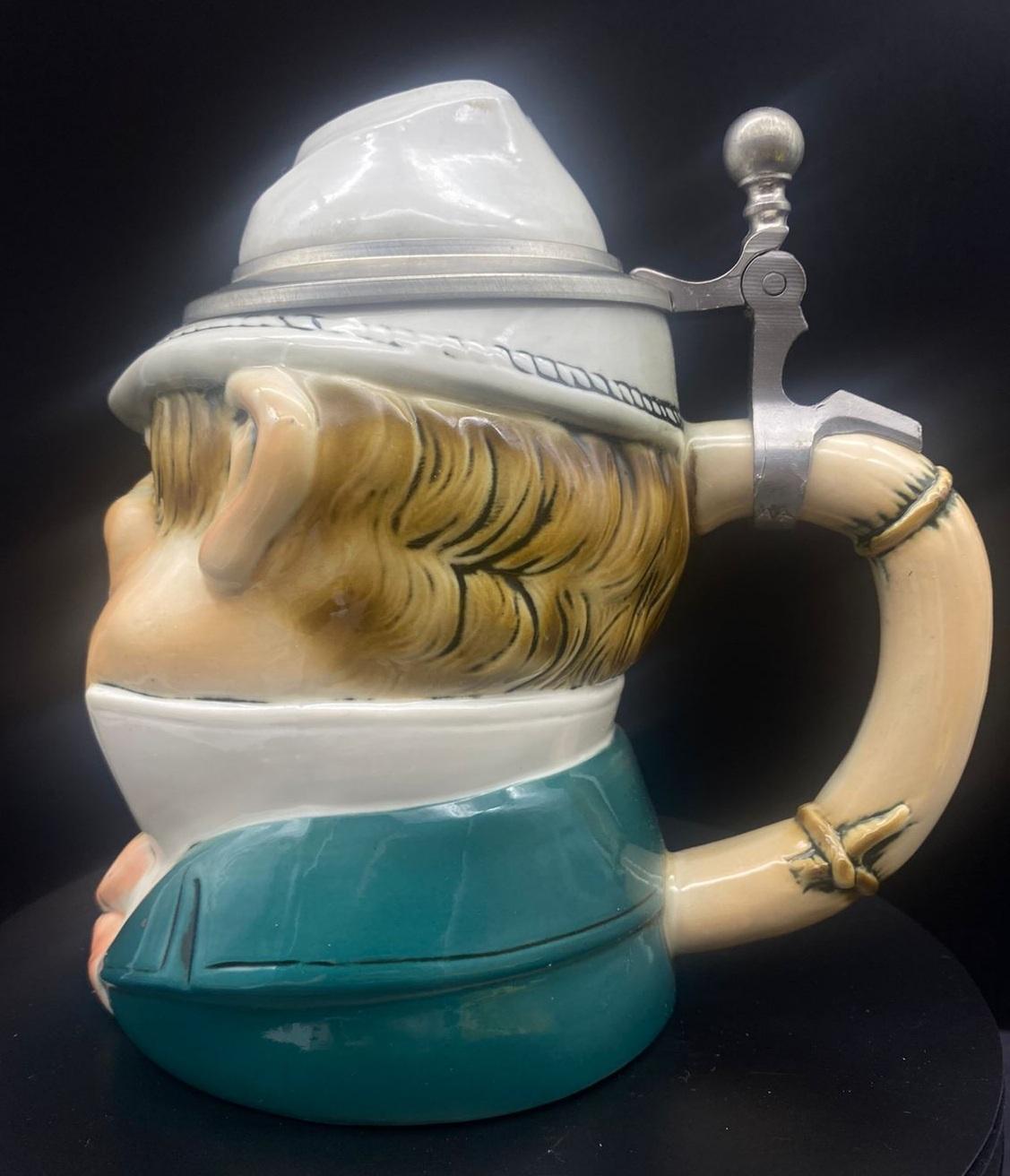
Stein Albert Stahl & Co. #4198 “Sausage Max”.
A video about this mug can be viewed at the link:
[Link]
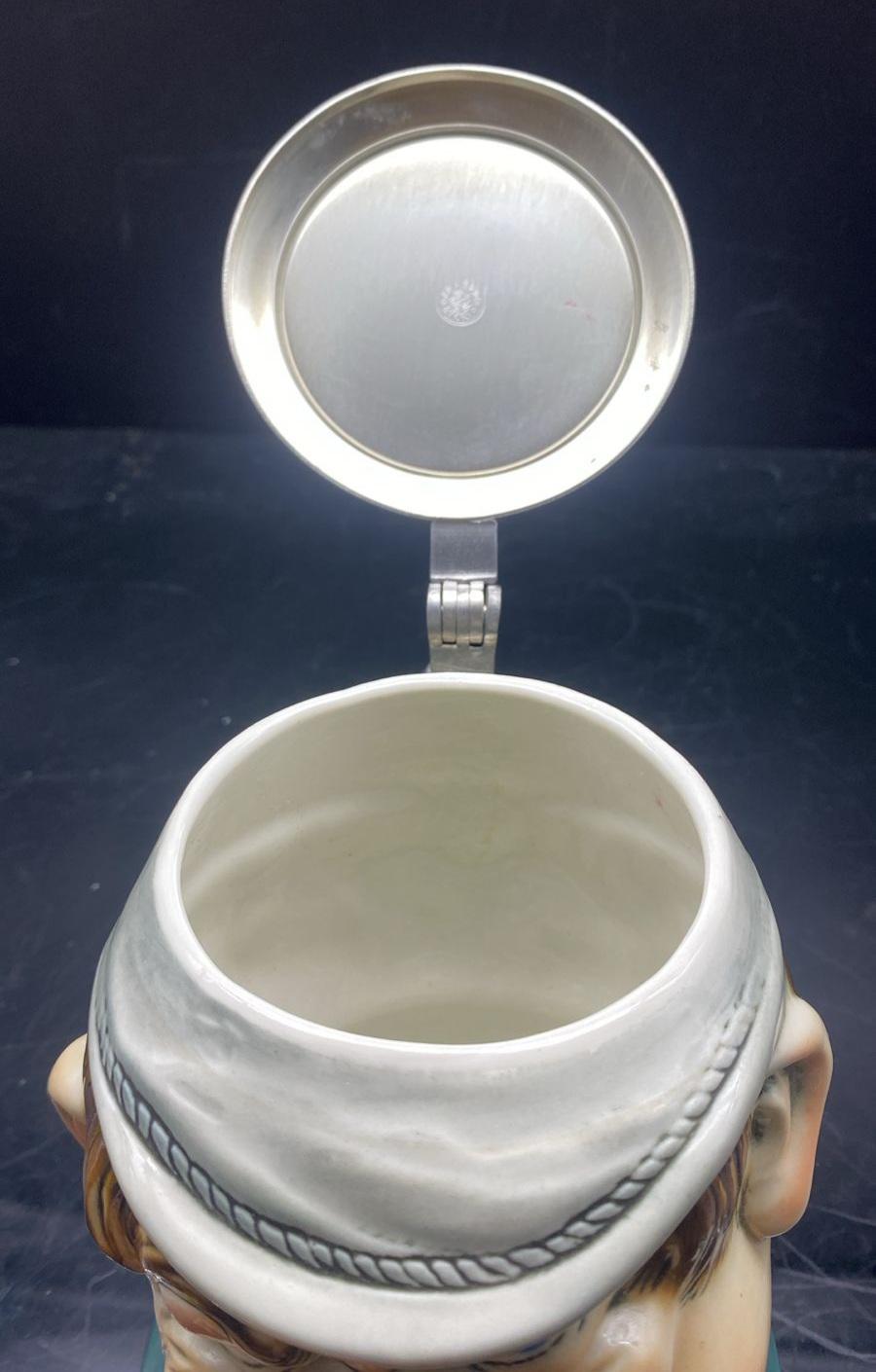
Collectible porcelain beer mug Kolbasnik-Max (original German name Wurstmax). A characteristic or shaped mug (Character Stein) in the form of a grotesque male bust. The character of "Wurstmax" is traditionally portrayed in Germany as a well-fed man with a bushy mustache, a sly squint and characteristic moles on his cheeks. This image in Germany represents the seller of sausages or sausages. The hinged lid is made in the form of a headdress (cap/hat) with a metal tin rim. The mug has a capacity of 0.5 liters, the height is 16 cm.
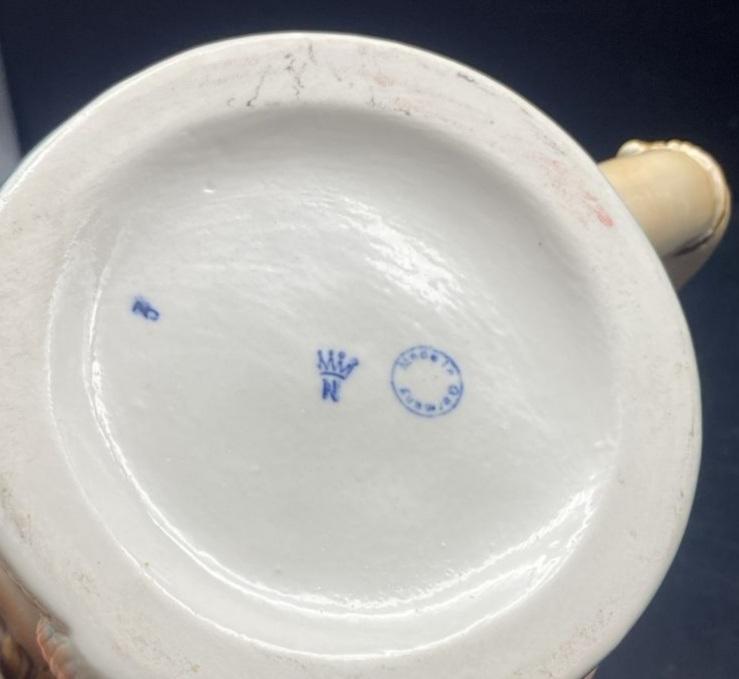
The mug was made in the period 1990-1993 at the German porcelain manufactory Albert Stahl & Co. It is important to note that the mold model of this mug was developed 100 years earlier - around the period 1890-1895 by porcelain sculptors from the famous old factory Ernst Bohne Söhne in Rudolstadt (Thuringia, Germany). In the catalog of products of the Ernst Bohne Söhne factory, the mold of this mug is present under the number 4198. The Ernst Bohne Söhne factory is considered one of the trendsetters of the style of shaped characteristic porcelain mugs.
The company was founded in 1848 by Ernst Bohne, a German porcelain artist. Initially, the company specialized in porcelain figurines. The heyday of the company's shaped mug production occurred in the period 1890-1910. During this period, the entire range of shaped beer mugs was made, which became the real artistic legacy of the masters of the Ernst Bohne Söhne factory in the future. The company stopped active production in the 30s of the XX century. In 1937, the factory was acquired by Albert Stahl, an accountant from Rudolstadt who was familiar with the economics of the porcelain business.
Unfortunately for Stahl, the factory was located in the city of Rudolstadt, in the former East German state of Thuringia. After the Second World War, the production facilities were nationalized and eventually converted into the production of technical porcelain. Despite the fact that the company managed to preserve many of the original molds, and after the reunification of Germany, to return those that were confiscated, the production of matte both during the war and after it, practically ceased during the GDR period.
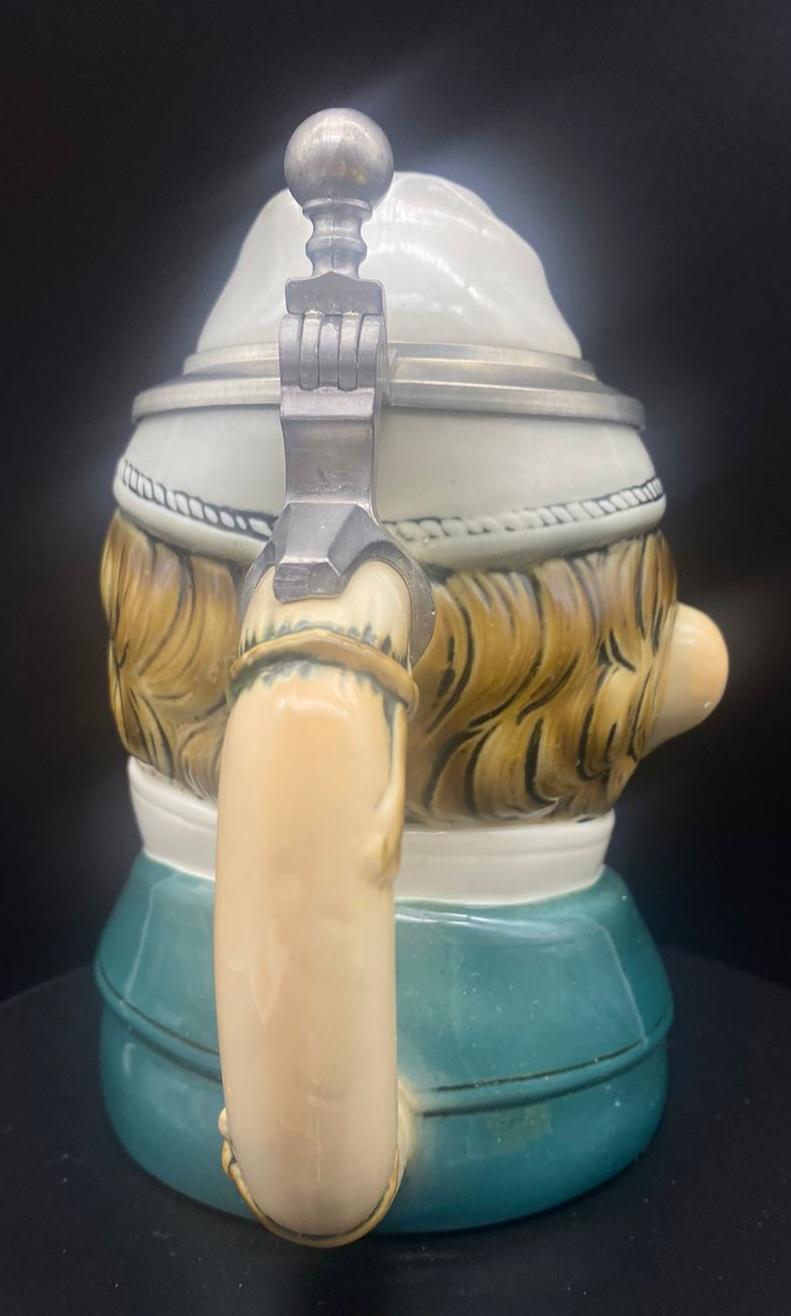
After privatization in 1990, the company began to regularly produce Ernst Bohne Söhne shaped glasses again, creating products that are very similar (but not identical) to the Bohne originals. Anyone familiar with Bohne glasses will be able to distinguish them from Albert Stahl & Co replicas. For example, one of the most important distinguishing details of the original Ernst Bohne Söhne mugs from reproductions by Albert Stahl & Co. is the handle design. In the original version, the handle always reaches the bottom of the mug and acts as an additional support for the mug along with the bottom. In the replica, the handle may not reach the bottom. In this case, this is exactly the case.
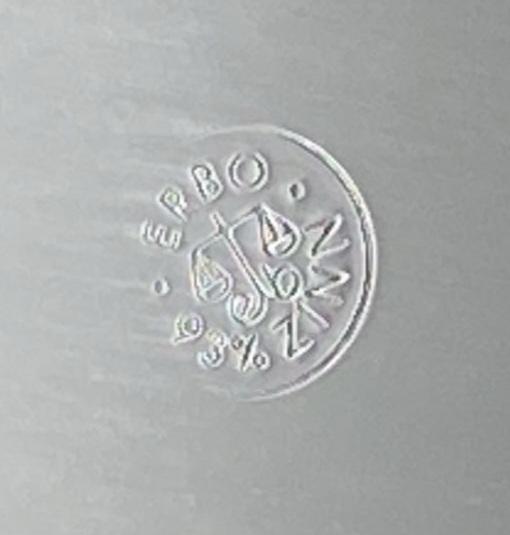
There is a stamp with the letters "eb" on the tin lid. This is the brand of the Erbo Zinn factory - (Erich Bolling) GmbH & Co. The factory has been operating since 1958. So, the ErBo lid was made by order of Albert Stahl & Co. after 1990.
Source of information on the link:
[Link]
Zeig alles von Paulo Vik Falcon
 Hersteller info
Zeig alles von Hersteller Albert Stahl & Co

Kommentare (0)
Einloggen um ein Kommentar ein zu geben.