



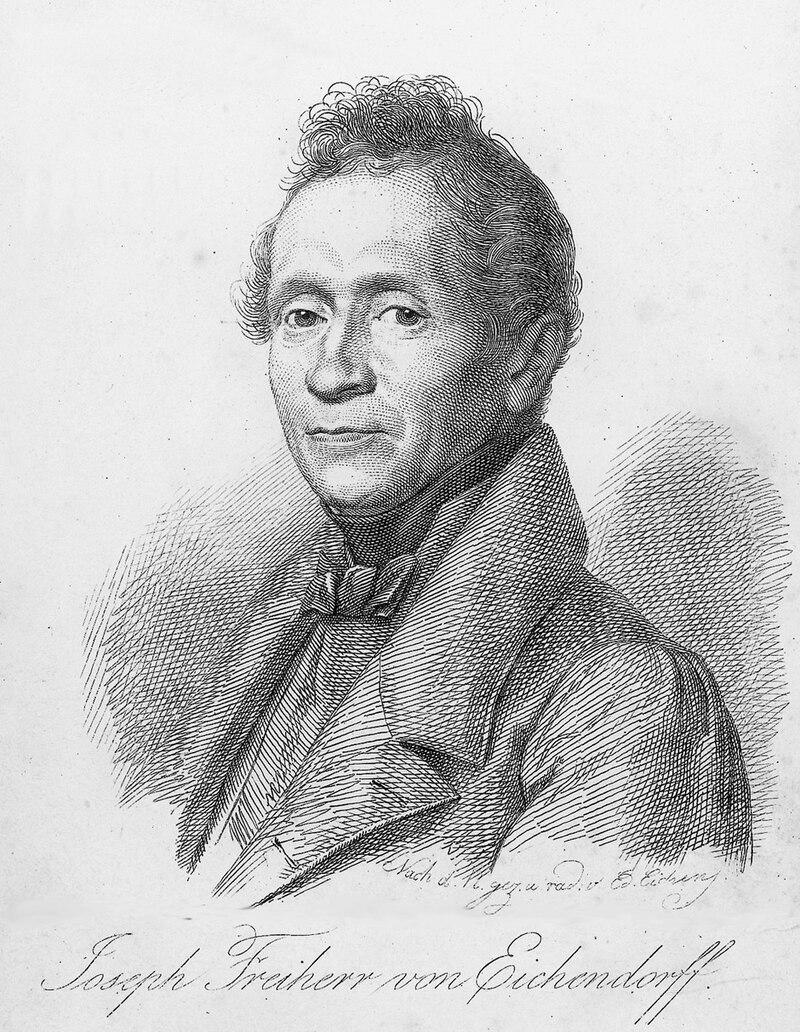
Joseph von Eichendorff (1788-1857)

Friedrich Glück (1793-1840)

Signed by "unknown artist"
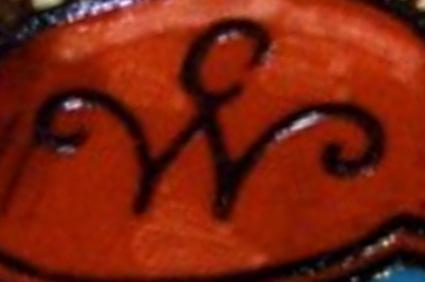
Artist's signature Christian Warth
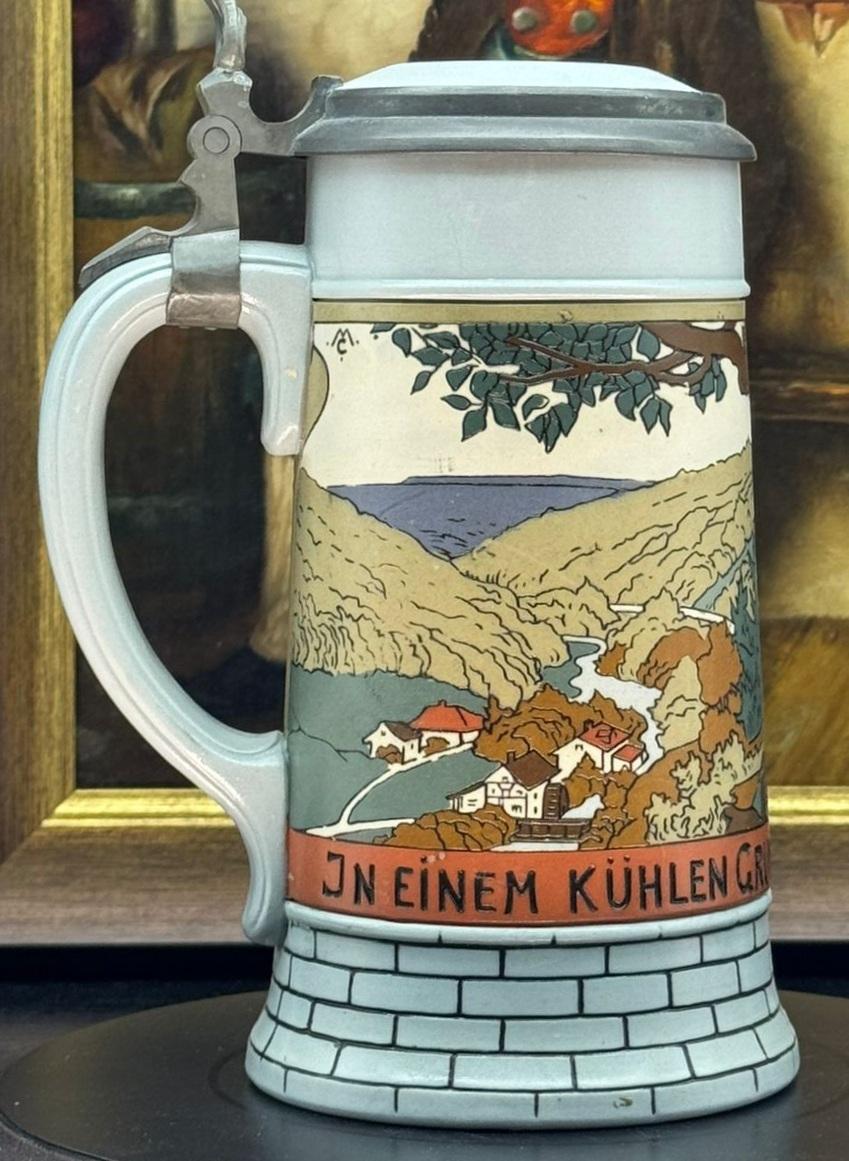
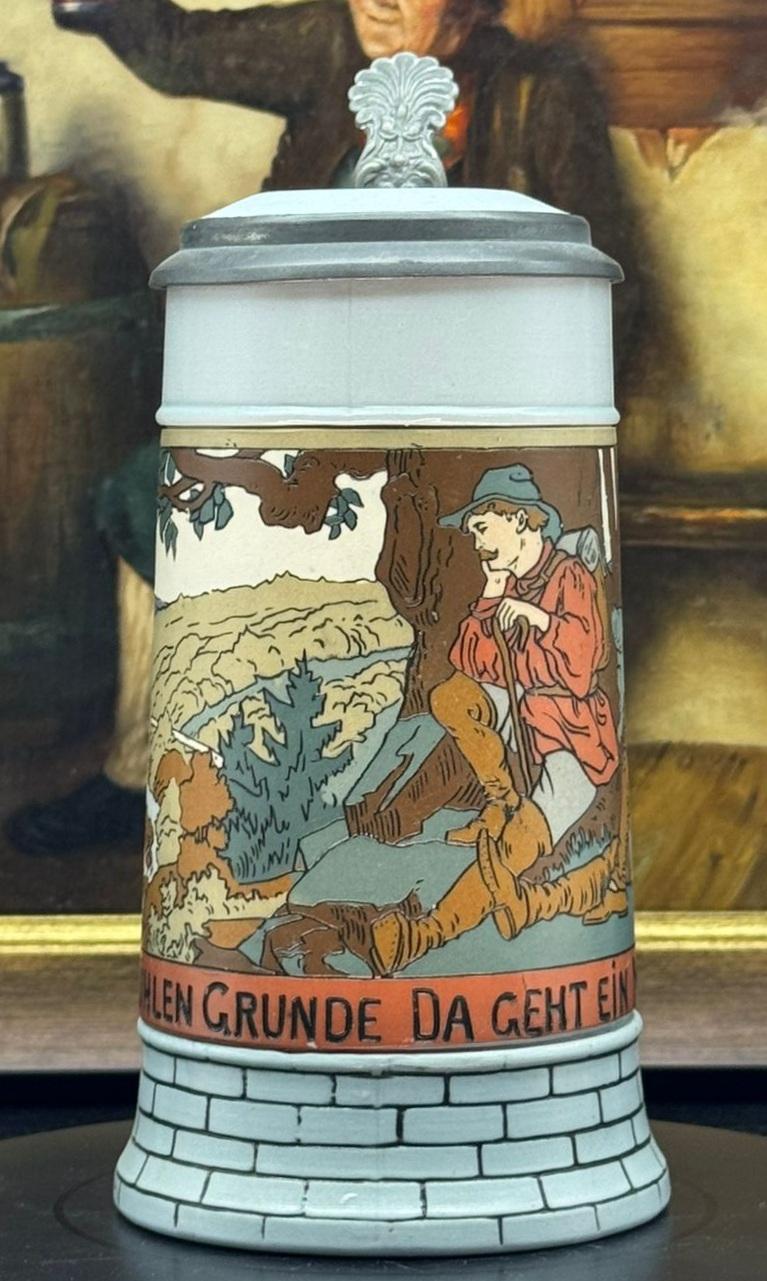
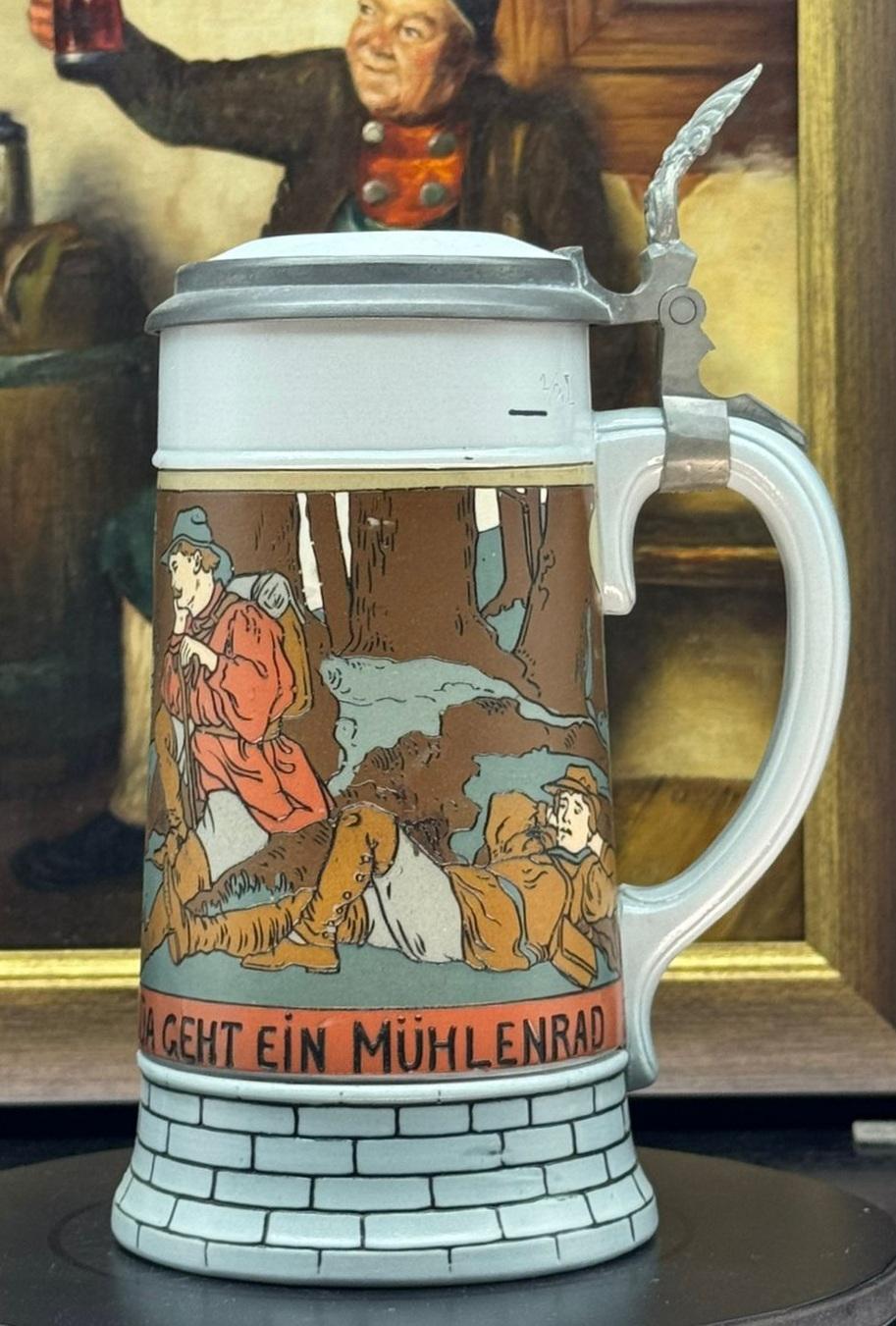
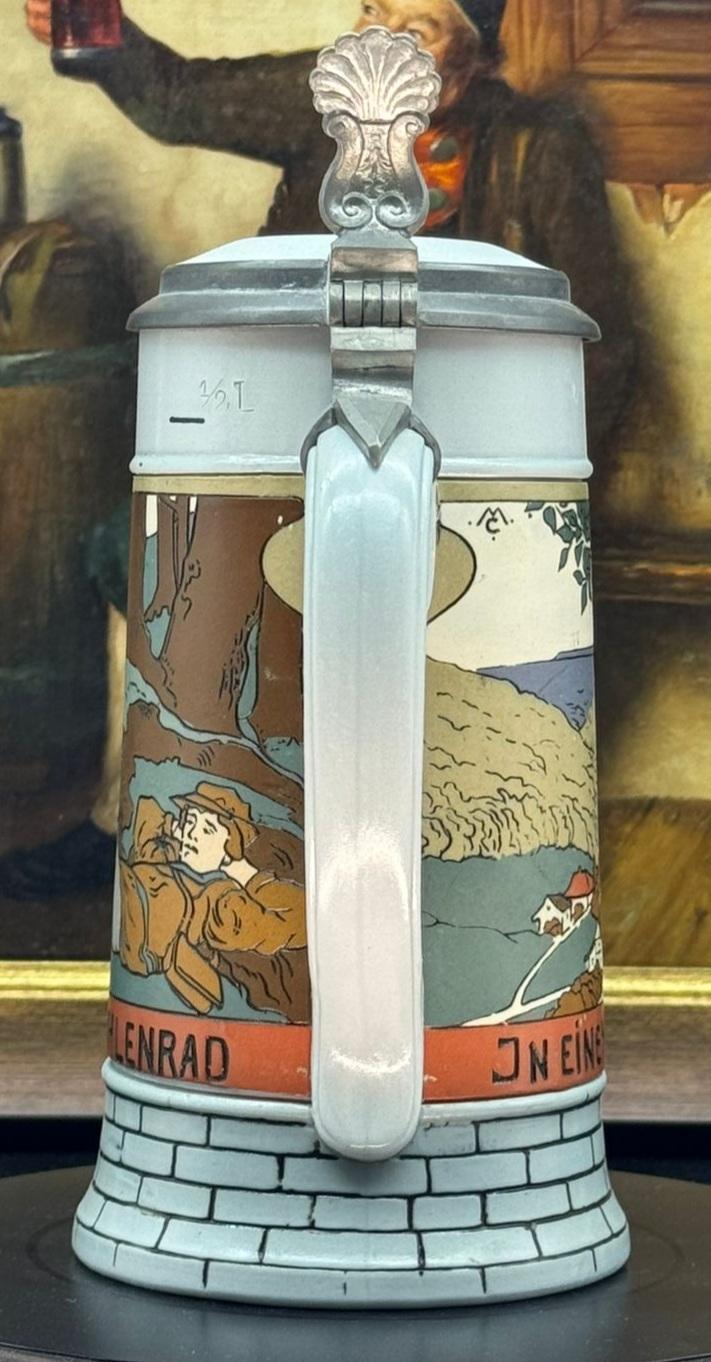
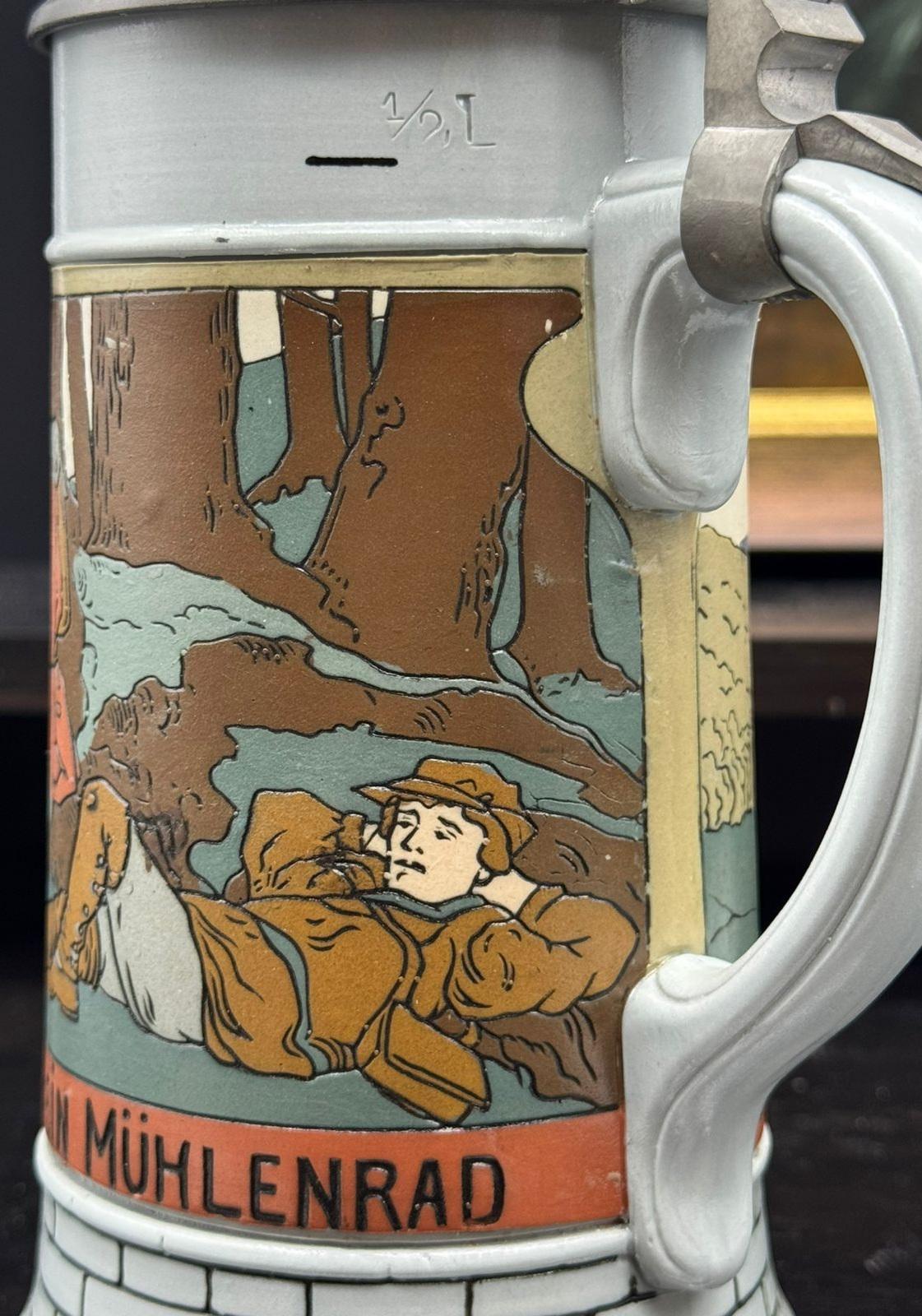
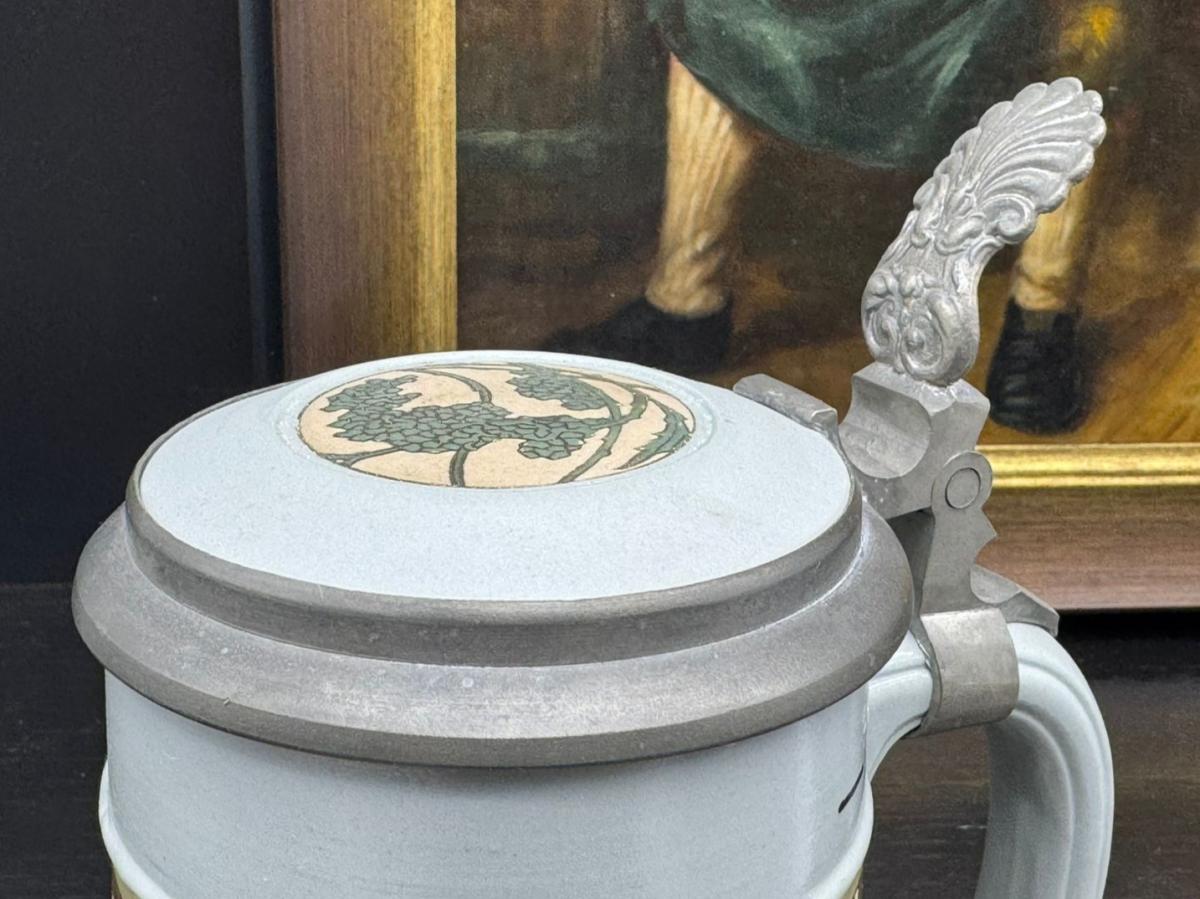
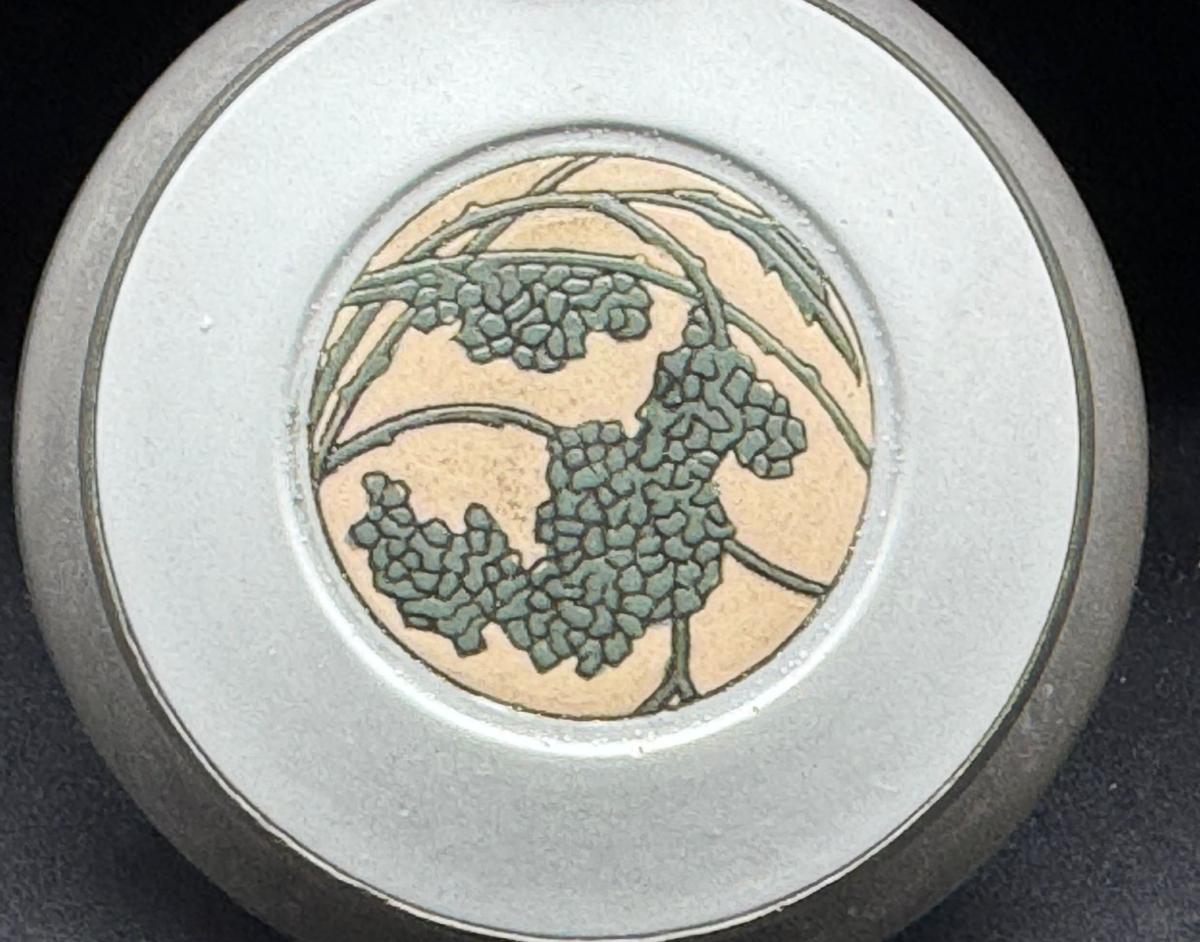
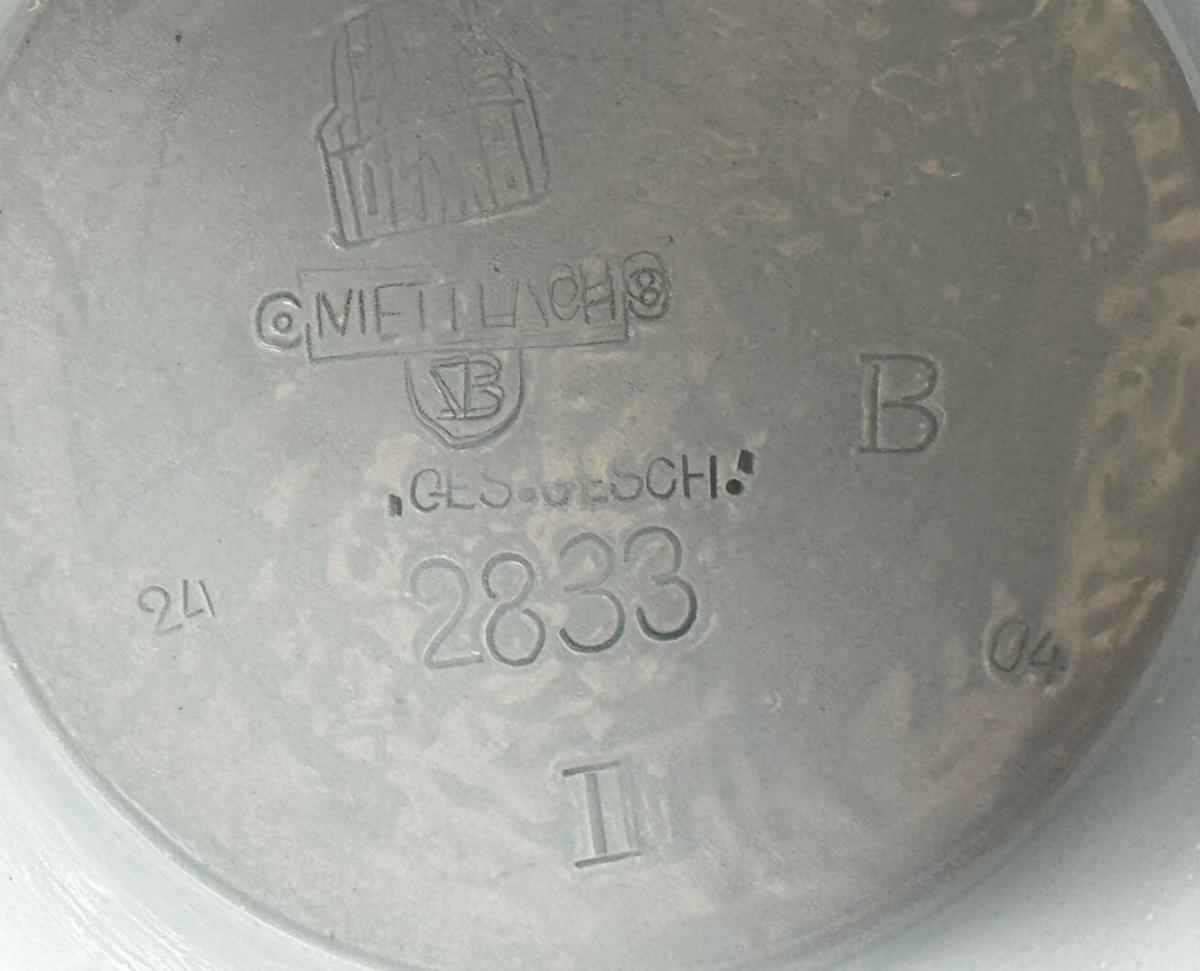
Stein Villeroy & Boch #2833 B, “In a Cool Valley”.
A video about this mug can be viewed at the link: [Link]
This antique German mug was made in 1904 at the famous Villeroy & Boch factory. The decoration of the mug is applied in the technique of ceramic engraving. This is one of the most difficult techniques of drawing on the surface of such products. This emphasizes the uniqueness and value of the mug, as well as noticeably distinguishes it from other objects.
This mug is the second of the famous Villeroy & Boch "Brick Base" series. The series got such a figurative name because of the design of the lower part of the mug decoration. It looks like the brickwork of the base of a fortress or tower.
In reality, the circles in this series were dedicated to the most popular songs in Germany, which were written at the beginning of the 19th century and became truly popular by the end of the 19th century and the beginning of the 20th century.
This series of beer mugs is formed by six different drawing plots. Each of the options is marked with a letter from "A" to "F". The plots of the drawings of beer mugs in this series introduce us to the legendary songs of Germany.
Our beer mug has a letter "B" and it is dedicated to the lyrical song "In a Cool Valley".
A phrase from this song is printed in a circle along the entire lower part of the frieze of the mug. Translated from German, it means: "There's a mill wheel running in a cool valley.” The lyrics of the song are based on the poem "In ein Kühlen Grunde", written by Joseph von Eichendorff in 1810 and set to music by Friedrich Gluck in 1814.
The poem tells about the mental anguish of a young man who is faced with unrequited love. Here is a fragment of this work: "
A mill wheel turns in a cool valley.
My beloved, who once lived there, has disappeared. She promised me loyalty, gave me a ring. She broke her promise, and my ring broke in two. I would like to travel as a minstrel, far around the world, and sing my melodies, and walk from house to house. I would like to fly as a horseman, even into a bloody battle, lying by silent campfires in a field on a dark night. When I hear the mill wheel turning, I do not know what I want most. I wish I could die, then everything would be quiet".
The performance of the song can be found at this link:
[Link]
In Germany, during the last quarter of the 19th century, singing associations and unions gained great popularity. They united lovers of choral singing. Contests and festivals were constantly held, where, of course, favorite and popular folk songs were played. I am sure that this series could have been produced at the Villeroy & Boch factory for one of the major festivals of choral art.
Mugs of this series have become in high demand. The series went to the masses.
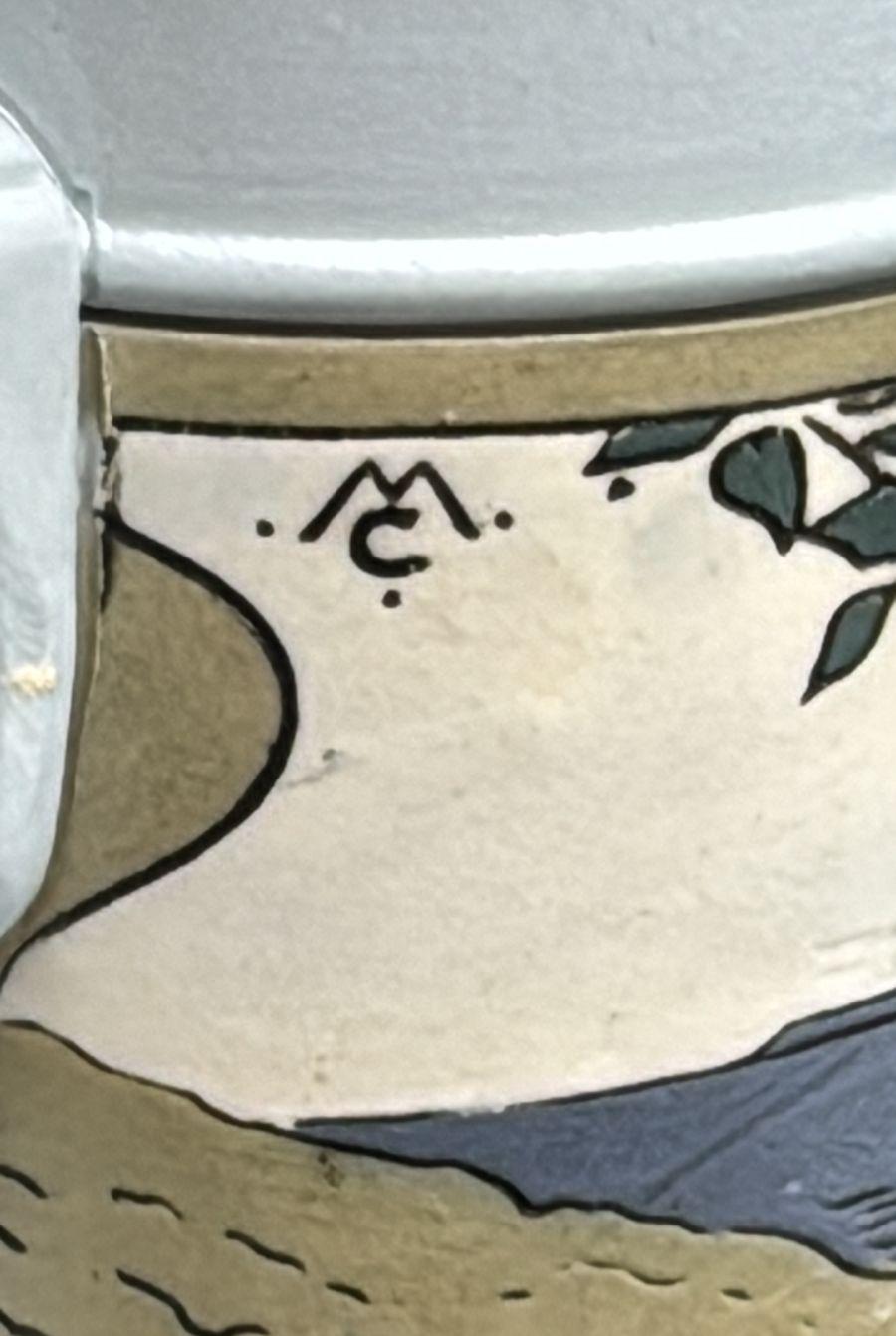
There is a mark of the author of the drawing on the mug. It is made in the form of a monogram of two letters M above C. All six mugs in this series are marked with this monogram. History is silent on the name of the artist who used such a sign. Researchers of beer mugs noted that they had never seen the sign anywhere else except on this series. Perhaps it could be a one-time project of the artist who received this order from Villeroy & Boch, having fulfilled which, for some reason, he did not want to put his recognizable autograph.
However, I have a theory that the authorship of this series belongs to Christian Warth. He is considered one of the most prolific and sought-after artists of the Villeroy & Boch factory. He was proficient in ceramic engraving techniques. Christian Warth's artistic style, which he used to depict people and nature, completely coincides with what we see in the drawings of the mugs in this series. Moreover, the Wart's personal game is very similar to the one we see on our mug with a slight difference. [Link] The monogram with which Warth signed his works consists of two letters W and C.
It is enough to turn over the W mentally and we will see the M above the C, that is, the monogram of the "unknown artist".
Again, I emphasize that this is just my version and it may well be a reason for discussion.
Zeig alles von Paulo Vik Falcon
 Hersteller infoDesigner/Dekorateur info
Wir sehen 9 weitere Items in unserer Datenbank mit der gleichen Formnummer und dem gleichen Hersteller:
Zeig alles von Hersteller Villeroy & Boch


Kommentare (0)
Einloggen um ein Kommentar ein zu geben.